

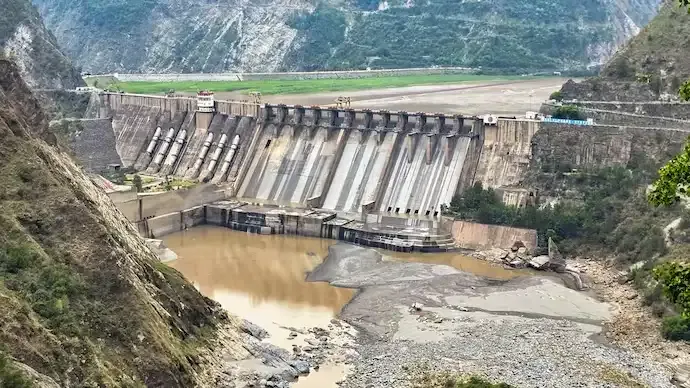

Pakistan's worsening water shortage has once again become a major public issue as rising temperatures, increasing demand and regional tensions place additional pressure on the country's water resources. The debate has intensified following India's suspension of the Indus Waters Treaty after the 2025 Pahalgam attack, with Islamabad raising concerns about future water security.
However, water experts have long argued that Pakistan's challenges extend far beyond recent diplomatic developments. Structural issues including limited storage capacity, inefficient water management, population growth and climate-related pressures have been affecting the country's water sector for decades.
The Indus Waters Treaty and the Current Debate
The Indus Waters Treaty, signed in 1960, governs the sharing of waters from the Indus river system between India and Pakistan.

Following the 2025 Pahalgam attack, India announced the suspension of the treaty, adding a new dimension to bilateral tensions. Pakistan has expressed concerns over the implications of that decision, while India has maintained that its actions were linked to national security considerations.
Even before these developments, Pakistan had repeatedly warned about growing water stress.
Why Pakistan Faces Water Stress
Several long-term factors have contributed to Pakistan's water challenges:
Limited Water Storage
Pakistan has relatively limited reservoir storage compared with its seasonal water requirements. During years of heavy rainfall, significant volumes of water cannot be stored for use during dry periods, increasing vulnerability to shortages.
Ageing Infrastructure
Many canals, barrages and irrigation systems require upgrades. Water losses during transportation remain a persistent challenge, reducing overall efficiency.
High Agricultural Demand
Agriculture accounts for the largest share of Pakistan's freshwater consumption. Traditional irrigation methods in many regions continue to use more water than modern alternatives, placing additional pressure on available resources.
Population Growth
Rapid population growth has steadily increased demand for drinking water, agriculture and industry, making long-term planning more challenging.
Climate Change
Changing rainfall patterns, glacier melt, prolonged heatwaves and extreme weather events have made water availability less predictable across the region.
Internal Water Management Challenges
Water distribution has also been the subject of debate among Pakistan's provinces, with disagreements over allocation and infrastructure development emerging periodically.
Experts have argued that improvements in governance, investment and conservation could help strengthen long-term water security regardless of external factors.
How India Fits Into the Discussion
The suspension of the Indus Waters Treaty has heightened public attention on cross-border water issues. However, any long-term assessment of Pakistan's water security also requires examining domestic factors such as infrastructure, policy implementation, efficiency and climate resilience.
Analysts generally view the current situation as the result of multiple interconnected challenges rather than a single development.
What Could Improve Water Security?
Policy specialists have suggested several measures that could strengthen long-term resilience:
- Expanding water storage capacity.
- Modernising irrigation systems.
- Reducing transmission losses.
- Promoting efficient agricultural practices.
- Improving groundwater management.
- Investing in climate adaptation and water conservation.
- Strengthening coordination among provinces.
Why the Issue Matters
Water security is closely linked to agriculture, food production, energy generation and economic development.
As climate pressures increase across South Asia, effective management of shared river systems and domestic water resources is expected to remain a major policy priority for countries across the region.
Featured SnippetPakistan's water crisis is driven by multiple long-term factors, including limited storage capacity, ageing infrastructure, population growth, agricultural demand and climate change. Recent tensions over the Indus Waters Treaty have intensified debate, but experts say many of the underlying challenges predate the current dispute.
Key Highlights- Pakistan is facing increasing pressure on its water resources.
- The Indus Waters Treaty has returned to the spotlight following recent tensions.
- Water experts point to long-term structural challenges beyond the treaty dispute.
- Limited storage and ageing infrastructure remain major concerns.
- Agriculture is the country's largest consumer of freshwater.
- Climate change has added further uncertainty to water availability.
- Policy reforms and infrastructure investment are seen as key to improving water security.
Pakistan's water crisis is shaped by a combination of environmental, infrastructural and policy challenges that have developed over many years. While recent geopolitical tensions have intensified the debate, addressing long-term water security will require sustained investment, improved resource management and greater resilience to climate-related risks alongside regional cooperation.
FAQs1. Why is Pakistan facing a water crisis?
Pakistan's water challenges are linked to limited storage capacity, ageing infrastructure, rising demand, climate change and water management issues.
2. What is the Indus Waters Treaty?
The Indus Waters Treaty is a 1960 agreement governing the sharing of the Indus river system between India and Pakistan.
3. Has the current treaty dispute created Pakistan's water crisis?
Recent tensions have added to concerns, but many experts say the country's structural water challenges existed long before the current dispute.
4. How does climate change affect Pakistan's water supply?
Changing rainfall patterns, glacier melt, droughts and extreme heat have made water availability increasingly unpredictable.
5. Why is agriculture important in this issue?
Agriculture accounts for the majority of freshwater use in Pakistan, making efficient irrigation critical to long-term water security.
6. What steps could help address the crisis?
Expanding storage, modernising irrigation, improving infrastructure, conserving water and strengthening governance are among the measures frequently recommended.








Conversation
Be kind and stay on topic. Comments are moderated; abuse, spam and personal attacks are removed. Report a problem