
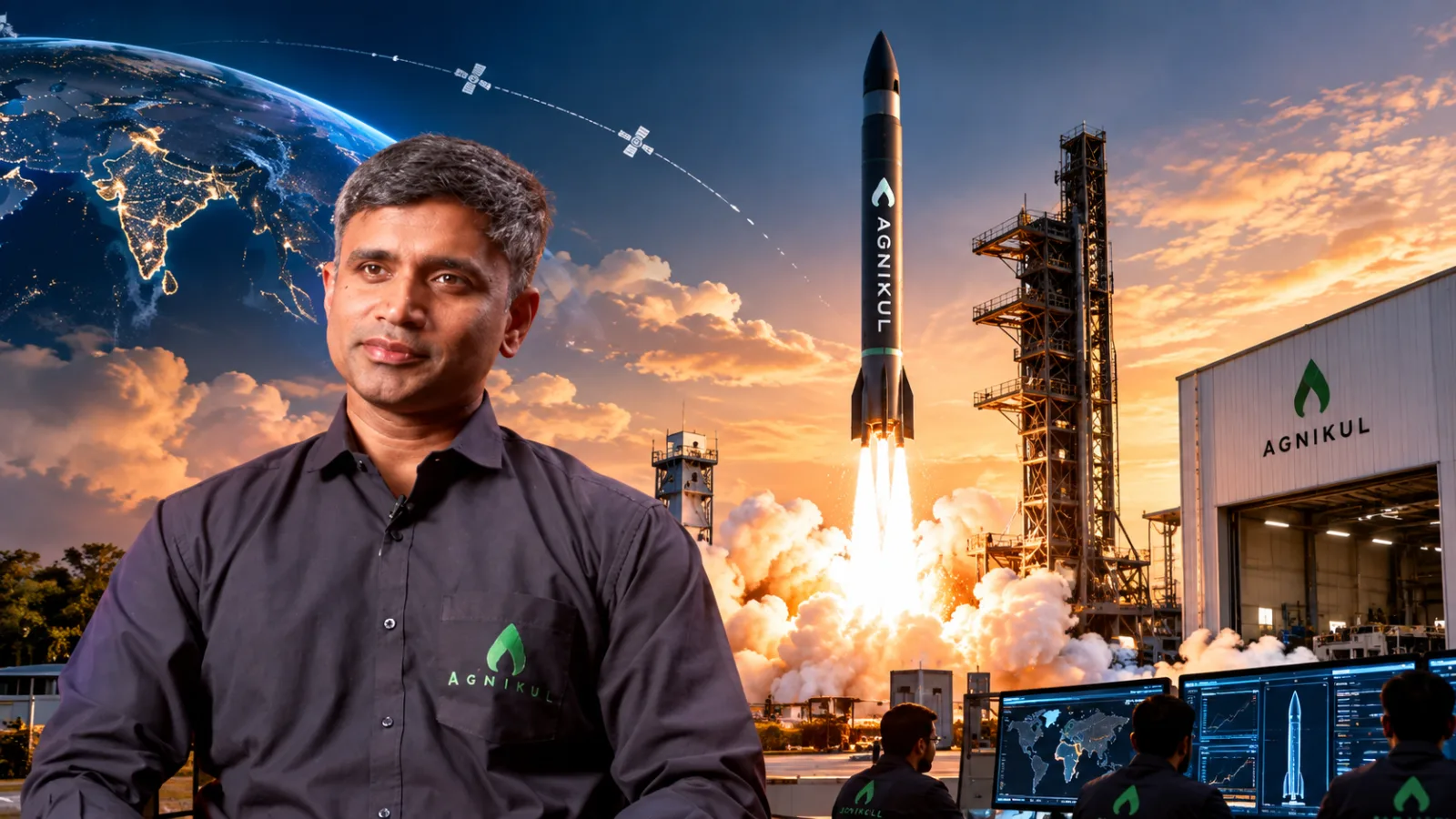
Agnikul Cosmos is taking its next step in commercial spaceflight with Mission-02, an upcoming mission designed to attempt recovery of an orbital-class rocket booster and convert its spent upper stage into an in-orbit platform. The Chennai-based startup, incubated at IIT Madras, has built its strategy around making launches more reusable, flexible and commercially viable.
Reusability at the centre of launch economics
Co-founder and CEO Srinath Ravichandran says the company's focus is not only on developing rocket technology but also on reducing the cost of repeated launches. According to him, reusability could reduce 70–80% of launch costs by allowing the same hardware to fly multiple times.
Mission-02 is therefore being designed around reuse of both the upper and lower stages of Agnibaan. Agnikul also believes converting the upper stage into an in-orbit platform could create additional value from hardware that would otherwise be discarded.
The company's approach is aimed at separating rocket production from launch frequency. Ravichandran says a facility capable of producing 20 booster stages could eventually support around 100 launches a year if reuse works as planned.
Targeting dedicated launches
Agnikul argues that dedicated small-satellite launches can address requirements that rideshare missions may not fully serve, including specific orbital destinations, launch schedules and last-mile connectivity.
The company says its initial anchor customers are expected to include commercial satellite operators in Europe, Australia, Japan and Singapore. Indian government programmes and the country's growing space startup ecosystem could provide additional demand.
Agnikul is also planning infrastructure near the upcoming launch facility at Kulasekarapatnam in Tamil Nadu, with an end-to-end setup covering design, manufacturing, testing and vehicle rollout.
Ravichandran says the wider ecosystem could accelerate growth by simplifying approvals across customs, taxation, launches, mission operations and supply chains.
Agnikul's stated objective is to build Agnibaan into a globally competitive launch system from India, with Mission-02 serving as an important test of whether reusable and convertible rocket architecture can translate technological capability into sustainable launch economics.
Related link: Agnikul Cosmos official website


Conversation
Be kind and stay on topic. Comments are moderated; abuse, spam and personal attacks are removed. Report a problem