
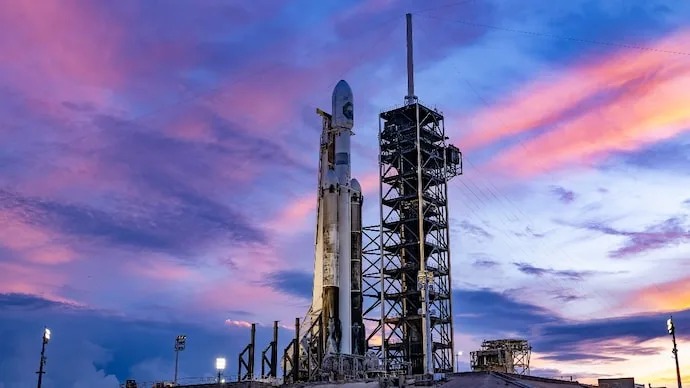
The Indian space startups Dhruva Space, SatLeo Labs and TakeMe2Space have taken new technologies into orbit aboard SpaceX’s Falcon 9 as part of the Transporter-18 rideshare mission. The mission carried around 130 payloads from different customers, with the Indian technologies focused on hosted payload services, thermal Earth observation and artificial intelligence-powered computing in orbit.
Dhruva Space’s LEAP-2 hosts multiple technologies
Hyderabad-based Dhruva Space’s LEAP-2 mission uses its P-30 satellite platform to host multiple in-orbit demonstration payloads. The platform carries SatLeo Labs’ TAPAS-1 thermal imaging payload along with a star tracker developed by France-based Sodern. Dhruva Space says LEAP-2 is designed to provide customers with hosted-payload and in-orbit validation opportunities.
SatLeo Labs’ TAPAS-1 uses long-wave infrared sensing to capture thermal information that conventional optical imaging cannot provide. The technology can potentially support applications such as urban heat monitoring, agriculture, climate observation and disaster monitoring. SatLeo plans to use the demonstration as a step towards its proposed PYRO thermal-imaging constellation.
TakeMe2Space puts AI computing in orbit
TakeMe2Space’s MOI-1A is designed as an orbital computing platform capable of processing data in space instead of sending all raw information to ground stations.
The satellite carries an Nvidia Jetson Orin NX-based computing system with 117 TOPS of processing capability, 2TB of onboard storage and multispectral imaging capabilities. The company says customers can run AI models on the satellite and receive processed insights rather than transmitting large volumes of raw data to Earth.
MOI-1A follows the loss of the earlier MOI-1 spacecraft during the PSLV-C62 mission in January 2026. TakeMe2Space subsequently scheduled the replacement spacecraft for the Transporter-18 mission.
Together, the missions highlight the expanding role of Indian private companies in commercial space infrastructure, Earth observation and in-orbit computing.
Relevant official links: SpaceX Transporter-18 | Dhruva Space LEAP-2 | TakeMe2Space MOI-1A


Conversation
Be kind and stay on topic. Comments are moderated; abuse, spam and personal attacks are removed. Report a problem