


The Judicial Observation vs. The Weaponized Narrative
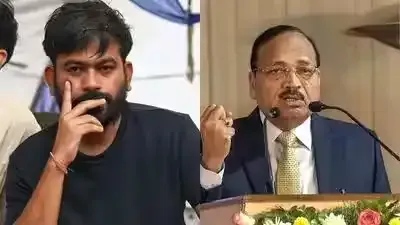
On May 15, 2026, during a Supreme Court hearing regarding a petitioner aggressively pursuing senior advocate status, Chief Justice of India Surya Kant expressed sharp anguish over individuals who use fraudulent credentials and online harassment to target state institutions. Pointing out how bad actors exploit public discourse, the CJI orally observed:

"There are youngsters like cockroaches; they don't get any employment, and they don't have any place in a profession. Some of them become media, some of them become social media, some become RTI activists... and they start attacking everyone."
Recognizing that his oral remarks were being stripped of context by online commentators, the Chief Justice issued an immediate formal clarification the very next day. He explicitly stated that his comments were never aimed at India's honest, job-seeking youth or legitimate student activists. Instead, his criticism was strictly confined to individuals who enter noble professions like law and media using fake or bogus degrees to exploit and attack constitutional systems. Reaffirming his trust in the nation's youth, he described them as the "pillars of a developed India."
However, the clarification was deliberately ignored by political communications strategist Abhijeet Dipke. A Boston University graduate with background ties to AAP's digital campaign machinery, Dipke saw an opportunity. On May 16, 2026, he launched the Cockroach Janta Party (CJP)—a satirical political entity that deliberately weaponized the misquoted remark to craft a viral victimhood narrative for India's unemployed youth.
The Pivot: Hijacking the NEET Crisis
Once CJP's AI-generated manifesto and viral reels built a massive social media following, the movement executed a classic tactical pivot: co-opting genuine student grief.
The systemic cancellation of the NEET-UG medical entrance exams following widespread paper leak allegations—which left over two million aspirants in despair and triggered nationwide distress—provided CJP with ready-made ground momentum. CJP shifted its messaging from internet satire to physical street mobilization at Delhi's Jantar Mantar, demanding the immediate resignation of Union Education Minister Dharmendra Pradhan.
1. May 3, 2026: The Exam & Initial Leak Reports
The Conduct: Over 2.2 million aspirants across India appeared for the NEET-UG medical entrance exam.
The Red Flag: Reports of a matching "guess paper" circulating via messaging groups in Rajasthan and Maharashtra triggered widespread panic among examinees.
The Conduct: Over 2.2 million aspirants across India appeared for the NEET-UG medical entrance exam.
The Red Flag: Reports of a matching "guess paper" circulating via messaging groups in Rajasthan and Maharashtra triggered widespread panic among examinees.
2. May 12, 2026: Official Cancellation & Government Response
Immediate Action: Following internal verification, the Ministry of Education and the National Testing Agency (NTA) officially canceled the May 3 examination to protect test integrity.
Fee Refunds & Re-Test Notice: NTA DG announced complete exam fee refunds and promised a free, transparent re-examination.
Immediate Action: Following internal verification, the Ministry of Education and the National Testing Agency (NTA) officially canceled the May 3 examination to protect test integrity.
Fee Refunds & Re-Test Notice: NTA DG announced complete exam fee refunds and promised a free, transparent re-examination.
3. May 13–25, 2026: ABVP Protests & Student Student Activism
On-the-Ground Protests: Student organizations, led by the Akhil Bharatiya Vidyarthi Parishad (ABVP) alongside local aspirant groups, held nationwide demonstrations outside NTA offices, demanding a Central Bureau of Investigation (CBI) probe, strict action against paper leak mafias, and structural reforms in high-stakes testing.
CBI Probe Handover: The Union Government formally handed the entire case to the CBI under strict anti-paper leak statutes.
On-the-Ground Protests: Student organizations, led by the Akhil Bharatiya Vidyarthi Parishad (ABVP) alongside local aspirant groups, held nationwide demonstrations outside NTA offices, demanding a Central Bureau of Investigation (CBI) probe, strict action against paper leak mafias, and structural reforms in high-stakes testing.
CBI Probe Handover: The Union Government formally handed the entire case to the CBI under strict anti-paper leak statutes.
4. May 15 – June 10, 2026: Mass Arrests & NTA Restructuring
Crackdown on Rackets: Special CBI teams executed multi-state raids, arresting key conspirators, coaching institute owners, and compromised exam invigilators across Maharashtra, Rajasthan, and Haryana.
Institutional Accountability: Top NTA officials involved in exam administration were removed or submitted resignations, paving the way for a high-powered committee oversight team.
Crackdown on Rackets: Special CBI teams executed multi-state raids, arresting key conspirators, coaching institute owners, and compromised exam invigilators across Maharashtra, Rajasthan, and Haryana.
Institutional Accountability: Top NTA officials involved in exam administration were removed or submitted resignations, paving the way for a high-powered committee oversight team.
5. June 21, 2026: Conduct of Re-NEET
Fair Re-Examination: Under strict multi-layer security protocols, Biometric tracking, and AI monitoring, NTA successfully re-conducted the NEET-UG examination for all affected aspirants.
Fair Re-Examination: Under strict multi-layer security protocols, Biometric tracking, and AI monitoring, NTA successfully re-conducted the NEET-UG examination for all affected aspirants.
6. July 10–15, 2026: Results, Transparency, & Student Celebrations
Fair Results Announced: NTA published transparent, verified results along with center-wise analysis.
Celebration & Relief: Across coaching hubs like Kota, Patna, and Sikar, students and families celebrated clean results and the restoration of academic merit, bringing closure to weeks of anxiety.
Fair Results Announced: NTA published transparent, verified results along with center-wise analysis.
Celebration & Relief: Across coaching hubs like Kota, Patna, and Sikar, students and families celebrated clean results and the restoration of academic merit, bringing closure to weeks of anxiety.
While student bodies like ABVP fought for procedural fixes, CBI action, and re-examinations—yielding clean results by July—the CJP leadership deliberately ignored these tangible resolutions, opting instead to escalate street confrontations long after the exam issues were officially addressed.
While Article 19(1)(b) of the Constitution guarantees citizens the right to assemble peacefully without arms, this right is not absolute. It is governed by state-level administrative procedures, public order regulations, and security restrictions under municipal police acts.
The 4-Step Legal Protocol for Demonstrations
1. Application for No Objection Certificate (NOC)
Jurisdictional Application: Organizers must submit a written request to the local Police Station or Deputy Commissioner of Police (DCP) at least 7 to 10 days in advance.
Mandatory Disclosures: The application must specify the exact purpose, organizer identities, expected participant count, proposed start/end times, and the complete route map in the case of a march or rally.
Jurisdictional Application: Organizers must submit a written request to the local Police Station or Deputy Commissioner of Police (DCP) at least 7 to 10 days in advance.
Mandatory Disclosures: The application must specify the exact purpose, organizer identities, expected participant count, proposed start/end times, and the complete route map in the case of a march or rally.
2. Designated Venue Restrictions
Restricted Protest Zones: In national capitals and state centers, protests are legally restricted to designated areas (e.g., Jantar Mantar or Ramlila Maidan in Delhi, Azad Maidan in Mumbai).
High-Security Exclusions: Protests or marches toward sensitive security zones—such as Parliament, Supreme Court, or Rashtrapati Bhavan—are strictly restricted and rarely granted clearance, particularly during active legislative sessions.
Restricted Protest Zones: In national capitals and state centers, protests are legally restricted to designated areas (e.g., Jantar Mantar or Ramlila Maidan in Delhi, Azad Maidan in Mumbai).
High-Security Exclusions: Protests or marches toward sensitive security zones—such as Parliament, Supreme Court, or Rashtrapati Bhavan—are strictly restricted and rarely granted clearance, particularly during active legislative sessions.
3. Equipment & Infrastructure Clearances
Additional Permissions: Organizers must obtain specific NOCs for deploying public address systems (loudspeakers), setting up overnight tents/pandals, or bringing heavy vehicles to the site.
Crowd Safety Compliance: Authorities require documented provisions for emergency medical access, drinking water, sanitation, and designated marshals to coordinate with on-duty police officers.
Additional Permissions: Organizers must obtain specific NOCs for deploying public address systems (loudspeakers), setting up overnight tents/pandals, or bringing heavy vehicles to the site.
Crowd Safety Compliance: Authorities require documented provisions for emergency medical access, drinking water, sanitation, and designated marshals to coordinate with on-duty police officers.
4. Enforcement of Prohibitory Orders (Section 163 BNSS)
Preventive Restrictions: Under Section 163 of the Bharatiya Nagarik Suraksha Sanhita (BNSS) (formerly Section 144 CrPC), police and magistrates hold preventive powers to restrict unauthorized gatherings of 5 or more people near sensitive zones to protect public tranquility.
Legal Consequences of Non-Compliance: Unlawful assemblies or attempts to march without explicit written permissions constitute offences punishable under Section 223 of the Bharatiya Nyaya Sanhita (BNS) for disobeying public servant orders.
Preventive Restrictions: Under Section 163 of the Bharatiya Nagarik Suraksha Sanhita (BNSS) (formerly Section 144 CrPC), police and magistrates hold preventive powers to restrict unauthorized gatherings of 5 or more people near sensitive zones to protect public tranquility.
Legal Consequences of Non-Compliance: Unlawful assemblies or attempts to march without explicit written permissions constitute offences punishable under Section 223 of the Bharatiya Nyaya Sanhita (BNS) for disobeying public servant orders.
The Cockroach Janta Party (CJP) movement, orchestrated by Abhijeet Dipke from the United States starting May 16, 2026, began as a digital campaign utilizing AI-generated content to build a viral social media following. Upon Dipke's arrival in India on June 6, 2026, the movement transitioned from online satire to on-ground demonstrations, capitalizing on the NEET paper leak crisis to organize flash gatherings that bypassed standard permit procedures. By June 20, 2026, the CJP established a semi-permanent presence at Jantar Mantar, operating within a regulatory gray area by cycling protesters to maintain occupation without formal, long-term permissions. The movement escalated significantly after June 28, 2026, when activist Sonam Wangchuk joined the site, culminating in an unsanctioned Sansad Chalo march on July 20, 2026, which proceeded despite explicit police denial of permits and enforcement of preventive security restrictions.
CJP's strategy intentionally relied on operating without advance police permits. By bypassing standard administrative procedures, the leadership created conditions for inevitable police intervention—which was then packaged as "state violence" for media distribution.
When the Cockroach Janta Party launched in mid-May 2026, it was widely dismissed as a temporary internet meme rather than a serious political movement for several reasons:
May 16: Virtual Launch & Early Endorsements
Following CJI Surya Kant's courtroom remarks, Abhijeet Dipke launched CJP online. Early digital backing came from prominent MPs like Mahua Moitra (TMC) and former MP Kirti Azad, who amplified CJP's satire across social platforms.
June 6: Ground Zero — Dipke Lands in Delhi
Abhijeet Dipke returned from the US to initiate CJP's first physical sit-in at Delhi. Student cadres from the All India Students' Federation (AISF) and All India Youth Federation (AIYF) joined the stage to coordinate ground logistics.
June 7–19: Student Unions & Spokesperson Appointments
As protests expanded over NEET paper leaks, investigative journalist Saurav Das, Ashutosh Ranka, Vaishnavi Gaur, and Aafreen Nawaz joined as official CJP spokespersons to address daily media briefings. Leftist student groups, including SFI and AISA, mobilized cadre support.
June 28: Sonam Wangchuk Starts 21-Day Fast
Magsaysay Award-winning activist Sonam Wangchuk joined the Jantar Mantar site, calling himself an "honorary cockroach" and commencing an indefinite 21-day hunger strike demanding Education Minister Dharmendra Pradhan's resignation. His presence gave the movement instant moral authority and national media coverage.
July 1–15: Gitanjali Angmo & Affected Families Join
Educator Gitanjali Angmo (wife of Sonam Wangchuk) addressed the crowd from the CJP stage. Families of deceased NEET aspirants (including the father of Riya Kumari, who died by suicide following exam cancellations) joined Dipke and Wangchuk on stage, grounding the protest in human grief.
July 18: Hospitalization & Opposition High Command
Authorities forcibly transferred Sonam Wangchuk to Safdarjung Hospital due to deteriorating health. Abhijeet Dipke launched a counter-fast. Opposition leaders, including Rahul Gandhi (INC), Sanjay Raut & Uddhav Thackeray (Shiv Sena UBT), Akhilesh Yadav (SP), and D. Raja (CPI), issued strong statements condemning police action and declaring support for CJP's core demands.
July 20: 'Sansad Chalo' March & Frontline Leaders
During the march to Parliament, Abhijeet Dipke, Gitanjali Angmo, Saurav Das, and Ashutosh Ranka led the crowd from the lead vehicle. Clashes erupted with police near barricades, resulting in over 180 injuries among protesters and security forces.
July 21–23: Delegation Talks with Union Government
Upon Sonam Wangchuk's request from the hospital, Dipke ended his fast. A CJP delegation led by Saurav Das and Ashutosh Ranka met Union Minister JP Nadda for formal talks, while Gitanjali Angmo maintained the sit-in at Jantar Mantar.
When a movement is genuinely dedicated to students, its trajectory follows academic cycles—demanding policy fixes, CBI probes, re-tests, and transparent results. Once those procedures were underway, legitimate student bodies like the ABVP and regional aspirant associations focused on counseling and academic preparation.
CJP leadership, however, executed a classic goalpost shift:
Investigative scrutiny into CJP’s leadership revealed concerning historical alignments. Founder Abhijeet Dipke had previously faced complaints from legal watchdog groups (such as the Legal Rights Observatory in 2019) over provocative social media commentary regarding sensitive national security matters, including Kashmir.
By projecting an image of total state collapse and inciting young people to storm high-security zones, the movement adopted the rhetorical playbook of broader global anti-establishment ecosystems.
Critics and socio-political analysts point out that movements of this nature frequently employ subtle cultural undermining:
The Cockroach Janta Party began with a distorted quote and ended with barricade-breaching street clashes. It was never about the NEET exam; NEET was simply the emotional fuel used to fire a professionally engineered political campaign.
Booker Prize-winning author Arundhati Roy visited the Jantar Mantar protest site and published an essay titled "Cockroach Democracy: Unarmed and Dangerous". The piece was amplified globally by international figures, including Hollywood actor John Cusack. Roy explicitly declared that the NEET exam controversy was merely an entry point for a much larger institutional confrontation:
"Dharmendra Pradhan is small change now. The stakes are far bigger. The rot in the whole system of governance, from top to bottom is clearly visible..."
She introduced explicit identity-based arguments into the movement:
"Thank goodness they aren't mostly Muslim, or Sikh, or Christian or Adivasi... Thank goodness they are mostly Hindu. That's how sad this moment is in India."
Roy explicitly steered the movement away from student-centric resolutions. By framing the protest through a lens of caste, religion, and regime collapse, her commentary sought to convert student anxiety over exam paper leaks into a broader ideological assault on the Indian state's legitimacy.
The 2010 "Azadi" Speech: At a New Delhi conference in October 2010 titled "Azadi — The Only Way" (alongside Kashmiri separatist leader Syed Ali Shah Geelani), Roy stated that "Kashmir has never been an integral part of India".
Support for Kashmiri Self-Determination: She has repeatedly described Jammu and Kashmir as a heavily militarized zone under state occupation and supported the Kashmiri movement for Azadi (self-determination).
Legal Charges (UAPA & Sedition): Her statements led to criminal complaints for provocative speech, promotion of enmity between groups, and advocating the secession of Kashmir. In recent years, authorities granted sanction under the Unlawful Activities (Prevention) Act (UAPA) to prosecute her for these remarks.
2016 JNU Controversy: During the February 2016 events at Jawaharlal Nehru University (JNU)—where students organized a meeting regarding the execution of Afzal Guru and raised slogans supporting Kashmiri Azadi—Roy publicly defended the student activists.
Critique of Police Action: She condemned the entry of police onto the JNU campus and the arrest of student union leaders, framing state action as an attempt to silence ideological dissent and enforce "hyper-nationalism".
Presence at Protests: Roy frequently visits university campuses (including JNU and Jamia Millia Islamia) and public protest sites to offer solidarity, linking student grievances (like exam leaks or fee hikes) to her broader critique of state authority, corporate influence, and nationalism.
On July 15, 2026, stand-up comedian Kunal Kamra joined CJP founder Abhijeet Dipke at Jantar Mantar, where he delivered a political satire performance targeting government institutions and senior political leaders. During his set, Kamra also referred to Lord Ram as "Sita ke pati," a remark that sparked criticism from those who considered it disrespectful to Hindu religious sentiments. His appearance shifted the protest's public perception from being focused on students' demands for exam accountability to a broader anti-establishment political event that generated significant attention online.
The arrival of Magsaysay Award-winning activist Sonam Wangchuk at Jantar Mantar on June 28, 2026, marked the definitive transition of the Cockroach Janta Party (CJP) from a satirical student platform into a high-stakes, politically charged standoff.
While mainstream narratives presented Wangchuk as a benevolent "moral anchor" standing with NEET aspirants, critical analysis reveals a long pattern of controversial statements, legal entanglements, and ideological shifts.
Following violent clashes in Leh in September 2025 during demonstrations demanding Sixth Schedule status for Ladakh, the Ministry of Home Affairs (MHA) detained Wangchuk under the National Security Act (NSA), citing concerns over public order and regional security.
State authorities highlighted public statements where Wangchuk drew parallels between local agitations and mass uprisings in Nepal, Sri Lanka, and Bangladesh. Security agencies argued these comparisons incited youth toward confrontation rather than peaceful dialogue. He was held in Jodhpur Central Jail before the detention was revoked in March 2026.
Time-to-time Wangchuk has given statements that are been controversial-
Analysis of various video clips from the CJP protests suggests a shift in the movement's nature; while it reportedly began as a student-centered cause, it subsequently evolved into an organized, anti-establishment campaign that disrupted public peace.
While CJP presented itself as a "spontaneous Gen Z movement," the physical logistics—crowd control, stage management, megaphones, barricade tactics, and street marches—were largely managed by established left-wing student unions. These organizations bring a documented history of anti-establishment activism, legal confrontations, and ideological disputes.
1. AISA (All India Students Association)
The 2016 JNU Sedition Row: AISA was a central participant in the February 2016 events at Jawaharlal Nehru University (JNU) organized to commemorate the execution of Parliament attack convict Afzal Guru. During these demonstrations, slogans advocating the "destruction of India" (Bharat Tere Tukde Honge) and Kashmiri self-determination were raised, triggering nationwide outrage and sedition investigations.
AISA leaders specialize in aggressive "occupy" style activism. During the July 20 CJP Sansad Chalo march, AISA national leadership and cadres formed the frontlines that repeatedly pushed against police barricades, framing the resulting law enforcement response as "state violence" for digital distribution.
2. SFI (Students Federation of India)
SFI has faced multiple allegations of enforcing ideological hegemony on campuses across Kerala and West Bengal. In 2022, SFI cadres vandalized the office of a sitting Member of Parliament in Wayanad, and in 2023, SFI activists barged into a major news media office in Ernakulam to intimidate journalists.
SFI campaigns frequently prioritize anti-imperialist, anti-state, and radical internationalist agendas over basic student welfare issues. Critics point out that SFI routinely uses local student grievances (like exam delays or fee hikes) as an entry point to introduce broader slogans against national security statutes like UAPA and CAA.
3. AISF & AIYF (All India Students' Federation & All India Youth Federation)
Former JNU Student Union President Kanhaiya Kumar was an AISF leader when he was arrested under sedition charges during the 2016 JNU row.
AISF and AIYF cadres actively frame constitutional bodies—including the National Testing Agency (NTA), the judiciary, and the Union Cabinet—as inherently corrupt and authoritarian. Their presence at Jantar Mantar ensured that the CJP's demands shifted away from technical exam reforms toward calling for the overthrow of the administrative setup.
Genuine support from influencers and Celebrities?
The sudden, almost simultaneous surge in endorsements from top-tier influencers, Bollywood celebrities, and digital content creators during the third week of July 2026—after nearly two months of radio silence—raised serious questions about the "spontaneous" nature of the Cockroach Janta Party (CJP) campaign.
Founder Abhijeet Dipke’s background as a professional communications strategist enabled him to leverage digital agency networks. Investigative reports allege that CJP utilized "seeding agencies"—PR firms that orchestrate coordinated messaging across talent management agencies representing lifestyle, gaming, and entertainment influencers.
Rather than individual, isolated posts, the messaging across dozens of major influencer channels featured identical talking points, graphic templates, and hashtags #CockroachJantaParty, #SansadChalo, #ResignPradhan. This level of coordination is a hallmark of organized political PR campaigns, where agency briefs are distributed to creators to build artificial consensus.
On July 23, 2026, a Public Interest Litigation (PIL) was urgently mentioned in the Delhi High Court seeking a specialized investigation by the National Investigation Agency (NIA). The petition alleges that the CJP movement was co-opted by political actors and supported by foreign-funded organizations to create public disorder and project an image of state instability. The petition explicitly questioned how an unregistered, non-monetized digital entity could afford month-long tent infrastructure, high-end sound stages, daily catering for thousands, and coordinated influencer outreach without institutional or foreign financial backing.
Top influencers and celebrities often operate under commercial pressures. Once a critical mass of posts was generated through coordinated agency pushes, a bandwagon effect took over:
The sudden influencer surge was not a spontaneous awakening of digital creators; it was a engineered campaign. By combining professional PR tradecraft, political funding networks, and social media peer pressure, CJP transformed a local dispute into a high-octane political spectacle.
What actually happened during "Sansad Chalo" (March to Parliament)?
While CJP leaders initially claimed the police crackdown was unprovoked, Delhi Police statements and security reports paint a very different picture of radicalized escalation:
The Conduct: Over 2.2 million aspirants across India appeared for the NEET-UG medical entrance exam.
The Red Flag: Reports of a matching "guess paper" circulating via messaging groups in Rajasthan and Maharashtra triggered widespread panic among examinees.
Immediate Action: Following internal verification, the Ministry of Education and the National Testing Agency (NTA) officially canceled the May 3 examination to protect test integrity.
Fee Refunds & Re-Test Notice: NTA DG announced complete exam fee refunds and promised a free, transparent re-examination.
On-the-Ground Protests: Student organizations, led by the Akhil Bharatiya Vidyarthi Parishad (ABVP) alongside local aspirant groups, held nationwide demonstrations outside NTA offices, demanding a Central Bureau of Investigation (CBI) probe, strict action against paper leak mafias, and structural reforms in high-stakes testing.
CBI Probe Handover: The Union Government formally handed the entire case to the CBI under strict anti-paper leak statutes.
Crackdown on Rackets: Special CBI teams executed multi-state raids, arresting key conspirators, coaching institute owners, and compromised exam invigilators across Maharashtra, Rajasthan, and Haryana.
Institutional Accountability: Top NTA officials involved in exam administration were removed or submitted resignations, paving the way for a high-powered committee oversight team.
Fair Re-Examination: Under strict multi-layer security protocols, Biometric tracking, and AI monitoring, NTA successfully re-conducted the NEET-UG examination for all affected aspirants.
Fair Results Announced: NTA published transparent, verified results along with center-wise analysis.
Celebration & Relief: Across coaching hubs like Kota, Patna, and Sikar, students and families celebrated clean results and the restoration of academic merit, bringing closure to weeks of anxiety.
Jurisdictional Application: Organizers must submit a written request to the local Police Station or Deputy Commissioner of Police (DCP) at least 7 to 10 days in advance.
Mandatory Disclosures: The application must specify the exact purpose, organizer identities, expected participant count, proposed start/end times, and the complete route map in the case of a march or rally.
Restricted Protest Zones: In national capitals and state centers, protests are legally restricted to designated areas (e.g., Jantar Mantar or Ramlila Maidan in Delhi, Azad Maidan in Mumbai).
High-Security Exclusions: Protests or marches toward sensitive security zones—such as Parliament, Supreme Court, or Rashtrapati Bhavan—are strictly restricted and rarely granted clearance, particularly during active legislative sessions.
Additional Permissions: Organizers must obtain specific NOCs for deploying public address systems (loudspeakers), setting up overnight tents/pandals, or bringing heavy vehicles to the site.
Crowd Safety Compliance: Authorities require documented provisions for emergency medical access, drinking water, sanitation, and designated marshals to coordinate with on-duty police officers.
Preventive Restrictions: Under Section 163 of the Bharatiya Nagarik Suraksha Sanhita (BNSS) (formerly Section 144 CrPC), police and magistrates hold preventive powers to restrict unauthorized gatherings of 5 or more people near sensitive zones to protect public tranquility.
Legal Consequences of Non-Compliance: Unlawful assemblies or attempts to march without explicit written permissions constitute offences punishable under Section 223 of the Bharatiya Nyaya Sanhita (BNS) for disobeying public servant orders.
Absurd Satirical Branding: The name "Cockroach Janta Party" and the use of cockroach graphics made the entity seem like an online joke rather than a legitimate student platform.
Gimmicky, AI-Generated Assets: The party manifesto and marketing materials were openly created using LLMs (ChatGPT and Claude), reinforcing the perception that it was a digital PR experiment with no real-world backing.
Lack of Ground Footprint: Founder Abhijeet Dipke initially managed the campaign remotely from the United States, creating the impression of an "armchair digital campaign" detached from physical activism.
Dismissal by Mainstream Media: News outlets and political commentators viewed the campaign as internet noise, assuming it would fade once online trends shifted.
From Exam Reforms to Political Resignations: The focus shifted from fixing testing protocols to demanding the immediate political downfall of the Union Education Minister.
Students as Visual Collateral: Real aspirants returned to their textbooks for the June re-examinations. The crowd at Jantar Mantar was increasingly populated by veteran cadres from Left-wing political unions (AISA, SFI, AIYF) rather than active NEET candidates.
Rejecting Administrative Resolution: When the Union Government scheduled formal talks to discuss exam reforms, CJP representatives used the platform to demand systemic political concessions rather than technical exam safeguards.
Attacking Cultural Symbols: CJP’s digital propaganda repeatedly mocked traditional social structures, framing national pride and cultural heritage as distractions engineered by the state.
Desensitizing Youth to Anarchy: By weaponizing terms like "cockroaches" to build a collective victimhood identity, the campaign encouraged youth to view state authority not as a democratic framework to be reformed, but as an oppressive entity to be dismantled.
Selective Outrage: While claiming to fight for all youth, CJP remained completely silent on state-level paper leaks and governance failures in opposition-ruled states, proving its outrage was politically selective rather than principle-driven.
Fear of Being "Cancelled": Influencers who remained silent—such as actor R. Madhavan—were targeted by online campaigns, plastered with "Gayab" (Missing) memes, and faced boycott calls on university campuses like FTII.
Algorithmic Incentives: High-conflict, rage-inducing political topics drive high engagement metrics. Influencers joined the commentary cycle not necessarily out of deep commitment to exam policy, but to capitalize on viral traffic.
Breach of Prohibitory Orders: Prohibitory orders under Section 163 of the BNSS (formerly Section 144) were active across New Delhi. Despite explicit warnings that marching toward Parliament House during an active legislative session was illegal and prohibited, CJP organizers pushed thousands of marchers directly into security cordons.
Aggressive Escalation & Physical Attacks: According to the official statement issued by the Delhi Police, sections of the crowd displayed "unruly, aggressive, and violent behavior". Protesters pelted security forces with stones, used spray irritants, physically assaulted officers, and damaged government vehicles.
Reports from the ground confirm that what started as a platform for NEET-UG aspirants was co-opted by radicalized groups using the crowd as physical cover:
Anarchist & Regime-Change Slogans: Witnesses and media reporters noted provocative slogans being raised among the crowd, including calls invoking recent regional overthrows ("Nepal/Bangladesh bana denge" and "Sansad Chalo, Parliament jala do").
Weapons & Iron Rods: Individuals armed with wooden lathis, iron sticks, and improvised sharp objects joined the frontlines of the march, using genuine students as a human shield while provoking law enforcement.
Radical Cadre Dominance: Left-wing student unions (AISA, SFI) and experienced agitators took over microphone communications, directing crowd movements toward high-security zones rather than maintaining a peaceful sit-in at Jantar Mantar.
One of the most glaring revelations during the lathi charge was the absence of key CJP organizers when the violence peaked:
Leading into Danger, then Retreating: CJP founder Abhijeet Dipke and senior team members led the march atop a sound truck toward the police barricades. However, as security forces initiated tear gas dispersal and baton charges to prevent a Parliament breach, the core PR team and organizers retreated into secured perimeter vehicles or nearby buildings.
Ordinary Students Bore the Brunt: Unarmed NEET aspirants, young women, and unsuspecting followers who had joined out of genuine frustration over exam paper leaks were left trapped between charging police forces and retreating crowd surges. Dozens of students sustained severe injuries and required emergency hospitalization at RML and Safdarjung Hospitals.
Post-Clash Justifications: When questioned by the press about the lack of safety marshals and police permissions, CJP spokespersons offered evasive justifications—framing the predictable law enforcement response as "unprovoked state terror" to fuel another round of viral social media outrage.
Democracy thrives on questioning authority. In a constitutional republic like India, the right to demand answers from the state is not a favor granted by the government—it is a fundamental right.
Under Articles 19(1)(a) and 19(1)(b) of the Constitution, every student, worker, and citizen possesses the explicit right to freedom of speech, to peacefully assemble, and to protest policies that affect their future. When exam paper leaks shatter the dreams of millions of NEET aspirants, taking to the streets to demand CBI inquiries, NTA accountability, and transparent testing is legitimate, patriotic, and constitutional.
However, the Constitution that grants the right to assemble peacefully without arms also draws an unshakeable line under Article 19(2): the sovereignty, integrity, and national security of India.
The tragedy of the Cockroach Janta Party (CJP) wasn't that students spoke up—it was that genuine student grief was hijacked for political disruption.
There is a world of difference between holding an exam board accountable and raising slogans to "turn Delhi into Nepal or Bangladesh." When organizers push youth against police barricades and disappear the moment tear gas fires, it ceases to be a student movement. It becomes a proxy war using students as human shields.
To the youth of India: Your right to demand fair exams is absolute. But do not let your grief be packaged by PR strategists, radical cadres, or political opportunists. Democracy gives you the power to reform the state—never let bad actors use your shoulders to destabilize it.




Conversation
Be kind and stay on topic. Comments are moderated; abuse, spam and personal attacks are removed. Report a problem