
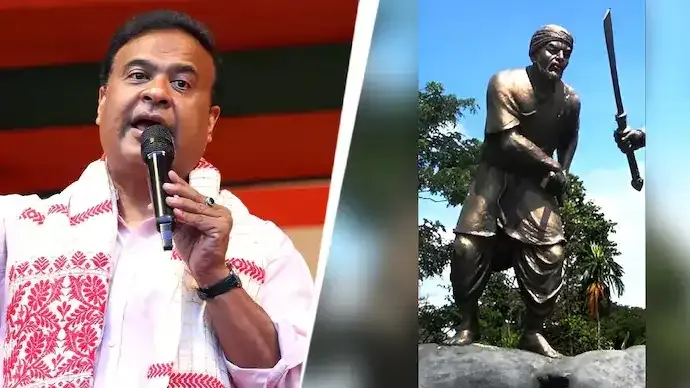
Assam Chief Minister Himanta Biswa Sarma on Friday announced that the state government will rewrite history textbooks for high school students, triggering a fresh debate over the interpretation of Assam’s past and the portrayal of historical figures. The move follows his recent remarks questioning whether Ahom warrior Bagh Hazarika fought alongside legendary general Lachit Barphukan during the Battle of Saraighat.
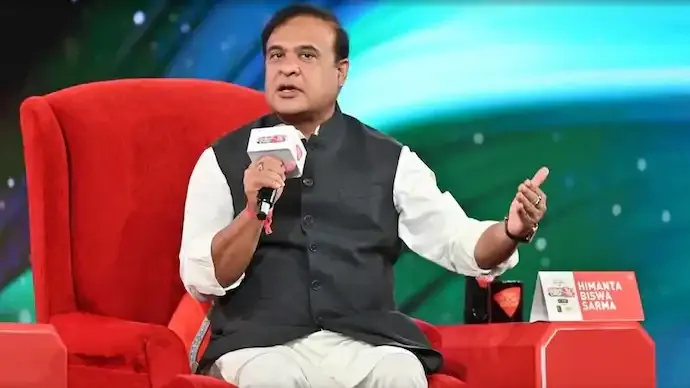
Addressing a public gathering in the presence of Union Home Minister Amit Shah, Sarma said he has instructed the state Education Department to revise history curricula taught at the high school level. He added that he has communicated this decision to Assam Education Minister Ranoj Pegu.
“We have decided to rewrite history textbooks for high schools,” Sarma said, without elaborating on the full scope of the changes. However, he specifically raised doubts over the long-accepted narrative that Bagh Hazarika participated in the 1671 Battle of Saraighat alongside Lachit Barphukan against the Mughal forces.
According to Sarma, there was no warrior named Bagh Hazarika who fought with Lachit Barphukan in the historic battle. Instead, he claimed that it was Miri Handique, a leader from the Mising community, who played a role in resisting the Mughals in the Kamrup region. The chief minister made these remarks while speaking at the closing ceremony of the 10th Mising Youth Festival organised by Takam Mising Porin Kebang at Kareng Chapori.
Historically, Ismail Siddique, popularly known as Bagh Hazarika, has been described in several accounts as a 17th-century warrior who fought under Lachit Barphukan during the decisive Battle of Saraighat, which halted Mughal expansion into Assam. He is believed to have hailed from an Assamese Muslim family in present-day Sivasagar district. Sarma’s remarks challenge this widely taught version of events and are likely to spark academic and political scrutiny.
The announcement comes amid heightened political tension following Sarma’s recent comments differentiating between Muslim communities in Assam. The ruling Bharatiya Janata Party leadership in the state has repeatedly drawn distinctions between indigenous Assamese Muslims and Bengali-speaking Muslims, often referred to as ‘Miya’. The term, historically used as a slur, has been reclaimed by some activists as an assertion of identity.
Sarma has previously made controversial statements targeting the ‘Miya’ community while praising indigenous groups for preserving Assamese culture and land. During the same event, he credited the Mising community with protecting Upper Assam from land encroachment and illegal infiltration, suggesting that their presence had helped maintain regional stability.
In addition to the political statements, Sarma announced financial support for community initiatives, declaring a Rs 100 crore grant for the Mising Youth Festival and Rs 10 crore for the development of the Donyi-Polo society.
The decision to rewrite history textbooks is expected to generate debate among historians, educators and opposition parties, particularly over the role of political authority in shaping historical narratives. For now, the state government maintains that the revisions are aimed at correcting what it sees as inaccuracies in existing textbooks.



Conversation
Be kind and stay on topic. Comments are moderated; abuse, spam and personal attacks are removed. Report a problem