

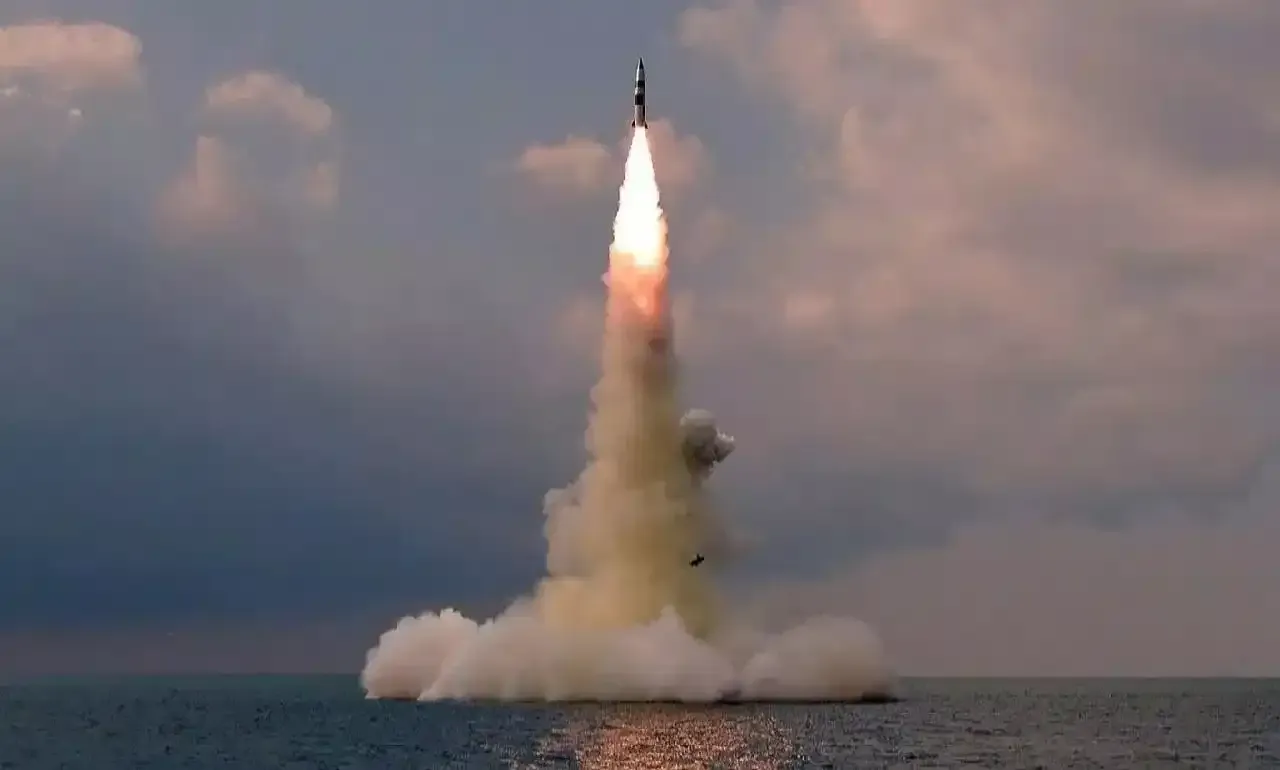

China has carried out a long-range ballistic missile test from a nuclear-powered submarine in the South Pacific, prompting diplomatic concern from Australia and New Zealand and renewing debate over military activity in one of the world's designated nuclear-free regions.
According to Chinese state media, the missile was launched during what Beijing described as a routine military exercise. Officials said the missile carried a dummy warhead, complied with international law and was not aimed at any country or specific target.
Despite those assurances, the launch has drawn attention across the Indo-Pacific due to its location and strategic implications.

Missile Fired During Routine Military Exercise
The launch reportedly took place at 12:01 pm local time from a Chinese nuclear-powered submarine operating in the South Pacific.
Chinese authorities described the test as part of their annual military training programme and maintained that it followed international norms governing such exercises.
State media also emphasised that the missile carried a non-live warhead, indicating the launch was intended as a training exercise rather than an operational deployment.
Australia and New Zealand Express Concern
The missile test prompted strong reactions from Australia and New Zealand, both of which voiced concern over the activity in the South Pacific.
Officials from the two countries highlighted the importance of maintaining regional stability and preserving the Pacific as a secure and peaceful region.
The launch has also intensified discussions surrounding military activities within the South Pacific Nuclear Free Zone, established under the Treaty of Rarotonga to discourage the deployment and testing of nuclear weapons in the region.
Why the South Pacific Matters
The South Pacific occupies a strategically important position in the Indo-Pacific, serving as a critical maritime corridor connecting Asia, Australia and the Americas.
In recent years, competition for influence in the region has intensified as major powers expand their diplomatic, economic and military presence.
China has steadily increased defence cooperation and infrastructure investments across several Pacific Island nations, developments that have attracted close attention from Australia, New Zealand, the United States and other regional partners.
China's Military Modernisation
The latest missile launch reflects China's continued efforts to modernise its strategic military capabilities.
Submarine-launched ballistic missiles form a key part of a country's nuclear deterrence strategy because submarines can remain hidden underwater for extended periods, making them difficult to detect.
Military analysts have increasingly monitored China's expansion of its submarine fleet and long-range missile capabilities as Beijing continues to strengthen its naval presence in the Indo-Pacific.
Previous Missile Tests
This is not the first time China has conducted a missile test over the Pacific.
Two years ago, Beijing launched an intercontinental ballistic missile carrying a dummy warhead during another exercise.
The latest test demonstrates China's willingness to continue long-range strategic exercises while expanding the operational readiness of its naval forces.
Regional Security in Focus
The missile launch comes at a time of heightened geopolitical competition across the Indo-Pacific.
Growing military activity by major powers has led to increased defence cooperation among regional allies, including Australia, New Zealand, Japan and the United States.
Analysts believe such developments are likely to remain a central issue in future regional security discussions.
Featured Snippet
China launched a long-range ballistic missile from a nuclear-powered submarine in the South Pacific during a routine military exercise. The test, which used a dummy warhead, prompted concern from Australia and New Zealand over regional security and activity within the Pacific's nuclear-free zone.
Key Highlights
- China conducted a long-range ballistic missile test from a nuclear-powered submarine.
- The missile carried a dummy warhead during a routine military exercise.
- Australia and New Zealand expressed concern over the launch.
- The test took place in the South Pacific Nuclear Free Zone.
- China said the exercise complied with international law and was not directed at any country.
- The launch highlights growing strategic competition across the Indo-Pacific.
Conclusion
China's latest submarine-launched missile test underscores the increasing strategic importance of the Indo-Pacific region. While Beijing maintains the exercise was routine and lawful, the launch has reignited concerns among neighbouring countries about military activity in the South Pacific. As geopolitical competition continues to intensify, such developments are expected to remain closely watched by governments and defence analysts worldwide.
FAQs
1. What did China test?
China launched a long-range ballistic missile from a nuclear-powered submarine during a military exercise.
2. Did the missile carry a nuclear warhead?
No. Chinese authorities said the missile carried a dummy (non-live) warhead.
3. Why did Australia and New Zealand object?
Both countries expressed concern about military activity within the South Pacific and its implications for regional security.
4. What is the South Pacific Nuclear Free Zone?
It is a region established under the Treaty of Rarotonga to prevent the stationing and testing of nuclear weapons across much of the South Pacific.
5. Was the launch aimed at another country?
China stated that the exercise was routine, complied with international law and was not directed against any nation.
6. Why is the missile test significant?
It highlights China's expanding strategic capabilities and comes amid growing geopolitical competition in the Indo-Pacific region.








Conversation
Be kind and stay on topic. Comments are moderated; abuse, spam and personal attacks are removed. Report a problem