

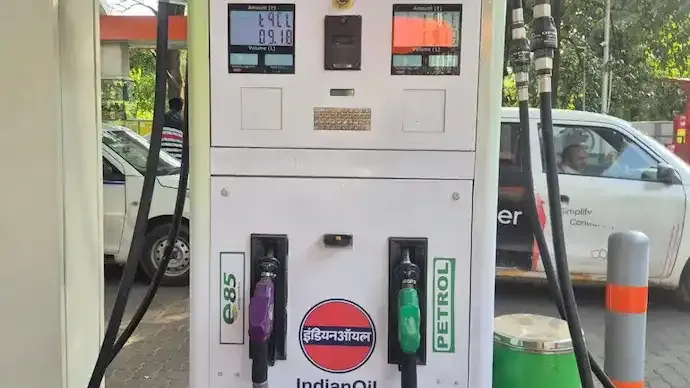

A 2021 NITI Aayog roadmap on ethanol blending has resurfaced amid the ongoing debate over E20 petrol, revealing that the Society of Indian Automobile Manufacturers (SIAM) had recommended that E10 petrol should continue to remain available even after the nationwide rollout of E20 fuel.
According to the roadmap, SIAM supported India's ethanol-blending programme but argued that existing vehicles on Indian roads would continue to require E10 as a "protection grade" fuel during the transition to higher ethanol blends.
The recommendations have gained renewed attention after recent discussions over the impact of E20 petrol on vehicle performance and compatibility.

What the NITI Aayog Roadmap Says
The recommendations were part of stakeholder consultations conducted for the Roadmap for Ethanol Blending in India: 2020–25, published by NITI Aayog in 2021.
Inputs reproduced in Annexure D of the report show that SIAM requested policymakers to ensure the continued availability of E10 petrol after introducing E20.
The automobile industry body argued that a phased transition would better support millions of vehicles already operating on Indian roads.
Why SIAM Wanted E10 to Continue
According to the roadmap, SIAM highlighted several concerns that could arise if E10 petrol were completely withdrawn during the transition period.
The organisation pointed to possible issues related to:
- Vehicle compatibility.
- Fuel efficiency.
- Drivability.
- Material compatibility.
- Long-term performance of older vehicles.
SIAM suggested that retaining E10 would help protect vehicles that were not originally designed for higher ethanol blends.
Government's Position on E20 Petrol
The renewed discussion follows recent clarification from the government regarding E20 fuel.
Authorities have stated that E20 petrol has undergone scientific validation and is being closely monitored.
The government has also maintained that there is no evidence of widespread engine failures or large-scale vehicle breakdowns directly linked to ethanol blending.
Officials continue to support the ethanol blending programme as part of India's broader clean energy and energy security goals.
What is E20 Petrol?
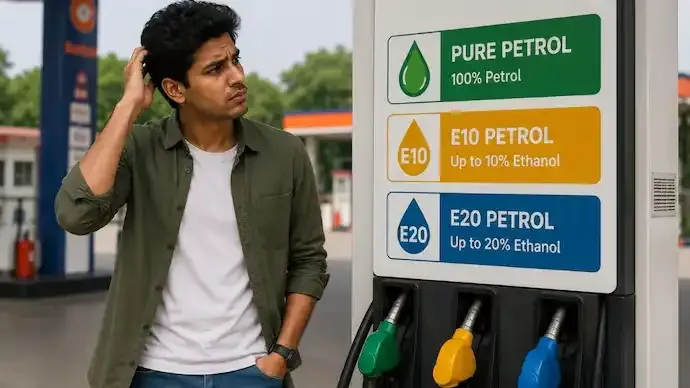
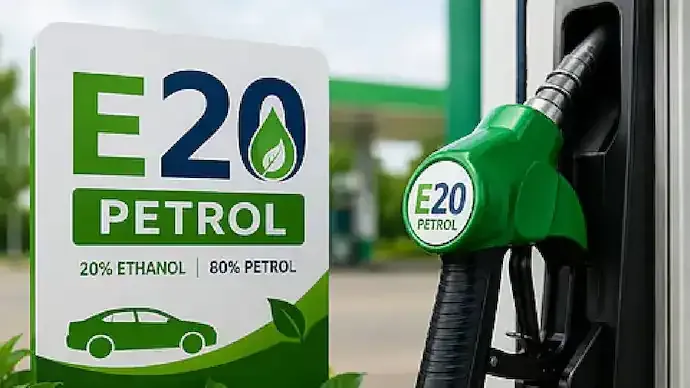
E20 is petrol blended with 20% ethanol and 80% petrol.
The programme aims to:
- Reduce dependence on imported crude oil.
- Lower carbon emissions.
- Support domestic ethanol production.
- Improve energy security.
- Promote cleaner transportation fuels.
India has been gradually increasing ethanol blending levels as part of its long-term biofuel strategy.
Difference Between E10 and E20
| Feature | E10 | E20 |
|---|---|---|
| Ethanol Content | 10% | 20% |
| Petrol Content | 90% | 80% |
| Intended Use | Older and newer compatible vehicles | Vehicles designed or approved for E20 compatibility |
| Objective | Lower ethanol blend | Higher renewable fuel usage |
Why the Debate Has Returned
The issue has resurfaced following public discussions over whether higher ethanol blends could affect vehicle mileage or engine performance in older vehicles.
The reappearance of the 2021 roadmap has highlighted that automobile manufacturers had earlier suggested maintaining both fuel options during the transition period.
At the same time, the government has reiterated its confidence in the scientific testing and phased implementation of E20 fuel.
Industry and Consumer Impact
For vehicle owners, the discussion highlights the importance of checking manufacturer recommendations regarding fuel compatibility.
Automobile manufacturers have gradually introduced E20-compatible engines in newer models, while older vehicles may have been originally designed for lower ethanol blends.
The ethanol programme continues to evolve alongside improvements in vehicle technology and fuel infrastructure.
Featured Snippet
A 2021 NITI Aayog roadmap reveals that SIAM recommended retaining E10 petrol alongside E20 during India's ethanol fuel transition, arguing that existing vehicles would benefit from continued access to lower ethanol-blended fuel while the government expanded E20 availability.
Key Highlights
- A 2021 NITI Aayog roadmap has resurfaced amid the E20 debate.
- SIAM recommended continuing E10 petrol alongside E20.
- The automobile body cited compatibility and fuel-efficiency concerns.
- The recommendations formed part of stakeholder consultations.
- The government maintains E20 has been scientifically validated.
- India continues expanding its ethanol blending programme.
What It Means for Vehicle Owners
Older Vehicles
Owners should follow manufacturer fuel recommendations regarding ethanol compatibility.
New Vehicles
Many newer models are designed or certified for E20 compatibility.
Fuel Availability
The long-term availability of various fuel grades will depend on government policy and implementation.
Conclusion
The resurfacing of the 2021 NITI Aayog roadmap has added fresh context to the ongoing discussion around E20 petrol. While SIAM had recommended retaining E10 fuel to support existing vehicles during the transition, the government continues to maintain that E20 has been scientifically tested and implemented through a phased approach. As India's ethanol blending programme expands, balancing environmental goals with vehicle compatibility remains an important aspect of the transition.
FAQs
1. What is E20 petrol?
E20 is fuel containing 20% ethanol and 80% petrol.
2. What did SIAM recommend?
SIAM recommended retaining E10 petrol alongside E20 during the transition period.
3. Why did SIAM want E10 to continue?
The organisation cited compatibility, drivability and fuel-efficiency concerns for existing vehicles.
4. Does the government say E20 damages engines?
No. The government has stated that E20 has been scientifically validated and that there is no evidence of widespread engine damage caused by ethanol blending.
5. Where were SIAM's recommendations recorded?
They were included in stakeholder consultations reproduced in Annexure D of the 2021 NITI Aayog roadmap.
6. Why is the report being discussed again?
It has resurfaced amid renewed public debate over E20 petrol and vehicle compatibility.




Conversation
Be kind and stay on topic. Comments are moderated; abuse, spam and personal attacks are removed. Report a problem