

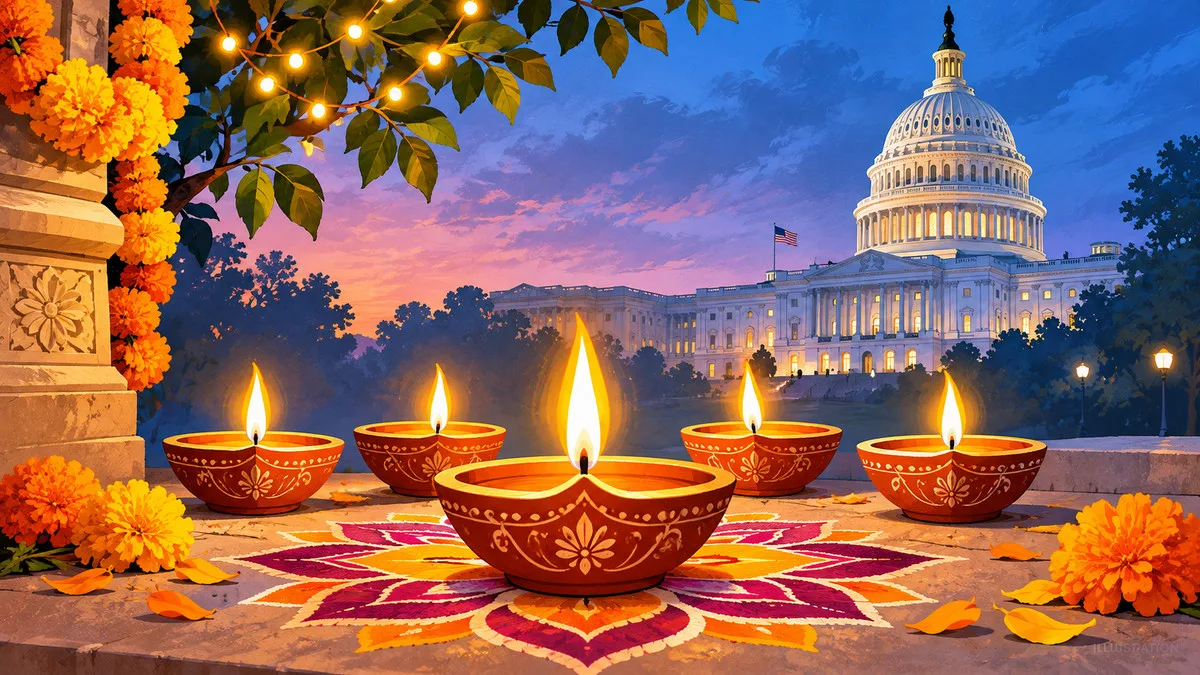

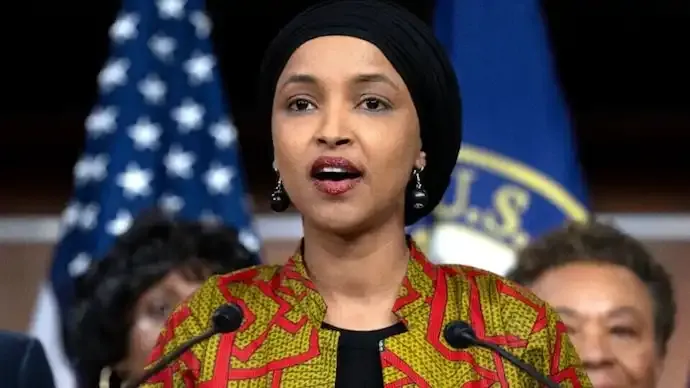
WASHINGTON, November 10, 2026: A fresh effort to make Diwali a federal holiday in the United States has reached Congress, with Democratic Representative Grace Meng reintroducing legislation backed by 19 lawmakers.
The proposal, known as the Diwali Day Act, would place the Festival of Lights alongside other holidays recognised by the US federal government. If passed, it would make Diwali the country's 12th federal holiday.
Meng announced the legislation on Monday, November 9, a day after Diwali celebrations took place across the United States and other parts of the world.

For millions of Americans who celebrate the festival, the proposal represents another attempt to secure recognition at the national level. But the legislation must still clear Congress before it can become law.
What Is the Diwali Day Act?
The Diwali Day Act proposes adding Diwali to the list of legal public holidays under Section 6103(a) of Title 5 of the United States Code.
Federal holidays are recognised by the US government and generally provide paid time off to eligible federal employees.
If enacted, the legislation would allow Diwali to receive the same federal status as holidays such as Christmas, Thanksgiving and Juneteenth.
The change would not automatically require every private company, school or business across the country to close. Those arrangements are governed by separate employment policies and state or local rules.
Diwali, also called Deepavali, is celebrated by Hindus, Sikhs, Jains and some Buddhist communities, although its religious and cultural significance differs among traditions.
Five Indian-Origin Lawmakers Among 19 Co-Sponsors
Meng, who represents a district in Queens, New York, chairs the Congressional Asian Pacific American Caucus.
Her latest proposal has attracted 19 co-sponsors in the House of Representatives.
Among them are five lawmakers of Indian origin: Ami Bera, Raja Krishnamoorthi, Suhas Subramanyam, Shri Thanedar and Ro Khanna.
Other supporters include Judy Chu, Josh Gottheimer, Rashida Tlaib, Suzan DelBene, Tom Suozzi and Bonnie Watson Coleman.
The number of co-sponsors reflects support for bringing the proposal forward. It does not, by itself, indicate that the bill has enough votes to pass the House or Senate.
Why Grace Meng Wants Diwali Recognised Nationally
Meng has presented the legislation as a way of acknowledging the religious and cultural traditions of communities that celebrate Diwali.
In her November 9 statement, she said the festival represents the triumph of good over evil and knowledge over ignorance.
She also argued that federal recognition would carry particular significance at a time when Hindu and South Asian communities have reported incidents of hostility and intimidation.
The Congressional Asian Pacific American Caucus cited vandalism at Hindu places of worship and the disruption of a Diwali celebration in Washington state among the concerns behind the renewed proposal.
Meng said recognising the festival would help other Americans understand its importance while acknowledging the contributions of communities that observe it.
The proposal has also received endorsements from several community, civil rights and religious organisations.
Diwali Holiday Bill Was First Introduced by Meng in 2023
This is not Meng's first attempt to secure federal holiday status for Diwali.
On May 15, 2023, she introduced the Diwali Day Act in the House of Representatives as H.R. 3336 during the 118th Congress.
That bill was referred to the House Committee on Oversight and Accountability but did not advance to a vote in the full House.
An earlier proposal seeking federal recognition for Diwali had also been introduced by former Representative Carolyn Maloney in 2021.
The latest legislation renews an effort that has been pursued by lawmakers over several congressional sessions.
Is Diwali Already a Holiday Anywhere in the United States?
Although Diwali is not currently a federal holiday, some American jurisdictions have already given the festival official recognition.
New York City, for example, has made Diwali a holiday in its public school system.
Under New York state education law, public schools in the city's school district are required to observe Diwali as a holiday.
The arrangement illustrates the difference between local recognition and a federal holiday.
Schools and local authorities can make their own arrangements within applicable laws, while a federal holiday requires legislation at the national level.
What Happens Next to the Diwali Day Act?
For the Diwali Day Act to become federal law, it must pass both chambers of the US Congress and receive presidential approval, unless Congress overrides a presidential veto.
The bill may first be considered by a congressional committee before lawmakers decide whether to advance it.
There is no confirmed date for a final vote.
For now, Diwali remains outside the official list of US federal holidays. The renewed proposal, however, has brought the question of national recognition back before American lawmakers.





Conversation
Be kind and stay on topic. Comments are moderated; abuse, spam and personal attacks are removed. Report a problem