



India may be increasing purchases of Russian crude oil as tensions in the Middle East disrupt global energy supply chains. Ship tracking data suggests that several oil tankers originally headed toward East Asia have redirected their routes to Indian ports, indicating a potential shift in global oil flows.
The development comes amid the ongoing conflict involving Iran, which has created uncertainty around oil shipments through key maritime routes in the region.
Tankers Carrying Russian Oil Head Toward India
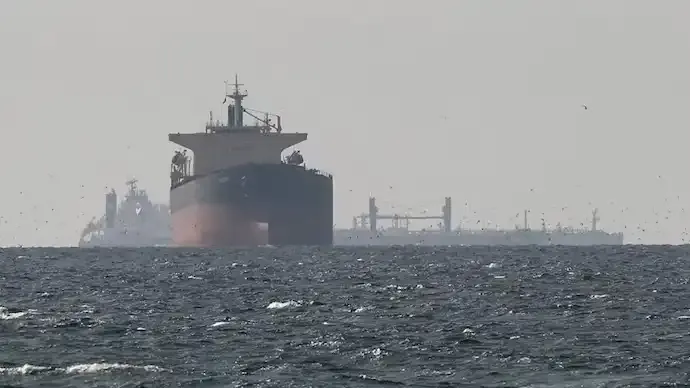
According to maritime tracking data from energy intelligence platforms, two oil tankers carrying Urals crude, a major Russian oil grade, have recently changed their destination to India.

Together, the vessels are transporting around 1.4 million barrels of crude oil.
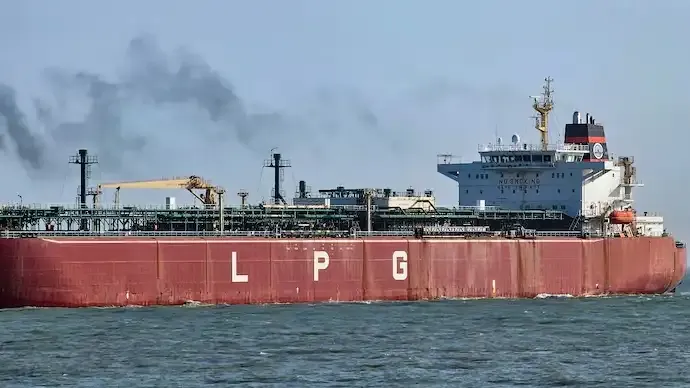
One of the tankers, Odune, is a Suezmax vessel carrying approximately 730,000 barrels of Urals crude. Ship tracking data indicates that the tanker has reached Paradip port on India’s eastern coast, although it remains unclear whether the cargo has already been unloaded.
Another tanker, Matari, an Aframax vessel carrying more than 700,000 barrels of the same crude grade, is expected to arrive at Vadinar port in western India.
Both vessels had earlier indicated that their final destination would be East Asia, but their route changed while they were already at sea.
Middle East Conflict Alters Global Oil Routes
The shift in tanker routes appears to be linked to rising geopolitical tensions in the Middle East.
The conflict involving Iran has affected shipping through the Strait of Hormuz, one of the world’s most critical energy transport corridors. A large share of global oil shipments moves through this narrow waterway located between Iran and Oman.
Any disruption in the Strait of Hormuz can significantly affect global oil supply and increase price volatility.
Because India depends heavily on imported crude oil, supply disruptions in the Middle East often force refiners to seek alternative sources.
Russian Crude Becomes Attractive Again
Russian Urals crude had become popular with Indian refiners after Western sanctions were imposed on Russia following the Ukraine war.
At that time, Russia offered its oil at discounted prices, allowing Indian refiners to reduce import costs while maintaining supply stability.
However, Indian purchases of Russian oil slowed earlier this year as refiners became cautious due to geopolitical pressure and ongoing trade discussions with Western countries.
Renewed Interest From Indian Refiners
The current tensions in the Middle East appear to be changing the situation once again.
With fears of supply disruptions increasing, Indian refiners are reportedly reconsidering Russian crude to ensure stable supply.
Energy analysts say this adjustment highlights how global oil markets quickly adapt when major supply routes face uncertainty.
More Russian Tankers Could Follow
Ship tracking data suggests that additional oil cargoes may also be redirected to India.
Another tanker named Indri, also a Suezmax vessel carrying around 730,000 barrels of Urals crude, had earlier signalled Singapore as its destination.
However, the vessel has recently changed course and is now moving toward India after making a sharp northward turn in the Arabian Sea.
If supply concerns in the Middle East continue, more Russian oil shipments could be redirected toward India in the coming weeks.
Sanctioned Tankers Highlight Complex Oil Trade
Interestingly, all three vessels involved in these shipments — Odune, Matari and Indri — were previously sanctioned by the European Union and the United Kingdom.
Despite sanctions, global oil flows often adjust through complex logistics networks, especially when market demand and supply disruptions increase.
Energy experts say the redirection of these shipments demonstrates how quickly global oil trade patterns can shift during geopolitical crises.
As tensions in the Middle East continue to affect key supply routes, India’s energy strategy may increasingly rely on diversified oil sources to maintain stable supplies.




Conversation
Be kind and stay on topic. Comments are moderated; abuse, spam and personal attacks are removed. Report a problem