

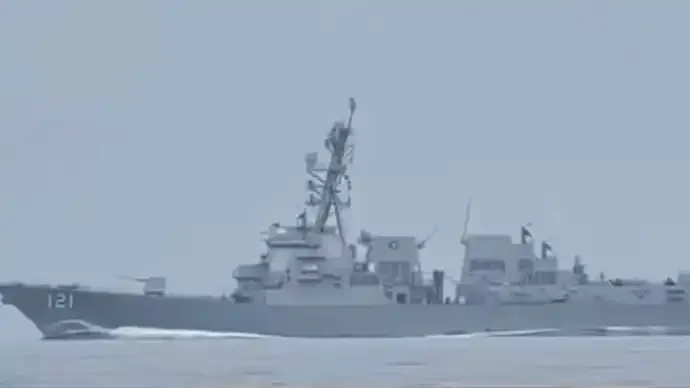

A new flashpoint has emerged in the Strait of Hormuz as Iran released footage claiming a direct naval confrontation with the United States.
The video, broadcast by Iranian state media, allegedly shows a tense exchange between Iranian naval forces and a US warship, raising fresh concerns over maritime security in the region.
IRGC Claims US Warships Retreated
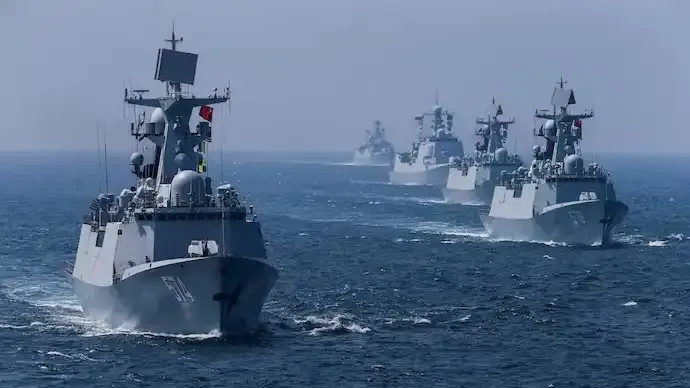
According to Iran, the Islamic Revolutionary Guard Corps Navy issued a firm warning to US vessels operating in the area. Iranian officials claim that their forces forced American warships to retreat following repeated radio warnings.

The footage reportedly includes audio of communications where Iranian forces instructed the US ship to alter its course.
US Denies Any Disruption
In contrast, the United States has denied Iran’s claims, stating that its naval operations continued as planned without any interference. US officials emphasized that their warships successfully completed their mission in the region.
This difference in narratives highlights the ongoing information battle between the two nations.
Footage Shows High-Tension Radio Exchange
The visuals aired by Iranian broadcaster IRIB depict what appears to be a real-time radio exchange between naval forces. The audio suggests repeated warnings being issued over open communication channels.
While the authenticity and full context of the footage remain under scrutiny, the incident underscores the fragile situation in the region.
Strategic Importance of the Strait of Hormuz
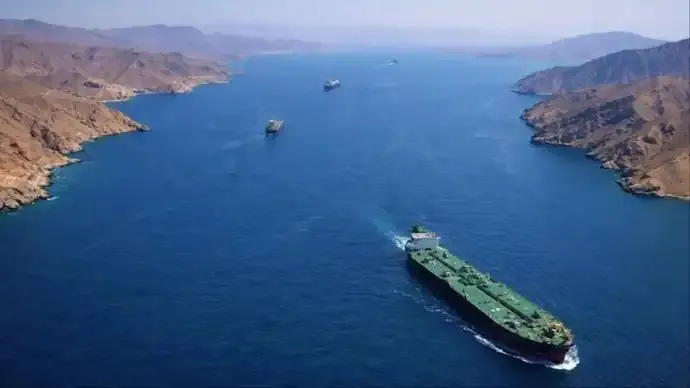
The Strait of Hormuz is one of the world’s most critical maritime chokepoints, with a significant portion of global oil shipments passing through it. Any disruption in this area can have far-reaching consequences for global energy markets.
As tensions rise, the security of this route has become a major concern for international stakeholders.
Rising Military Presence in the Region
The incident comes amid increasing military activity in the Gulf region, following failed diplomatic talks and growing geopolitical tensions. Both Iran and the United States have been strengthening their presence in key strategic areas.
Such developments increase the risk of miscalculation or unintended escalation.
Conflicting Narratives Add to Uncertainty
With both sides presenting different versions of the same event, the truth remains difficult to verify independently. This has added to the uncertainty surrounding the situation.
Analysts note that such incidents often become part of broader strategic messaging.
Global Concerns Over Escalation
The standoff has drawn global attention, with concerns that continued confrontations could lead to a larger conflict. Nations dependent on stable oil supplies are closely monitoring developments in the region.
A Sensitive Moment in Global Security
The Hormuz incident highlights the delicate balance of power in one of the world’s most important maritime corridors. As tensions persist, the need for diplomatic solutions becomes increasingly critical.




Conversation
Be kind and stay on topic. Comments are moderated; abuse, spam and personal attacks are removed. Report a problem