
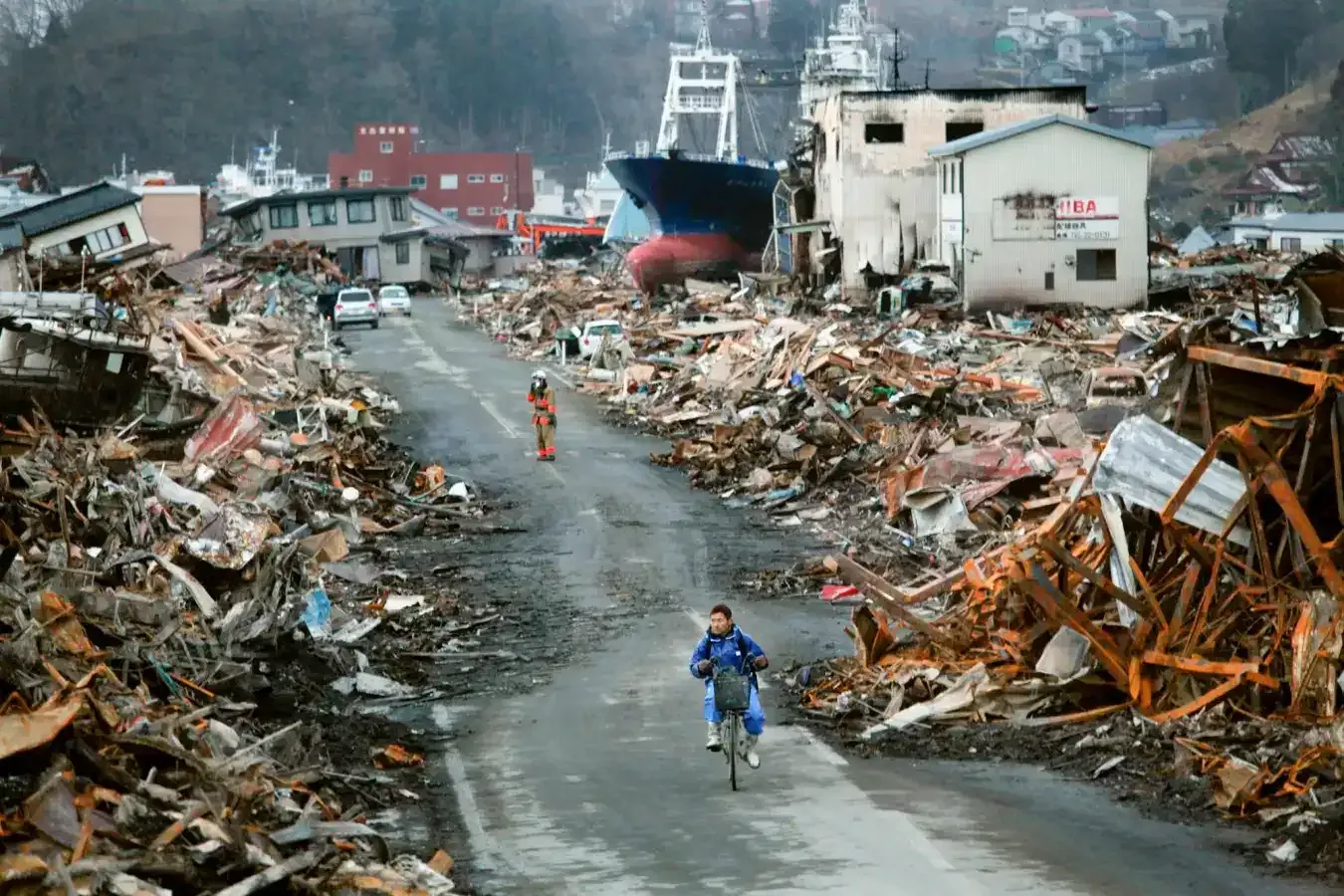
A powerful earthquake struck off the eastern coast of Iwate Prefecture in northern Japan during Thursday's morning rush hour, shaking large parts of the country's northeast and sending mild tremors as far as Tokyo. Authorities, however, confirmed that there was no tsunami threat and no immediate reports of major damage or casualties.
The Japan Meteorological Agency (JMA) upgraded the earthquake's magnitude to 7.2, while the United States Geological Survey (USGS) estimated it at 6.9. Despite the strong tremor, emergency agencies said the situation remained under control and urged residents to stay alert for possible aftershocks.
Strong Earthquake Strikes Off Iwate Coast
The earthquake occurred off the eastern coast of Iwate Prefecture at a depth of approximately 50 kilometres beneath the seabed.
The tremor was widely felt across northeastern Japan and was also experienced, though less intensely, in Tokyo during the busy morning commute.
Authorities immediately activated monitoring systems to assess any potential impact.
No Tsunami Warning Issued
Despite the earthquake's strong magnitude, the Japan Meteorological Agency confirmed that no tsunami warning was necessary.
Officials stated that the seismic activity did not generate conditions likely to produce dangerous tsunami waves along Japan's coastline.
Residents in coastal areas were nevertheless advised to remain attentive to official updates as a precaution.
No Major Damage or Casualties Reported
Initial assessments indicated:
- No immediate fatalities.
- No major injuries reported.
- No significant structural damage.
- No disruption to critical infrastructure.
- No reports of coastal flooding.
Authorities continued to inspect transportation networks, public utilities and buildings following the quake.
Earthquake Felt in Tokyo
Although the epicentre was located off the Iwate coast, tremors were also felt in the Japanese capital.
Commuters in Tokyo experienced mild shaking during the morning rush hour, but public transportation and essential services continued to operate without major disruption.
Japan's extensive earthquake preparedness systems helped ensure a rapid response.
Aftershocks Remain Possible
The Japan Meteorological Agency warned that aftershocks may continue in the coming days.
Residents in affected areas have been advised to:
- Stay informed through official announcements.
- Avoid damaged structures if any are identified.
- Prepare emergency supplies.
- Follow evacuation instructions if required.
- Remain cautious during aftershocks.
Aftershocks are common following large seismic events and can sometimes cause additional damage.
Why Japan Experiences Frequent Earthquakes
Japan is among the world's most earthquake-prone countries because it lies on the Pacific Ring of Fire, a region where several major tectonic plates meet.
The country experiences thousands of earthquakes every year, ranging from minor tremors to powerful seismic events.
Japan's advanced monitoring systems and strict building regulations have significantly improved its ability to withstand major earthquakes.
Japan's Earthquake Preparedness
Over the years, Japan has developed one of the world's most sophisticated disaster management systems.
Key preparedness measures include:
- Nationwide earthquake early warning systems.
- Strict earthquake-resistant building standards.
- Regular disaster preparedness drills.
- Extensive seismic monitoring networks.
- Public awareness programmes.
- Emergency response infrastructure.
These measures have helped reduce the impact of major earthquakes on lives and property.
Difference Between Magnitude and Intensity
An earthquake's magnitude measures the amount of energy released at its source.
Its intensity, however, refers to how strongly the shaking is felt at a particular location.
As a result, people in areas closer to the epicentre generally experience stronger shaking than those farther away, even during the same earthquake.
Why No Tsunami Was Triggered
Not every undersea earthquake produces a tsunami.
A tsunami generally occurs when there is significant vertical movement of the seabed, displacing a large volume of water.
According to Japanese authorities, the conditions necessary for a tsunami were not present during this earthquake.
Conclusion
The powerful earthquake off Japan's Iwate coast caused widespread tremors across northeastern Japan and parts of Tokyo but did not trigger a tsunami or result in major reported damage. Authorities continue to monitor the situation and have advised residents to remain alert for possible aftershocks. The incident once again highlights Japan's strong earthquake preparedness systems and the importance of continuous seismic monitoring in one of the world's most active earthquake zones.
FAQ SECTION
Q1. How strong was the Japan earthquake?
The Japan Meteorological Agency measured the earthquake at magnitude 7.2, while the US Geological Survey estimated it at 6.9.
Q2. Where did the earthquake occur?
The earthquake struck off the eastern coast of Iwate Prefecture in northern Japan.
Q3. Was there a tsunami warning?
No. Japanese authorities confirmed that there was no tsunami threat following the earthquake.
Q4. Were there any casualties?
At the time of the initial reports, there were no immediate reports of deaths, injuries or major damage.
Q5. Why does Japan experience frequent earthquakes?
Japan is located on the Pacific Ring of Fire, where multiple tectonic plates interact, making it one of the world's most seismically active regions.
Q6. Should residents expect aftershocks?
Yes. Authorities have warned that aftershocks may occur and have advised residents to remain cautious.



Conversation
Be kind and stay on topic. Comments are moderated; abuse, spam and personal attacks are removed. Report a problem