

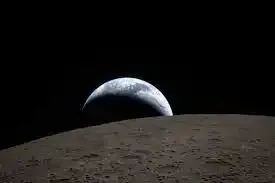

Astronauts aboard Artemis II have captured stunning images of the Moon’s far side during a recent flyby, offering a rare and detailed view of a region that remains hidden from Earth.
The images were taken as the Orion spacecraft traveled around the Moon on April 6, showcasing rugged terrain filled with craters and shadowed landscapes.
A Historic Moment for Lunar Exploration
The Artemis II mission, led by NASA, marks the first crewed journey to the Moon in more than 50 years. This mission is a crucial step in advancing human space exploration and preparing for future lunar landings.

The successful flyby demonstrates the capabilities of modern spacecraft and highlights the progress made since earlier lunar missions.
Stunning Visual Contrast Captured
The images reveal a dramatic contrast between the Moon’s shadowed far side and the sunlit horizon. This unique perspective provides both scientific value and visual impact.
Key highlights from the images include:
- Deep craters and uneven terrain
- Dark regions rarely visible from Earth
- Bright sunlight illuminating the lunar edge
These visuals help scientists better understand the Moon’s geological features.
Scientific Importance of the Flyby
The high-resolution images captured during the flyby are not just visually impressive but also scientifically valuable. They provide insights into the Moon’s surface composition and structure.
Such data will support future missions, including potential human landings and long-term lunar exploration plans.
Preparing for Future Moon Missions
Artemis II is part of NASA’s broader Artemis programme, which aims to return humans to the Moon and establish a sustainable presence.
The mission serves as a testing ground for systems, technologies, and crew readiness, ensuring that future missions can be conducted safely and efficiently.
A Step Toward Deep Space Exploration
Beyond the Moon, the Artemis programme is also seen as a stepping stone for deeper space missions, including potential journeys to Mars.
The success of Artemis II reinforces confidence in upcoming missions and strengthens global interest in space exploration.






Conversation
Be kind and stay on topic. Comments are moderated; abuse, spam and personal attacks are removed. Report a problem