

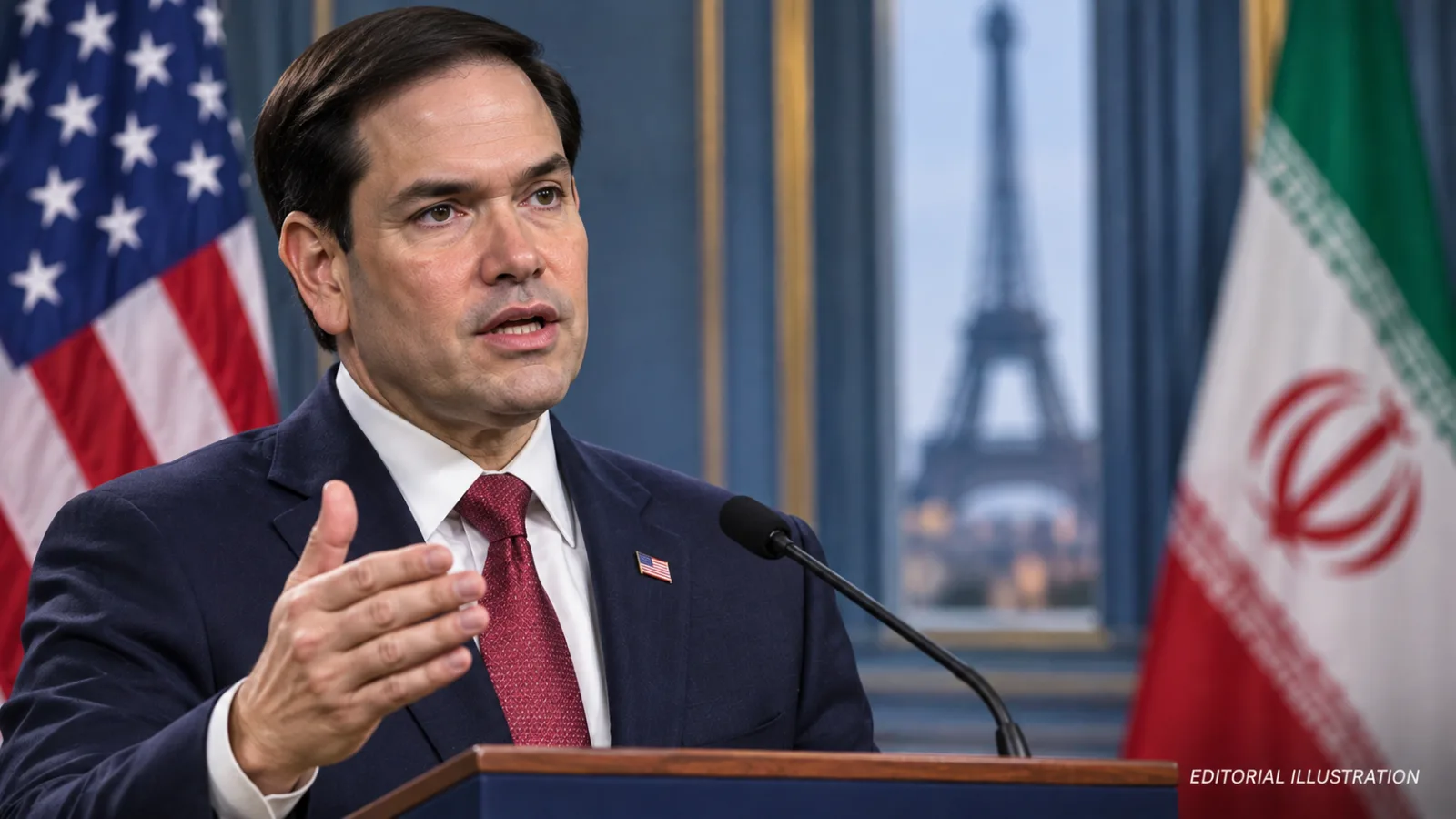

PARIS, November 11, 2026: US Secretary of State Marco Rubio has said Washington remains willing to negotiate a peace agreement with Iran, but warned that Tehran's current demands are preventing meaningful progress towards ending the conflict.
Speaking to journalists on Tuesday after a meeting of G7 foreign ministers in Paris, Rubio described Iran's proposed conditions as unrealistic and said the Trump administration would continue applying economic pressure instead of immediately resuming large-scale military operations.
The remarks came as regional governments intensified diplomatic efforts to prevent another escalation, with Qatar playing a central role in discussions between Washington and Tehran.

Iran has rejected the American approach, arguing that additional sanctions and economic restrictions will not bring an end to the war.
Marco Rubio Says US Is Still Open to Iran Peace Negotiations
Rubio told reporters that Washington was prepared to consider a negotiated settlement if Iran presented conditions the United States considered acceptable.
However, he expressed frustration over Tehran's current position, suggesting that the demands did not provide a workable basis for an agreement.
"The conditions they continue to place are absurd," Rubio said during the briefing.
The secretary of state indicated that the economic difficulties facing Iran could eventually influence its negotiating position.
He also acknowledged that countries including Qatar were continuing to exchange proposals and explore possible compromises.
Washington was not discouraging those diplomatic efforts, he said.
Despite the possibility of renewed discussions, Rubio made clear that the administration was unwilling to accept an agreement simply to bring the confrontation to an immediate conclusion.
US Plans to Increase Economic Pressure on Iran
A central part of Rubio's message was that the United States believes its existing economic restrictions are achieving important objectives without requiring another major military campaign.
According to the secretary of state, sanctions and the US naval blockade have severely affected Iran's ability to earn revenue from oil exports.
He argued that the financial consequences would become more significant as remaining shipments were exhausted and restrictions continued to affect trade.
Rubio told reporters that Washington expected the economic pressure to increase over the coming months.
He also told G7 officials that additional large-scale military operations were unnecessary under the present circumstances.
That assessment represents the US government's position. The full economic impact of the restrictions, including their effects on ordinary Iranian citizens, cannot be established solely from Washington's statements.
Why Has the US Rejected Iran's Peace Conditions?
One of the major disagreements concerns Iran's demand for compensation following US and Israeli military operations.
Tehran has sought reparations for damage caused during the conflict.
Rubio rejected that demand, arguing that Washington would not make financial payments to Iran as part of a settlement.
He maintained that the Iranian government should instead be held responsible for its role in regional instability.
The secretary of state also rejected the idea that Washington should accept conditions affecting other regional conflicts as part of a bilateral agreement with Tehran.
The disagreements demonstrate how far apart the two governments remain on the terms of a possible settlement.
While both sides have publicly expressed an interest in ending the conflict, they differ sharply over the sequence of concessions and the responsibilities each government should accept.
What Conditions Has Iran Proposed to End the War?
Iranian officials have outlined several requirements they want addressed before a final agreement with the United States.
According to statements reported by Reuters and other international news organisations, Tehran's proposals include:
- Ending military hostilities across the affected region
- Lifting US economic sanctions on Iran
- Ending the American naval blockade of Iranian ports
- Releasing Iranian assets frozen overseas
- Addressing compensation for damage caused during the conflict
- Establishing arrangements for reopening the Strait of Hormuz
Iran has indicated that shipping through the strategically important waterway could resume within two days if an acceptable agreement is reached.
However, the conditions remain disputed, and Washington has not accepted the proposed terms.
The Strait of Hormuz is one of the world's most important routes for oil and gas shipments. Restrictions on shipping through the waterway have consequences beyond the two countries, affecting international trade and energy markets.
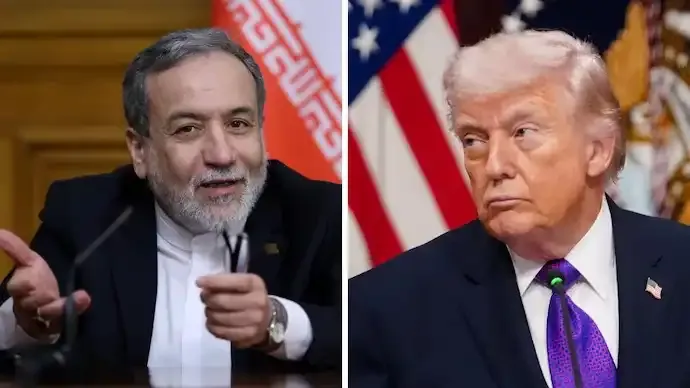
Iranian Foreign Minister Abbas Araghchi Responds to Rubio
Iranian Foreign Minister Abbas Araghchi has strongly criticised Rubio's comments, accusing the United States of relying on economic hardship to force political concessions.
In a social media statement on Wednesday, Araghchi compared Rubio's remarks with earlier comments made by former US Secretary of State Mike Pompeo.
He argued that Washington's approach reflected mistaken assumptions about how Iran would respond to outside pressure.
The Iranian foreign minister also criticised the humanitarian consequences of using economic restrictions as a means of influencing government decisions.
His response followed repeated statements from Tehran that military action and further sanctions would not produce a lasting settlement.
Iran maintains that diplomacy, recognition of its demands and an end to the conflict are necessary for progress.
The exchange highlights the continuing distrust between the two governments despite efforts to maintain indirect communication.
Donald Trump Sees Progress in Efforts to End Iran War
Rubio's comments followed President Donald Trump's meeting with Qatari Prime Minister Sheikh Mohammed bin Abdulrahman Al Thani.
Following the meeting, Trump indicated that diplomatic efforts were making progress towards a possible resolution.
He also suggested that renewed major strikes against Iran were unlikely in the immediate future.
However, the president has continued to emphasise that the United States retains military options if circumstances change.
Rubio delivered a similar message in Paris, maintaining that the administration was not ruling out future military action.
For the moment, Washington appears focused on combining economic restrictions with the possibility of negotiations.
The approach allows the administration to maintain pressure on Tehran while leaving space for further diplomatic discussions.
Qatar and European Leaders Push for Diplomatic Solution
Qatar has emerged as an important intermediary in the latest efforts to resolve the conflict.
Its prime minister travelled to Paris for discussions with European and regional officials after meeting Trump in Washington.
The consultations included representatives from several European governments and Saudi Arabia.
European leaders have urged the United States and Iran to avoid further military escalation and find an arrangement that would restore stability to regional shipping routes.
French Foreign Minister Jean-Noel Barrot warned that the possibility of renewed escalation had not been eliminated.
British Foreign Secretary Ed Miliband also called for stronger diplomatic efforts, expressing concern about the economic consequences of prolonged uncertainty.
For European governments, the continuing restrictions on shipping and energy flows have made a negotiated settlement an increasingly urgent priority.
What Happens Next in the US-Iran Peace Talks?
The immediate challenge is whether the United States and Iran can agree on a framework for negotiations.
Washington says it remains open to diplomacy but will not accept Tehran's current conditions.
Iran, meanwhile, continues to demand an end to sanctions, the naval blockade and other measures before it can accept a settlement.
Qatar and other regional governments are attempting to narrow those differences.
No final peace agreement has been announced, and the timing of any formal negotiations remains uncertain.
The dispute over reparations, sanctions and shipping through the Strait of Hormuz continues to complicate the process.
For now, the United States is maintaining its economic pressure campaign while Iran insists that a sustainable resolution must address its demands.
Whether the ongoing diplomatic contacts can turn those opposing positions into an agreement remains unresolved.



Conversation
Be kind and stay on topic. Comments are moderated; abuse, spam and personal attacks are removed. Report a problem