



Russia has announced that it will shut German cultural centres across the country after Berlin moved to close Russian facilities following an alleged attempted attack at Leipzig/Halle Airport.
The decision marks a fresh escalation in tensions between Russia and Germany, with Moscow and Berlin taking retaliatory action against each other’s cultural and diplomatic presence.
Russian Foreign Minister Sergey Lavrov said centres operated by Germany’s Goethe-Institut would be closed in Moscow, St Petersburg and Yekaterinburg. He said Russia could not ignore Germany’s decision to shut the Russian House cultural centre in Berlin and the Russian Consulate in Bonn.

According to Lavrov, Germany should have understood that closing Russian cultural facilities would have consequences for its own cultural presence inside Russia.
The dispute intensified after an August 4 incident at Leipzig/Halle Airport, where a drone carrying explosives was reportedly discovered near a Ukrainian aircraft and later defused. The airport is an important international freight hub that has been used to support Ukraine.
German authorities blamed Russia for the alleged attempted attack, while Moscow rejected the accusations.
Western governments have repeatedly accused Russia of carrying out sabotage and disruption operations across Europe as part of a wider effort to weaken support for Ukraine. Moscow has denied involvement in such activities.
The issue was also discussed during a meeting of European Union foreign ministers in Ireland, where officials considered possible responses, including additional sanctions, visa restrictions and the closure of Russian consulates.
EU foreign policy chief Kaja Kallas said the incident showed signs associated with state-sponsored terrorism and raised questions about how European governments should respond.
The European Union has already imposed multiple rounds of sanctions on Russia since the start of the war in Ukraine. These measures have targeted thousands of Russian officials, businesses, banks, energy companies and entities linked to the country's defence and drone industries.
European officials are also considering further travel bans and asset freezes against additional Russian individuals.
Germany has described itself as a frequent target of what it calls Russia’s hybrid campaign involving sabotage, cyber activity and other forms of disruption.
German Foreign Minister Johan Wadephul said Berlin had carefully prepared its response and that Moscow would have to face the consequences of its actions. He also called for Russia to engage in meaningful discussions and negotiations, particularly regarding the war in Ukraine.
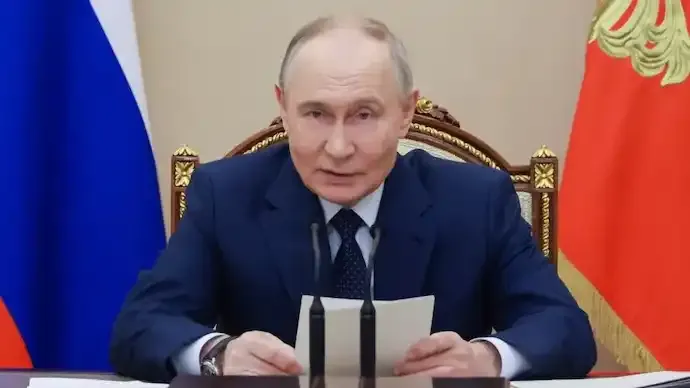
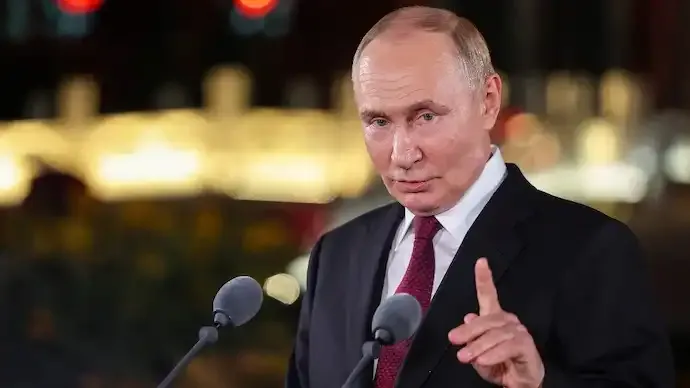
Russian President Vladimir Putin dismissed Germany’s allegations, claiming Berlin was attempting to shift attention away from domestic political and economic problems. He also questioned the evidence presented against Russia.
The latest confrontation highlights the rapidly deteriorating relationship between Moscow and Berlin. With Russia now preparing to close Goethe-Institut centres and Germany having already moved against Russian cultural and diplomatic facilities, the dispute has expanded beyond traditional diplomatic tensions.
As the European Union considers additional sanctions and restrictions following the Leipzig/Halle Airport incident, relations between Russia and Germany could face further escalation in the coming weeks.





Conversation
Be kind and stay on topic. Comments are moderated; abuse, spam and personal attacks are removed. Report a problem