

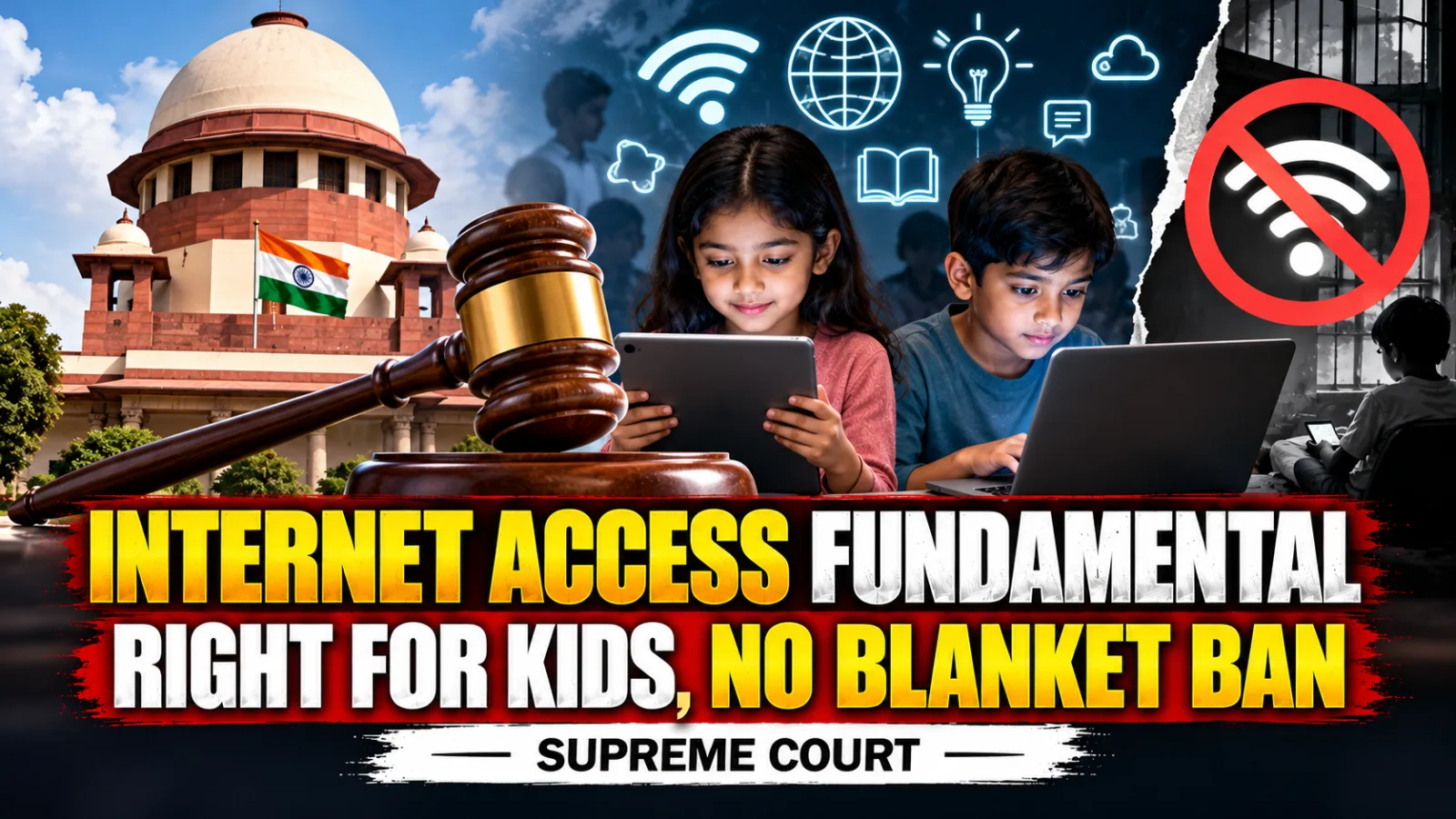

The Supreme Court internet rights debate has brought children's online access and digital safety into focus. According to the information provided, a bench of the Supreme Court of India declined to impose blanket age-based restrictions on internet access, observing that broad bans may not keep children offline and could expose them to other risks.
The court reportedly acknowledged growing concerns about children's safety on digital platforms while emphasising the need for stronger safeguards rather than a blanket prohibition. The approach focuses on making online spaces safer while allowing children to access the internet responsibly.
Parental Controls and Child Mode Features
The court reportedly stressed the importance of stronger parental controls and directed social media platforms to provide child mode controls.

Such measures can help parents manage children's online experiences, restrict access to unsuitable content and support age-appropriate use of digital services. Platform-level safeguards can also play a role in reducing children's exposure to harmful material.
The issue highlights the shared responsibility of families, technology companies and authorities in creating safer online environments for minors.
Action Against Child Sexual Abuse Material
The reported directions also address child sexual abuse material (CSAM), a serious concern across online platforms. The court issued directions to intermediaries and authorities to actively flag and remove such material from digital spaces.
Effective reporting systems, timely removal processes and cooperation between platforms and law enforcement agencies are important components of online child protection. The directions seek to strengthen the response to illegal and harmful content involving children.
Balancing Internet Access and Online Safety
The reported observations underline the challenge of protecting children without relying exclusively on age-based restrictions. While limiting access may appear straightforward, the court's reported approach places greater emphasis on parental supervision, platform safeguards and active action against abusive content.
The precise scope and implementation of the reported directions will depend on the formal court order and applicable rules. For official judicial updates, visit the Supreme Court of India.






Conversation
Be kind and stay on topic. Comments are moderated; abuse, spam and personal attacks are removed. Report a problem