
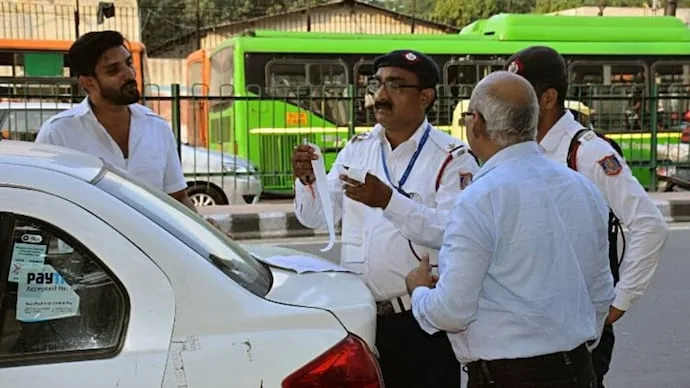
The Supreme Court traffic challan discussion has brought attention to the large amount of unpaid e-challans pending across India. During a hearing on September 28, the court observed that merely issuing electronic traffic fines was not enough and that authorities needed practical mechanisms to ensure recovery.
Justice J.B. Pardiwala suggested that authorities could explore linking unpaid traffic challans with other government dues, including electricity bills. The suggestion was made during the hearing as a possible way to improve recovery and was not issued as a direction for immediate implementation.
The court was informed that states and Union Territories have around ₹45,000 crore in pending e-challan dues, with approximately ₹25,000 crore recovered so far.
Electricity Bills Among Recovery Options Discussed
During the hearing, the court discussed whether unpaid traffic fines could be added to electricity dues so that defaulters would have another incentive to clear outstanding amounts.
However, the proposal remains only a suggestion at this stage. There is currently no Supreme Court direction requiring electricity distribution companies to add traffic challans to consumer bills.
The discussion was part of a broader examination of how authorities can improve recovery when fines remain unpaid for extended periods.
Other Measures Considered by the Court
The Supreme Court also discussed several vehicle-related restrictions that could potentially be used against persistent challan defaulters.
These included restricting the renewal of vehicle registration certificates, withholding duplicate registration certificates and blocking ownership transfers until outstanding challans are cleared.
The court also discussed whether vehicle fitness certificates could be withheld when fines remain unpaid. Other measures considered included blacklisting vehicles on the Parivahan portal and restricting renewal or issuance of driving licences connected with outstanding challans.
Authorities could also consider restrictions involving Pollution Under Control certificates, random vehicle checks and, where legally appropriate, vehicle seizure.
Why Is Challan Recovery a Concern?
The discussion highlights the difference between issuing traffic violations electronically and actually recovering the resulting penalties.
E-challans allow traffic enforcement agencies to record violations digitally, but unpaid fines can continue to accumulate if there are no effective mechanisms for collection.
The figures presented before the court indicate the scale of the issue, with tens of thousands of crores in outstanding e-challan dues.
What Does This Mean for Vehicle Owners?
For now, vehicle owners should not interpret the hearing as a new rule allowing traffic challans to be automatically added to electricity bills.
The electricity-bill proposal was one idea discussed by the court, while other recovery mechanisms were also considered. Any actual implementation would require the relevant authorities to establish the necessary legal and administrative framework.
The broader message from the hearing was that authorities need practical methods to recover unpaid traffic fines rather than relying only on the issuance of e-challans.
Related: Supreme Court of India



Conversation
Be kind and stay on topic. Comments are moderated; abuse, spam and personal attacks are removed. Report a problem