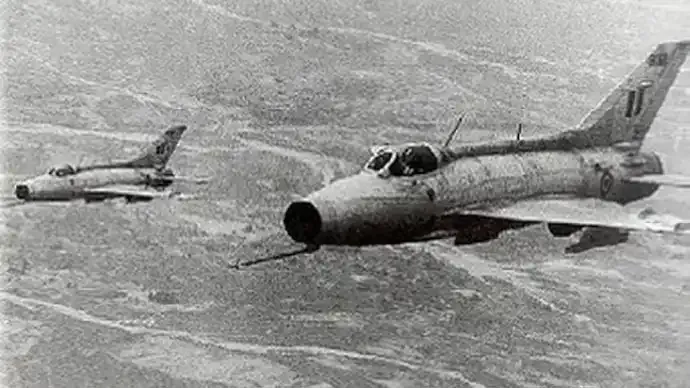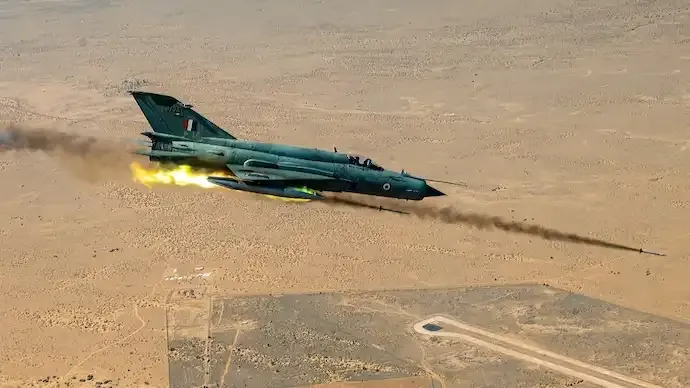
For over six decades, the MiG-21 defended India’s skies, trained generations of pilots, and even downed a Pakistani F-16 in 2019. Despite being labeled a “flying coffin,” the jet earned respect among the Indian Air Force (IAF), proving its deadly capabilities and unmatched reliability when used correctly.
MiG-21: The Workhorse of the Indian Air Force
Inducted in 1963, the MiG-21 was a Soviet-designed high-altitude interceptor, intended to shoot down bombers quickly and return. Over the years, it became the backbone of the IAF, seeing action in major conflicts:
-
1965 Indo-Pak War: Provided crucial air defence through combat patrols.
-
1971 War: Downed PAF F-104s and bombed Tezgaon airfield in Dhaka.
-
1999 Kargil War (Operation Safed Sagar): Flew alongside Mirage 2000s and MiG-29s, delivering ground strikes in harsh Himalayan terrain.
-
2019: Group Captain Abhinandan Varathman shot down a Pakistani F-16 in a MiG-21 Bison.
Why the ‘Flying Coffin’ Label Is Misleading
Air Marshal Harish Masand (Retd), a Vir Chakra awardee, clarified:
“The MiG-21 was unfairly maligned. The term ‘flying coffin’ was originally used for the F-104 Starfighter, which had a far higher accident rate. MiG-21 crashes were influenced by operational realities, not inherent flaws.”
Key factors behind accidents included:
-
Lack of advanced trainer aircraft for rookie pilots.
-
Dense, bird-populated flight zones over India.
-
Financial constraints delaying timely upgrades.
The MiG-21 as an Advanced Jet Trainer (AJT)
In the late 1970s, India faced a shortage of dedicated trainer aircraft. The MiG-21 Type 77 was repurposed as a stepping stone for new pilots, despite its:
-
High take-off and landing speeds
-
Tricky maneuverability
-
Low cockpit visibility
-
Limited endurance
This mismatch contributed to the high crash rate, especially before the induction of Hawk AJTs in 2008.
Maintenance Challenges and Spare Parts
Post-Soviet Union breakup, sourcing spares became complex. While some lower-quality components entered the market, pilots insist these did not significantly raise crash rates. Accident statistics show:
-
Over 480 crashes across six decades.
-
Only ~20 crashes after 2010, less than 5% of the total.
Air Marshal Masand emphasized that the MiG-21’s longevity and performance outweighed these issues.
MiG-21: A Bird of All Seasons
Air Marshal Subramaniam (Retd) called the MiG-21 “a bird of all seasons,” noting it was the longest-serving fighter in a modern air force. Pilots praised its handling:
-
Type 74: Smoothest to fly
-
Bison variant: Capable of supersonic speeds at low altitude, able to out-accelerate Mirage 2000s and F-16s
Despite controversies, the MiG-21:
-
Helped India win wars in 1965, 1971, and 1999
-
Served over 62 years
-
Claimed lives of 170 pilots and 40 civilians, yet remained indispensable
Legacy of India’s MiG-21
From a Soviet interceptor to India’s customized “bird of war,” the MiG-21 trained pilots, challenged modern aircraft, and proved its worth across decades. Its story reflects both the prowess of Indian pilots and the administrative decisions that shaped its controversial legacy.