

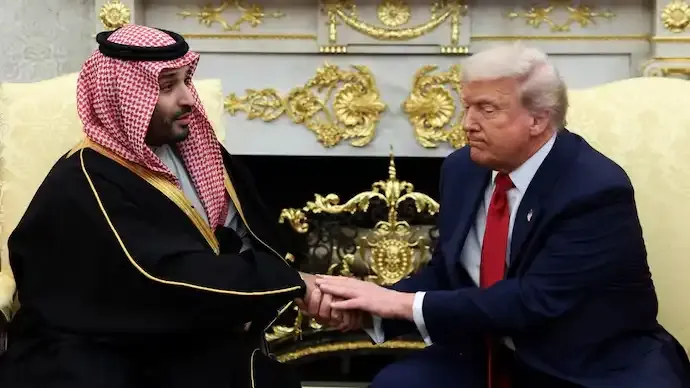

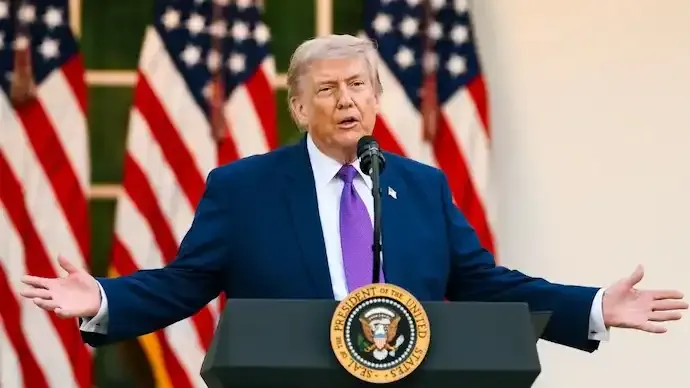
US President Donald Trump has reportedly approved a landmark civil nuclear cooperation agreement with Saudi Arabia that could allow the kingdom to enrich uranium on its own soil without several non-proliferation safeguards traditionally included in similar US agreements.
According to multiple media reports, the proposed agreement is expected to deepen energy cooperation between Washington and Riyadh while also raising questions about nuclear proliferation and regional security.
What the Agreement Includes
The proposed pact would create a framework for US companies to participate in the development of Saudi Arabia's civilian nuclear energy programme over the coming decades.

Reports suggest the agreement could remain in force for 30 years and involve investments worth tens of billions of dollars, making it one of the most significant nuclear cooperation arrangements between the two countries.
The Trump administration is expected to submit the agreement to the US Congress for review in accordance with American law.
Missing Traditional Nuclear Safeguards
According to reports, the proposed agreement does not include the so-called "Gold Standard" provisions that have featured in several previous US civil nuclear agreements.
These provisions typically require partner countries to refrain from:
- Enriching uranium domestically
- Reprocessing spent nuclear fuel
Both activities are closely monitored internationally because they can be used to produce material suitable for nuclear weapons.
The reported agreement also does not require Saudi Arabia to adopt the International Atomic Energy Agency (IAEA) Additional Protocol, an enhanced inspection framework that expands the UN nuclear watchdog's authority to monitor civilian nuclear programmes and inspect undeclared facilities.
Instead, reports indicate that oversight arrangements would be determined through bilateral understandings between the United States and Saudi Arabia.
Why Experts Are Concerned
Nuclear experts have expressed concern that allowing domestic uranium enrichment without internationally recognised safeguards could increase proliferation risks.
Although uranium enrichment is widely used for civilian nuclear power generation, the same technology can also be employed to produce highly enriched uranium suitable for nuclear weapons if not subject to strict monitoring and limitations.
Many countries operating civilian nuclear programmes import enriched uranium under international oversight rather than producing it domestically.
Saudi Arabia's Nuclear Position
Saudi Arabia has repeatedly stated that it seeks to develop nuclear energy for peaceful purposes as part of its long-term economic diversification strategy.
However, Crown Prince Mohammed bin Salman has previously said the kingdom would pursue nuclear weapons if regional rival Iran were to acquire one, a statement that has drawn international attention in discussions about nuclear security in the Middle East.
Congressional Review Expected
The proposed agreement is expected to undergo congressional scrutiny before it can move forward.
Lawmakers are likely to examine the balance between expanding strategic cooperation with Saudi Arabia and maintaining longstanding US commitments to global nuclear non-proliferation standards.
The reported agreement has already generated debate among policymakers and security analysts over whether additional safeguards should be incorporated before final approval.
Key Highlights
- Donald Trump has reportedly approved a civil nuclear agreement with Saudi Arabia.
- The deal would reportedly allow Saudi Arabia to enrich uranium domestically.
- Reports say the agreement omits traditional US non-proliferation safeguards.
- The proposed pact also reportedly does not require adoption of the IAEA Additional Protocol.
- Experts have raised concerns about potential nuclear proliferation risks.
- The agreement is expected to be reviewed by the US Congress.
Frequently Asked Questions (FAQs)
What is the US-Saudi nuclear agreement?
It is a proposed civil nuclear cooperation agreement that would allow US companies to help develop Saudi Arabia's civilian nuclear energy programme.
Why is the agreement controversial?
Reports suggest it does not include several traditional non-proliferation safeguards that have been part of previous US nuclear agreements.
What is the "Gold Standard" in nuclear agreements?
It refers to provisions that prohibit partner countries from enriching uranium or reprocessing spent nuclear fuel, reducing the risk of nuclear weapons development.
What is the IAEA Additional Protocol?
The Additional Protocol expands the International Atomic Energy Agency's inspection powers, allowing broader monitoring of civilian nuclear programmes.
Why are experts concerned?
They argue that domestic uranium enrichment without internationally recognised safeguards could increase the risk of nuclear proliferation.
What happens next?
The proposed agreement is expected to be submitted to the US Congress, where lawmakers will review its terms before it can move forward.




Conversation
Be kind and stay on topic. Comments are moderated; abuse, spam and personal attacks are removed. Report a problem