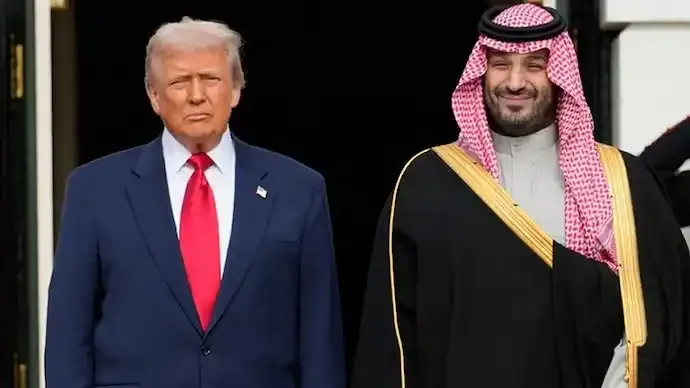
The United States and Saudi Arabia have signed a landmark civil nuclear cooperation agreement, approved by US President Donald Trump, that could reshape the strategic balance in the Middle East.
While the agreement is designed to support Saudi Arabia's civilian nuclear energy ambitions, it has triggered debate over regional security, nuclear proliferation and future geopolitical alliances. The deal has drawn concern in Israel, while also reviving discussions about Pakistan's long-standing strategic relationship with Saudi Arabia.
What Is the US-Saudi Nuclear Agreement?
The agreement allows the United States to cooperate with Saudi Arabia in developing the Kingdom's civilian nuclear energy programme under the framework of a 123 Agreement, which governs US nuclear cooperation with foreign nations.
According to reports, the pact could permit Saudi Arabia to enrich uranium domestically, enabling it to produce fuel for nuclear reactors.
However, uranium enrichment is considered sensitive because the same technology can, if taken to much higher enrichment levels, potentially produce material that could be used in nuclear weapons.
The agreement is still expected to undergo review by the US Congress before it can take full effect.
Why Has the Deal Sparked Debate?
The agreement has attracted international attention because reports suggest it does not include some of the stricter non-proliferation conditions that have featured in previous US nuclear agreements.
Among the reported concerns are:
- Saudi Arabia may retain the ability to enrich uranium domestically.
- The agreement reportedly does not require adoption of the International Atomic Energy Agency (IAEA) Additional Protocol, which provides broader inspection powers.
- Future monitoring arrangements are expected to be negotiated separately.
These provisions have prompted questions about how Saudi Arabia's civilian nuclear programme could evolve over the coming decades.
Why Is Israel Concerned?
Israel has long opposed the spread of uranium enrichment capabilities across the Middle East.
Although Saudi Arabia has publicly maintained that its nuclear programme is intended for civilian purposes, Israeli policymakers remain concerned that domestic enrichment could eventually provide the technological foundation for a future weapons programme if regional security conditions change.
The issue is particularly sensitive because Saudi Arabia and Israel still do not maintain formal diplomatic relations, despite years of US-led efforts aimed at normalisation.
Several Israeli political leaders have argued that civilian nuclear infrastructure can potentially become the basis for military programmes if adequate safeguards are not maintained.
Saudi Arabia's Position on Nuclear Weapons
Saudi Arabia has consistently stated that its current nuclear ambitions are focused on peaceful energy production.
However, Crown Prince Mohammed bin Salman has previously said that if Iran were to acquire nuclear weapons, Saudi Arabia would seek to do the same.
That statement continues to shape regional security discussions surrounding the Kingdom's nuclear programme.
Why Pakistan Is Being Discussed
The agreement has also revived speculation about Pakistan's strategic relationship with Saudi Arabia.
The two countries have maintained close defence and security ties for decades, and reports over the years have suggested extensive Saudi financial support for Pakistan's strategic programmes during earlier decades.
Although neither government has officially acknowledged claims of nuclear cooperation, analysts continue to debate whether Pakistan's technical expertise could become valuable should Saudi Arabia significantly expand its nuclear capabilities in the future.
Reports also note that Saudi Arabia and Pakistan signed a new defence agreement in 2025, further strengthening bilateral security cooperation.
Historical Context
Saudi Arabia has historically relied on strategic partnerships rather than pursuing an independent nuclear weapons programme.
The Kingdom also acquired Chinese DF-3 ballistic missiles during the 1980s, a move that drew international attention because the missiles were considered capable of carrying nuclear warheads, although Saudi Arabia later assured the international community they would not be equipped with weapons of mass destruction.
These historical developments continue to influence current debates surrounding the new agreement.
What Happens Next?
Before the agreement is implemented, it must pass through the US Congressional approval process.
Lawmakers are expected to examine:
- Non-proliferation safeguards.
- Uranium enrichment provisions.
- Inspection mechanisms.
- Regional security implications.
Even if the agreement is approved, any future attempt by Saudi Arabia to divert a civilian nuclear programme toward military purposes would likely attract intense international scrutiny, diplomatic pressure and potential sanctions.
Key Highlights
- The United States and Saudi Arabia have signed a landmark civil nuclear cooperation agreement.
- The deal could allow Saudi Arabia to enrich uranium domestically for civilian nuclear purposes.
- Reports suggest the agreement contains fewer traditional non-proliferation restrictions than some previous US nuclear agreements.
- Israel has raised concerns over the long-term regional security implications.
- Pakistan's longstanding strategic partnership with Saudi Arabia has renewed speculation about future cooperation, although no official nuclear collaboration has been announced.
- The agreement must still be reviewed by the US Congress before implementation.
Frequently Asked Questions (FAQs)
What is the US-Saudi nuclear deal?
It is a civil nuclear cooperation agreement that allows the United States to assist Saudi Arabia in developing its civilian nuclear energy programme under a 123 Agreement.
Why is uranium enrichment significant?
Uranium enrichment is necessary for producing fuel for civilian nuclear reactors, but highly enriched uranium can also potentially be used in nuclear weapons, making the technology strategically sensitive.
Why is Israel concerned?
Israeli officials worry that domestic uranium enrichment could eventually provide Saudi Arabia with capabilities that might be redirected toward a military nuclear programme in the future.
Why is Pakistan being mentioned?
Pakistan has maintained close strategic ties with Saudi Arabia for decades. Analysts have renewed discussions about possible future cooperation because of Pakistan's nuclear expertise, although no official plan or agreement has been announced.
Does the agreement mean Saudi Arabia will build nuclear weapons?
No. The agreement relates to civilian nuclear cooperation. Any move toward a military nuclear programme would involve additional political, technical and legal developments and would likely face significant international scrutiny.
What happens before the deal takes effect?
The agreement is expected to undergo review by the US Congress, where lawmakers will assess its safeguards, legal framework and regional security implications.