



Fresh scrutiny over the health and cognitive sharpness of US President Donald Trump has emerged following remarks he made during a recent interview, in which he appeared to momentarily struggle to recall the name of Alzheimer’s disease while discussing his family’s medical history. The episode has reignited debate around the President’s mental fitness, a topic that has drawn increasing attention in recent months.
During an unscripted conversation, Trump spoke about the health of his late father, real estate developer Fred Trump, noting that he enjoyed relatively good health until advanced age. However, while describing the illness his father developed later in life, the President paused mid-sentence and appeared unable to immediately recall the name of the neurological condition.
“At a certain age, about 86 or 87, he started getting—what do they call it?” Trump said, gesturing toward his forehead and briefly turning to White House Press Secretary Karoline Leavitt for help. After she supplied the term, Trump responded by acknowledging it and reiterating that he himself does not have the condition, adding that he is not concerned about developing it.

Trump also dismissed questions about hereditary risk, stating that he does not think about the issue and emphasising his belief in maintaining a positive outlook. He went on to assert that his own health remains “perfect,” a claim he has repeatedly made while responding to questions about his physical and cognitive condition.
Fred Trump was diagnosed with Alzheimer’s disease in the early 1990s and lived with the condition for several years before his death in 1999 at the age of 93. The President has previously referred to his father’s diagnosis while discussing genetics, longevity, and his own focus on cognitive testing.
Clips from the interview spread quickly across social media platforms, prompting sharply divided reactions. Critics argued that the moment raised legitimate concerns about cognitive decline, while supporters countered that brief pauses and word searches are common in spontaneous speech and should not be overinterpreted.
The incident comes at a time when the mental acuity of senior political leaders in the United States is under heightened public scrutiny. Trump, now the oldest individual to serve a second term as President, has consistently rejected any suggestion that he is unfit for office. He has repeatedly highlighted his performance on cognitive assessments, claiming to have scored perfectly on multiple tests.
The White House moved swiftly to downplay the significance of the moment. Communications Director Steven Cheung issued a statement asserting that the President remains in excellent physical and cognitive health. Officials also pointed to Trump’s demanding schedule, noting that he regularly works long hours and maintains an intense pace.
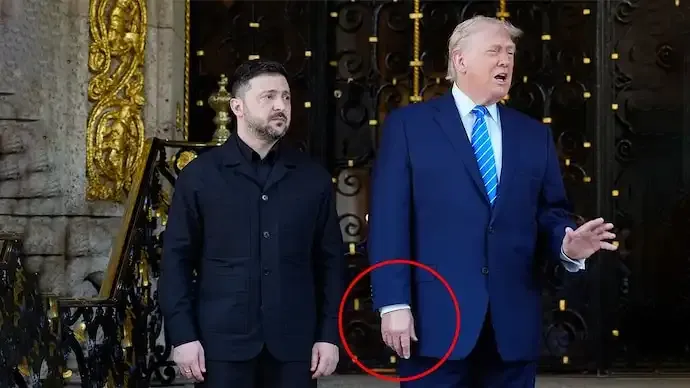
In recent months, public attention on Trump’s health has intensified following several widely circulated moments, including a stumble while boarding Air Force One, appearances where he seemed fatigued during lengthy meetings, visible bruising on his hands, swelling in his ankles, and a brief absence from public view. These incidents have fuelled online speculation and prompted the administration to issue repeated reassurances.
Despite the ongoing debate, Trump has continued to project confidence, stating that he feels as energetic as he did decades ago. The episode underscores how closely scrutinised the health of political leaders has become, particularly in an era of viral clips, heightened political polarisation, and constant public attention.





Conversation
Be kind and stay on topic. Comments are moderated; abuse, spam and personal attacks are removed. Report a problem