

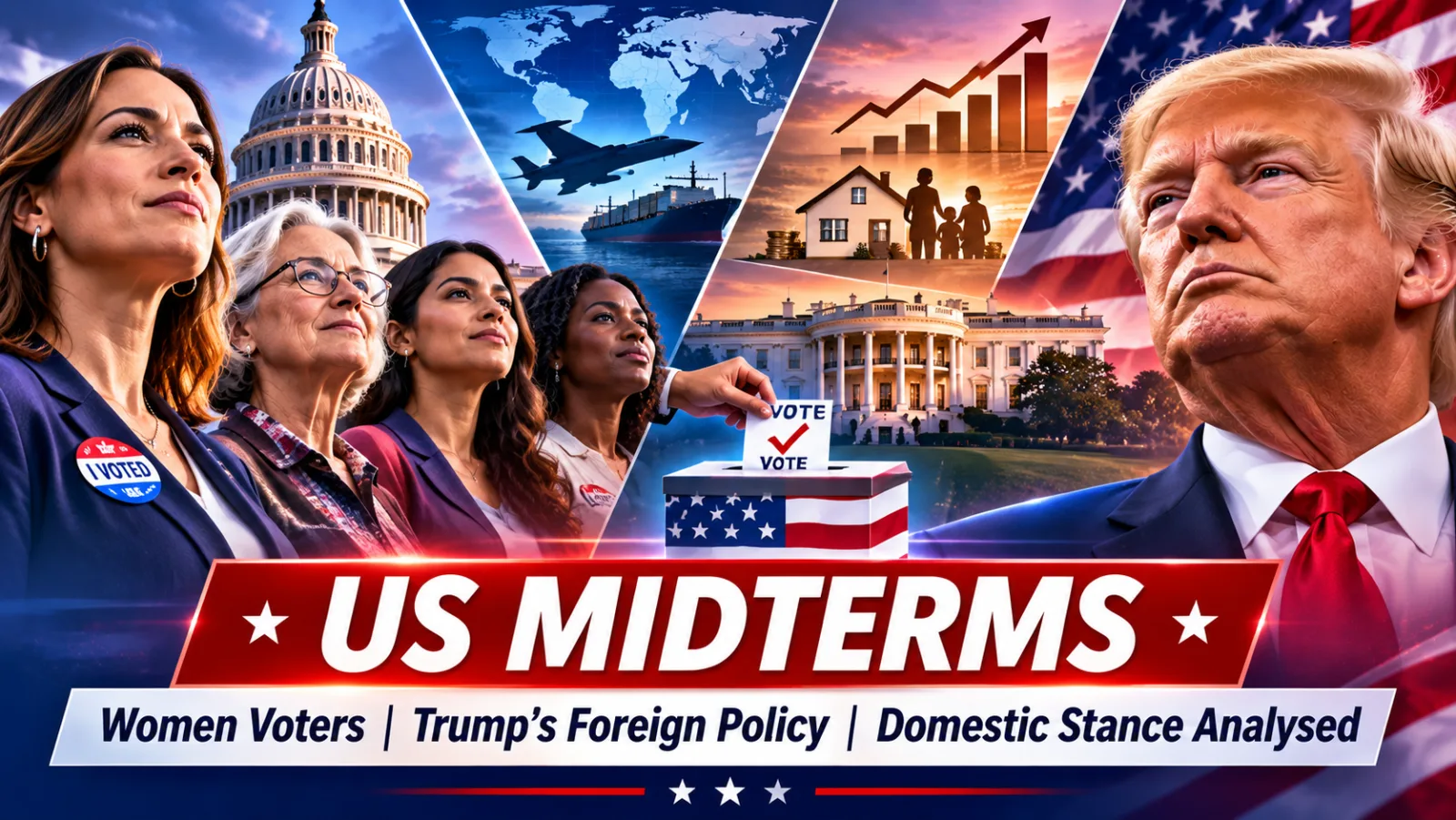

The US elections 2026 have brought renewed attention to voter behaviour, women's political representation and the foreign policy approach of President Donald Trump. A panel of foreign policy and political experts examined these issues, highlighting how economic concerns, international conflicts and political uncertainty are shaping the American electoral landscape.
The discussion focused on whether women candidates are benefiting from a distinct electoral wave and how women's voting preferences are influencing the Democratic Party's performance.
Cost of Living and Foreign Conflicts Influence Women Voters
The panellists highlighted the cost of living as a significant issue influencing women voters. Opposition to foreign conflicts, particularly concerns surrounding the United States' tensions with Iran, was also identified as an important factor drawing women voters towards Democratic candidates.

The discussion raised questions about whether the growing electoral success of women candidates reflects a broader political shift or individual achievements.
Experts noted that women and Indian-American leaders are making notable electoral gains based on their own political credentials. However, they emphasised that broader representation in American politics continues to develop gradually rather than through an immediate transformation.
Trump's Foreign Policy and Political Posturing Under Scrutiny
The panel also examined Trump's unpredictable political and foreign policy decisions, particularly his approach towards Iran and domestic political negotiations.
Experts pointed to what they described as inconsistent political messaging, with the administration shifting between threats of military action and diplomatic overtures. They argued that such fluctuations create uncertainty at a time when many Americans are looking for domestic stability and predictable governance.
The discussion also considered Trump's changing positions on domestic negotiations, suggesting that his political approach often combines confrontational statements with an openness to dialogue.
Stability Remains a Key Political Concern
The panellists suggested that the contrast between Trump's unpredictable political posturing and public expectations of stable governance could remain an important factor in shaping voter perceptions.
The broader discussion highlighted the changing role of women and Indian-American leaders in electoral politics, alongside the growing influence of economic concerns and foreign policy decisions on domestic political choices.
While representation is expanding, the experts observed that the process remains gradual. The evolving relationship between voter priorities, leadership representation and presidential decision-making will continue to shape debates around American politics.







Conversation
Be kind and stay on topic. Comments are moderated; abuse, spam and personal attacks are removed. Report a problem