

Shopping cart
Your cart empty!
Terms of use dolor sit amet consectetur, adipisicing elit. Recusandae provident ullam aperiam quo ad non corrupti sit vel quam repellat ipsa quod sed, repellendus adipisci, ducimus ea modi odio assumenda.
Lorem ipsum dolor sit amet consectetur adipisicing elit. Sequi, cum esse possimus officiis amet ea voluptatibus libero! Dolorum assumenda esse, deserunt ipsum ad iusto! Praesentium error nobis tenetur at, quis nostrum facere excepturi architecto totam.
Lorem ipsum dolor sit amet consectetur adipisicing elit. Inventore, soluta alias eaque modi ipsum sint iusto fugiat vero velit rerum.
Sequi, cum esse possimus officiis amet ea voluptatibus libero! Dolorum assumenda esse, deserunt ipsum ad iusto! Praesentium error nobis tenetur at, quis nostrum facere excepturi architecto totam.
Lorem ipsum dolor sit amet consectetur adipisicing elit. Inventore, soluta alias eaque modi ipsum sint iusto fugiat vero velit rerum.

Dolor sit amet consectetur adipisicing elit. Sequi, cum esse possimus officiis amet ea voluptatibus libero! Dolorum assumenda esse, deserunt ipsum ad iusto! Praesentium error nobis tenetur at, quis nostrum facere excepturi architecto totam.
Lorem ipsum dolor sit amet consectetur adipisicing elit. Inventore, soluta alias eaque modi ipsum sint iusto fugiat vero velit rerum.
Sit amet consectetur adipisicing elit. Sequi, cum esse possimus officiis amet ea voluptatibus libero! Dolorum assumenda esse, deserunt ipsum ad iusto! Praesentium error nobis tenetur at, quis nostrum facere excepturi architecto totam.
Lorem ipsum dolor sit amet consectetur adipisicing elit. Inventore, soluta alias eaque modi ipsum sint iusto fugiat vero velit rerum.
Do you agree to our terms? Sign up
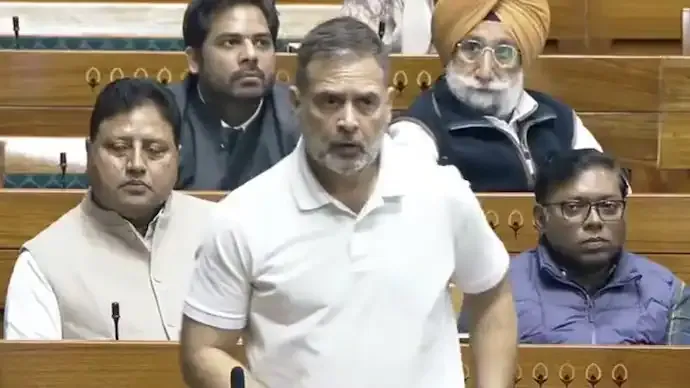
In a rare moment of cross-party alignment, Congress MP and Leader of Opposition in the Lok Sabha Rahul Gandhi on Friday called for an urgent, structured debate on India’s escalating air pollution crisis—an appeal that received an immediate indication of support from the government. The development marks a notable shift in parliamentary dynamics, especially on an issue that affects millions across the country regardless of political affiliation.
Raising the matter during Zero Hour, Rahul Gandhi described India’s deteriorating air quality as a national public health emergency. He warned that major cities were now “living under a blanket of poisonous air,” placing children, elderly citizens and vulnerable populations at severe risk.
“Millions of children are getting lung disease. Their future is being destroyed. People are getting cancer. Older people are struggling to breathe,” he said, stressing that the crisis is beyond ideological differences. For one of the rare occasions, he added, the House could achieve “complete agreement” on the need for serious intervention.
Gandhi urged the government to grant time for a full-fledged debate in Parliament and to commit to measurable actions that address the crisis. He emphasised that both sides—the ruling party and the Opposition—bear responsibility for safeguarding public health and shaping long-term solutions to an issue that grows more severe each year.
Responding to the appeal, Parliamentary Affairs Minister Kiren Rijiju signalled the government’s readiness to take up the matter formally. He informed the House that the proposal had already been noted in the Business Advisory Committee. Rijiju reiterated the government's position that it is willing to discuss all important issues brought forth by the Opposition and work collaboratively to find sustainable solutions.
“We will see how we can take up this discussion. We will come back and let us see how we can structure this discussion. We are ready to take up this matter,” Rijiju said, indicating that the committee could soon allocate time for the debate.
India’s air pollution, particularly in major urban centres, has repeatedly ranked among the worst in the world, with toxic particulate levels triggering school closures, flight disruptions, declining public health indicators and economic losses. Experts have long called for coordinated national strategies involving urban planning, industrial regulation, agricultural reforms and clean mobility adoption.
The rare unity demonstrated in Parliament may offer a window for advancing bipartisan solutions to one of India’s most pressing environmental and health challenges. While many policies will require long-term implementation, the agreement to hold a structured debate is seen as a crucial first step toward pushing forward accountability-based action.
37
Published: Dec 12, 2025