

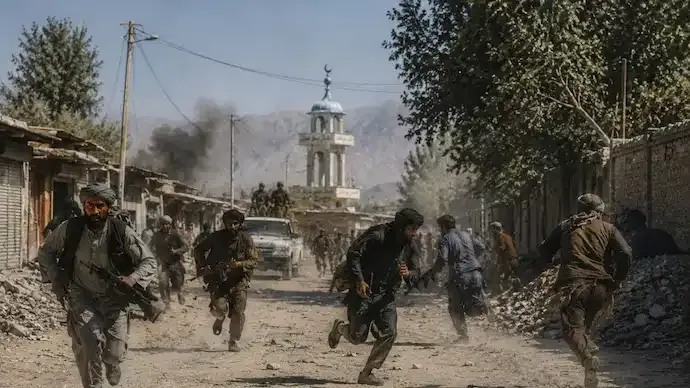

An armed anti-Taliban group has claimed it briefly seized the Yaftal-e-Paeen district headquarters in Afghanistan's Badakhshan province, marking what could be the first reported instance since the Taliban returned to power in 2021 that a district administrative centre temporarily slipped from its control.
The Taliban acknowledged that an overnight attack had taken place but said its security forces quickly regained control, arrested several suspects, and restored order.
While independent verification of the incident remains limited, the reported operation has drawn attention because it suggests that armed resistance to Taliban rule continues despite the group's firm grip on Afghanistan.

What Happened in Yaftal-e-Paeen?
According to reports from Afghan media citing local sources, dozens of anti-Taliban fighters launched an early morning assault on the district headquarters in Yaftal-e-Paeen, located in Badakhshan province.
The fighters reportedly:
- Disarmed Taliban personnel stationed at the district headquarters.
- Took temporary control of the administration building.
- Raised the flag of a newly announced armed group called Sepahian-e-Mihan (Soldiers of the Homeland).
Reports indicate the group remained in control for only a few hours before withdrawing from the area.
Taliban Says Control Was Quickly Restored
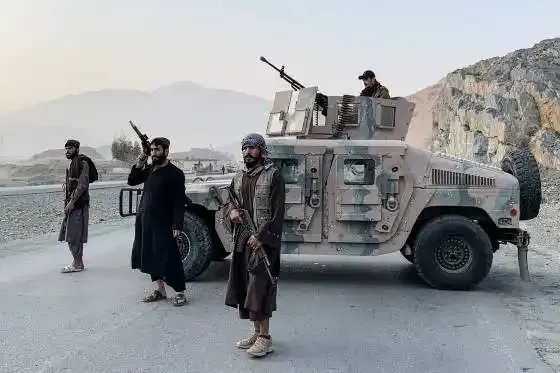
Taliban authorities confirmed that an attack had occurred but rejected claims that it represented a significant military setback.
Officials said additional security forces were deployed soon after the assault, allowing them to regain control of the district headquarters.
The Taliban also stated that several suspects had been arrested and that operations were continuing to identify and detain others allegedly involved in the attack.
Authorities described the incident as an isolated security breach rather than a broader challenge to Taliban control.
Why the Incident Is Significant
If independently confirmed, the reported seizure would represent a symbolic moment in Afghanistan's post-2021 security landscape.
Since returning to power following the collapse of the previous Afghan government, the Taliban has largely maintained territorial control despite sporadic attacks by armed resistance groups.
Although opposition organisations have carried out ambushes and targeted attacks in recent years, no group had previously claimed even temporary control of a district headquarters after the Taliban's return to power.
Who Are Sepahian-e-Mihan?
The group calling itself Sepahian-e-Mihan, which translates to "Soldiers of the Homeland," is a relatively new organisation that has only recently emerged in public reporting.
According to local sources, the group announced its existence during the operation by raising its own flag over the district headquarters.
Taliban officials described it as a newly formed organisation with limited operational capabilities, while some analysts believe it could represent an effort to establish another anti-Taliban resistance movement.
Who Is the Group's Leader?
Multiple reports identify the group's leader as Qayum Khan Malang, a former officer in the Afghan National Army.
According to published accounts:
- He previously served under Afghanistan's former republic.
- He reportedly trained alongside US special operations personnel during the previous conflict.
- Following the Taliban takeover in 2021, he joined the National Resistance Front (NRF) led by Ahmad Massoud.
- He later separated from the NRF and reportedly formed his own armed organisation in Badakhshan.
These details have not been independently verified.
Why Badakhshan Matters
Badakhshan is one of Afghanistan's most strategically significant provinces.
The region:
- Borders Pakistan, Tajikistan, and China.
- Includes the strategically important Wakhan Corridor.
- Lies close to Panjshir Valley, long regarded as the centre of anti-Taliban resistance.
Its mountainous terrain has historically made it difficult for central authorities to maintain complete control.
Resistance to Taliban Rule Continues
Since 2021, several anti-Taliban organisations, including the National Resistance Front and other smaller armed groups, have continued low-level insurgent activities across parts of Afghanistan.
While these groups have not significantly altered the country's balance of power, they continue to challenge Taliban authority through occasional attacks and symbolic operations.
The reported incident in Yaftal-e-Paeen highlights that organised resistance remains active, even though the Taliban continues to control most of Afghanistan.
Key Highlights
- An anti-Taliban group claimed it briefly captured the Yaftal-e-Paeen district headquarters in Badakhshan.
- Taliban authorities said security forces regained control within hours.
- The incident, if independently verified, would mark the first reported temporary loss of a district headquarters since 2021.
- The newly emerged group Sepahian-e-Mihan claimed responsibility for the operation.
- The group's reported leader is former Afghan National Army officer Qayum Khan Malang.
- Badakhshan's strategic location near Pakistan, Tajikistan, China, and the Wakhan Corridor adds to the significance of the incident.
Frequently Asked Questions (FAQs)
What happened in Afghanistan's Yaftal-e-Paeen district?
An anti-Taliban group claimed it temporarily seized the district headquarters before withdrawing. The Taliban says it quickly restored control.
Where is Yaftal-e-Paeen located?
Yaftal-e-Paeen is a district in Badakhshan province in northeastern Afghanistan.
Who are Sepahian-e-Mihan?
Sepahian-e-Mihan, or Soldiers of the Homeland, is a newly emerged anti-Taliban armed group that claimed responsibility for the reported operation.
Who leads Sepahian-e-Mihan?
Reports identify the group's leader as Qayum Khan Malang, a former Afghan National Army officer who reportedly served with the National Resistance Front before forming his own organisation.
Why is Badakhshan strategically important?
Badakhshan borders Pakistan, Tajikistan, and China, includes the Wakhan Corridor, and lies close to the Panjshir Valley, making it strategically significant.
Has the Taliban confirmed the district was captured?
No. The Taliban acknowledged the attack but denied losing lasting control, stating that security forces regained the district within hours.




Conversation
Be kind and stay on topic. Comments are moderated; abuse, spam and personal attacks are removed. Report a problem