

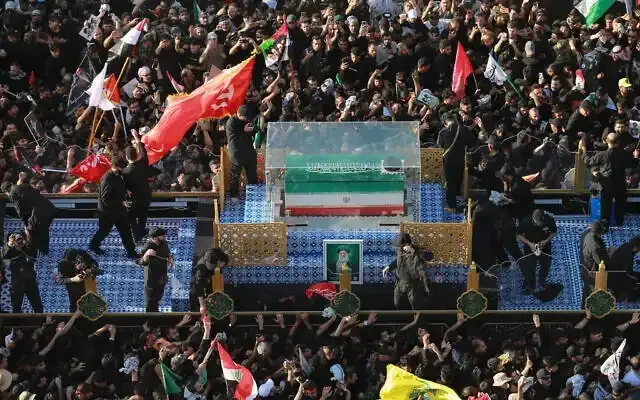

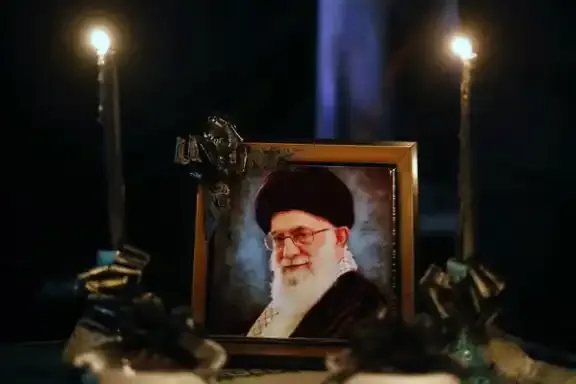
Funeral ceremonies for Iran's late Supreme Leader Ayatollah Ali Khamenei began in Iraq's holy city of Najaf on Wednesday, drawing thousands of mourners as the multi-day procession commenced before continuing to Karbala and later returning to Iran.
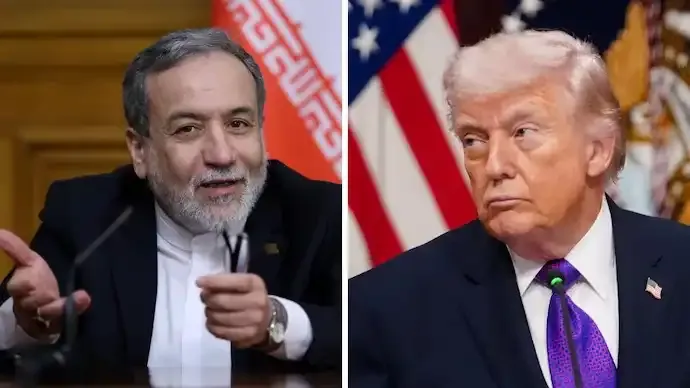
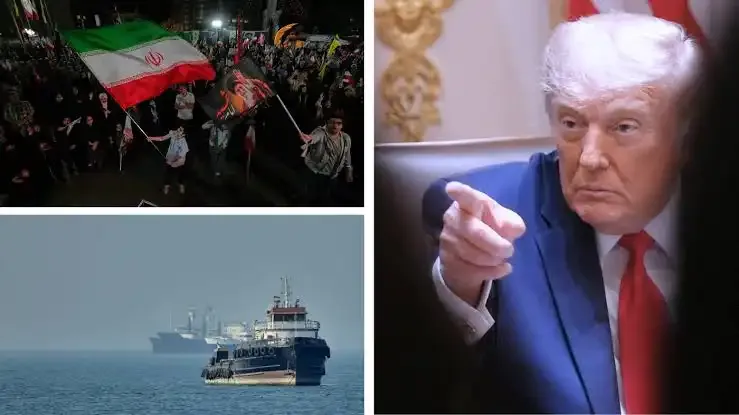
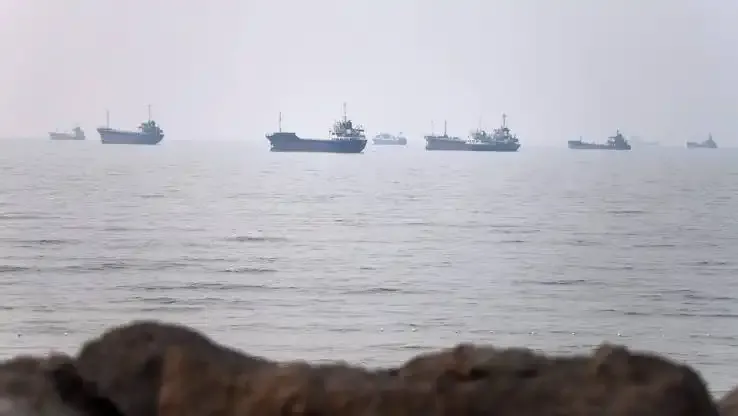
The ceremonies are taking place against the backdrop of heightened regional tensions, with US-Iran diplomatic talks reportedly paused and fresh military exchanges in the Persian Gulf raising concerns over regional stability.
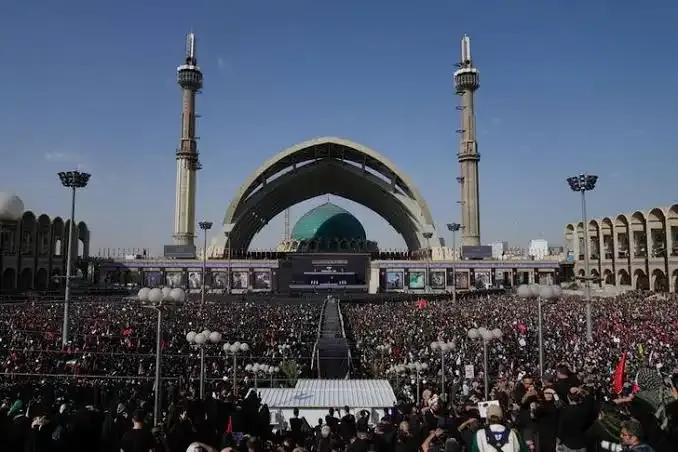
Thousands join funeral procession in Najaf
Large crowds gathered in Najaf to pay their respects as Khamenei's body arrived in the city accompanied by senior Iranian officials, including President Masoud Pezeshkian and Foreign Minister Abbas Araghchi.

Mourners carried Iranian flags, portraits of Khamenei and black mourning banners, while many participated in traditional Shiite mourning rituals during the procession.
The body was placed in a glass-covered casket draped with the Iranian national flag.
Funeral prayers at the Shrine of Imam Ali
The main funeral prayers in Najaf are scheduled to be held at the Shrine of Imam Ali, one of the holiest sites in Shiite Islam.
Religious scholar Muhammad Taqi al-Hakim is expected to lead the prayers before the procession moves to Karbala, another major pilgrimage centre for Shiite Muslims.
In Karbala, prayers will be conducted at the Imam Hussein Shrine under the leadership of Abdul Mahdi al-Karbalaei, a representative of Iraq's highest Shiite religious authority.
Procession to continue into Iran
Following ceremonies in Iraq, Khamenei's body will be transported back to Iran, where funeral events have continued since the weekend.
The ceremonies are expected to conclude with official state honours and religious observances inside Iran.
Regional tensions remain high
The funeral comes during one of the most volatile periods in the Middle East in recent months.
Key developments include:
- US-Iran diplomatic talks remain on hold.
- Military exchanges in the Persian Gulf have increased tensions.
- Concerns persist over the stability of the regional ceasefire.
- International attention remains focused on Iran's political transition.
The funeral has therefore become not only a religious event but also a significant geopolitical moment.
Iran's leadership transition
Ayatollah Ali Khamenei was killed during large-scale US and Israeli strikes on Iran earlier this year.
His death marked a major turning point in Iranian politics, with the country's leadership transition now under global scrutiny.
According to reports, Iran's new Supreme Leader Ayatollah Mojtaba Khamenei has not appeared publicly during the funeral ceremonies and is believed to remain at an undisclosed location following reports that he was injured during the same conflict.
Why Najaf and Karbala are significant
Najaf and Karbala are among the holiest cities in Shiite Islam.
Najaf is home to the Shrine of Imam Ali, while Karbala houses the Shrine of Imam Hussein, both of which attract millions of pilgrims every year.
Holding funeral ceremonies in these cities reflects the religious significance of Khamenei's role within the Shiite world.
Why this matters
The funeral of Ayatollah Ali Khamenei is unfolding at a time of heightened geopolitical uncertainty across the Middle East.
Beyond its religious importance, the event is closely tied to Iran's political transition, regional security concerns and the future of US-Iran relations.
Featured Snippet
Funeral ceremonies for Ayatollah Ali Khamenei began in Iraq's holy city of Najaf before moving to Karbala and later returning to Iran. The multi-day procession is taking place amid heightened regional tensions and a pause in US-Iran diplomatic talks.
Key Highlights
- Funeral ceremonies for Ayatollah Ali Khamenei began in Najaf.
- Thousands of mourners gathered for the procession.
- The funeral will continue in Karbala before returning to Iran.
- Senior Iranian leaders attended the ceremonies.
- Funeral prayers will be held at the Shrine of Imam Ali.
- Regional tensions remain high amid paused US-Iran talks.
- The funeral coincides with Iran's ongoing leadership transition.
- Najaf and Karbala hold deep religious significance in Shiite Islam.
Conclusion
Ayatollah Ali Khamenei's funeral has become both a major religious event and a significant geopolitical moment for the Middle East. As thousands gather across Iraq and Iran to pay their respects, the ceremonies unfold alongside growing regional tensions and uncertainty over the future direction of Iranian leadership and diplomacy.
FAQs
1. Where did Ayatollah Khamenei's funeral begin?
The funeral procession began in Najaf, Iraq, one of the holiest cities in Shiite Islam.
2. Where will the funeral procession go next?
The procession will continue to Karbala before returning to Iran for the final ceremonies.
3. Why is Najaf important?
Najaf is home to the Shrine of Imam Ali, one of the most sacred sites for Shiite Muslims.
4. Why is Karbala significant?
Karbala houses the Shrine of Imam Hussein and is one of the most important pilgrimage sites in Shiite Islam.
5. Who attended the funeral?
Iranian President Masoud Pezeshkian, Foreign Minister Abbas Araghchi and other senior Iranian officials attended the ceremonies.
6. Why is the funeral receiving global attention?
It comes during heightened regional tensions, a pause in US-Iran talks and Iran's ongoing political transition.
7. Who is believed to be Iran's new Supreme Leader?
Reports indicate Ayatollah Mojtaba Khamenei has assumed leadership, although he has not appeared publicly during the funeral ceremonies.
8. Why are US-Iran relations relevant to the funeral?
The ceremonies are taking place while diplomatic talks remain suspended and military tensions in the Persian Gulf continue to rise.



Conversation
Be kind and stay on topic. Comments are moderated; abuse, spam and personal attacks are removed. Report a problem