
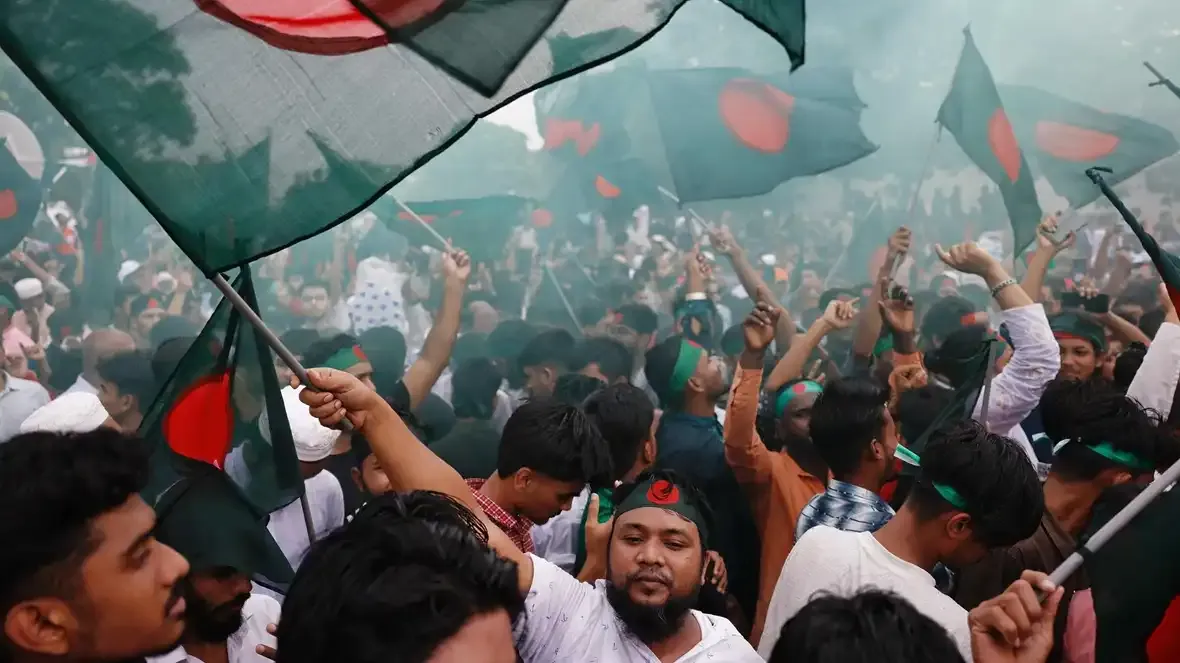
Bangladesh is witnessing a historic political moment as millions head to the polls in the first national election since the exit of former prime minister Sheikh Hasina and the absence of her Awami League from the ballot after more than a decade. The vote is widely seen as a turning point that could redefine the country’s political landscape and determine its direction in the post-Hasina era.
With nearly 127 million eligible voters, including a large youth demographic, the election carries enormous significance. Almost 44 percent of voters fall between the ages of 18 and 37, while millions are casting ballots for the first time. Analysts believe this young electorate, many of whom participated in the protests that reshaped the country’s politics in recent years, could play a decisive role in shaping the outcome.
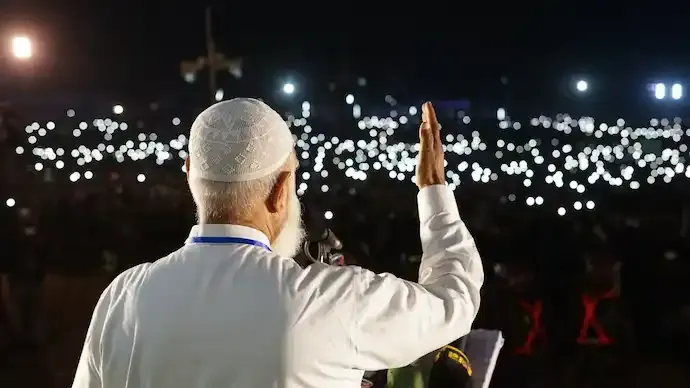
At the centre of the contest are two major alliances. The Bangladesh Nationalist Party (BNP), led by Tarique Rahman, enters the race as a perceived frontrunner. Facing it is an Islamist-leaning coalition spearheaded by Jamaat‑e‑Islami under Shafiqur Rahman, which is attempting a major political comeback after years of restrictions and legal challenges.
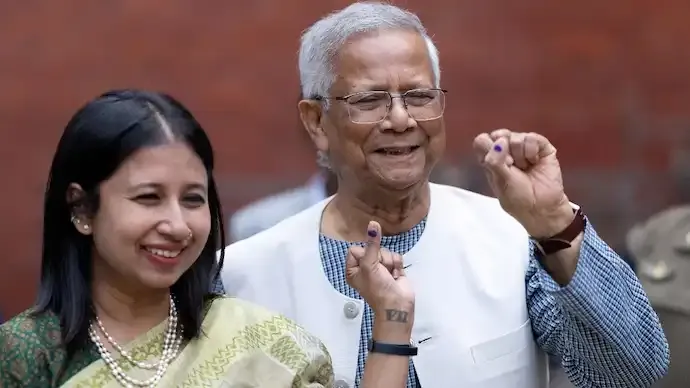
Beyond choosing a new government, voters are also participating in a simultaneous referendum on the proposed “July Charter,” a constitutional reform package supported by interim leader Muhammad Yunus. The charter aims to reshape executive powers, improve election oversight and introduce stronger accountability mechanisms. Supporters describe it as a reset for governance, while critics warn of uncertainty surrounding sweeping institutional changes.
Security concerns have loomed large ahead of voting. Authorities have reportedly identified thousands of polling stations as sensitive due to fears of violence, political tensions and logistical challenges. Incidents such as arson attacks on polling booths and isolated clashes have heightened the sense of uncertainty surrounding the electoral process.
The absence of the Awami League has created an unusual political vacuum, making the contest more unpredictable than previous elections. Surveys suggest that a significant portion of former Awami League supporters may shift towards the BNP, though Jamaat-e-Islami is also gaining ground among certain voter groups. Smaller parties and new political formations are attempting to capitalise on voter demand for reform and fresh leadership.
The stakes are especially high for young voters, many of whom view this election as their first real opportunity to influence the country’s direction through democratic means. Issues such as unemployment, economic slowdown, rising costs of living and governance reforms dominate the political discourse. For many, the election represents not just a change of leadership but a chance to redefine Bangladesh’s political identity after years of polarised politics.
Bangladesh’s parliamentary system means that the party or alliance securing a majority in the unicameral legislature will form the government, with additional reserved seats allocated proportionally. As results begin to emerge, attention will focus on whether the BNP can stage a decisive return to power or whether Jamaat-e-Islami’s resurgence will reshape alliances and parliamentary dynamics.
With a dual ballot combining a high-stakes parliamentary contest and a constitutional referendum, the election marks one of the most consequential moments in Bangladesh’s recent political history, potentially setting the tone for governance, democratic reforms and regional politics in the years ahead.

Conversation
Be kind and stay on topic. Comments are moderated; abuse, spam and personal attacks are removed. Report a problem