Shopping cart
Your cart empty!


Your cart empty!
Terms of use dolor sit amet consectetur, adipisicing elit. Recusandae provident ullam aperiam quo ad non corrupti sit vel quam repellat ipsa quod sed, repellendus adipisci, ducimus ea modi odio assumenda.
Lorem ipsum dolor sit amet consectetur adipisicing elit. Sequi, cum esse possimus officiis amet ea voluptatibus libero! Dolorum assumenda esse, deserunt ipsum ad iusto! Praesentium error nobis tenetur at, quis nostrum facere excepturi architecto totam.
Lorem ipsum dolor sit amet consectetur adipisicing elit. Inventore, soluta alias eaque modi ipsum sint iusto fugiat vero velit rerum.
Sequi, cum esse possimus officiis amet ea voluptatibus libero! Dolorum assumenda esse, deserunt ipsum ad iusto! Praesentium error nobis tenetur at, quis nostrum facere excepturi architecto totam.
Lorem ipsum dolor sit amet consectetur adipisicing elit. Inventore, soluta alias eaque modi ipsum sint iusto fugiat vero velit rerum.
Dolor sit amet consectetur adipisicing elit. Sequi, cum esse possimus officiis amet ea voluptatibus libero! Dolorum assumenda esse, deserunt ipsum ad iusto! Praesentium error nobis tenetur at, quis nostrum facere excepturi architecto totam.
Lorem ipsum dolor sit amet consectetur adipisicing elit. Inventore, soluta alias eaque modi ipsum sint iusto fugiat vero velit rerum.
Sit amet consectetur adipisicing elit. Sequi, cum esse possimus officiis amet ea voluptatibus libero! Dolorum assumenda esse, deserunt ipsum ad iusto! Praesentium error nobis tenetur at, quis nostrum facere excepturi architecto totam.
Lorem ipsum dolor sit amet consectetur adipisicing elit. Inventore, soluta alias eaque modi ipsum sint iusto fugiat vero velit rerum.
Do you agree to our terms? Sign up
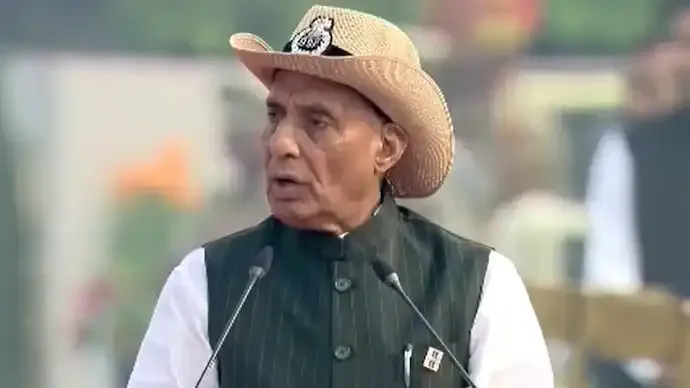
In a significant policy reform aimed at aligning defence housing rules with evolving social realities, Defence Minister Rajnath Singh has approved an expanded definition of “family” for the purpose of allotment of government accommodation to service officers. The revised framework broadens eligibility criteria, allowing a wider range of dependents to be recognised under official housing provisions.
Under the updated rules, the definition of family will now include parents, dependent siblings, and legally adopted children, in addition to the existing categories of spouse, stepchildren, and dependent children. The move is expected to benefit officers across the armed forces, particularly those who shoulder caregiving responsibilities beyond the traditional nuclear family structure.
Officials said the earlier housing norms were limited in scope and did not adequately account for officers who are primary caregivers to elderly parents, unmarried siblings, or adopted children. This often created administrative and logistical challenges when seeking government accommodation. By expanding the definition, the Defence Ministry aims to make housing policies more inclusive and reflective of contemporary family arrangements.
The reform is also seen as particularly beneficial for single women officers residing with their parents, as well as personnel who support dependent family members due to personal or financial circumstances. The updated guidelines recognise that many service officers are responsible not only for spouses and children but also for ageing parents and extended family members.
The decision factors in provisions of the Maintenance and Welfare of Parents and Senior Citizens Act, 2007, which places a legal obligation on children and heirs to provide maintenance, including residence and medical care, to parents and senior citizens who cannot sustain themselves. By integrating this principle into defence accommodation policy, the government has sought to harmonise legal responsibilities with welfare measures for armed forces personnel.
Officials indicated that the revision acknowledges the changing dynamics of Indian households, where intergenerational living arrangements remain common. It also underscores the government’s emphasis on strengthening family welfare within the armed forces, recognising that stable family support structures contribute to the overall morale and efficiency of service personnel.
The policy shift reflects a broader administrative approach that seeks to modernise institutional rules in line with societal evolution. Observers note that defence housing policies historically focused on nuclear family units, often overlooking the complexities of caregiving responsibilities faced by officers deployed across various regions.
With this expanded definition, the Defence Ministry aims to provide greater flexibility and fairness in accommodation allotment processes. The reform is expected to ease practical difficulties faced by officers managing family obligations while serving in demanding operational environments.
By adapting housing regulations to better accommodate diverse family structures, the government has positioned the change as part of its larger commitment to personnel welfare and social responsibility within the armed forces. The move is likely to have a positive impact on service officers who balance professional duties with extended family care.
42
Published: Feb 12, 2026

All India Story is your trusted source for comprehensive and up-to-the-minute news coverage across India. Bringing you the latest on politics, business, technology, entertainment, sports, and more, we are dedicated to keeping you informed with accurate, engaging, and insightful stories from every corner of the nation.