

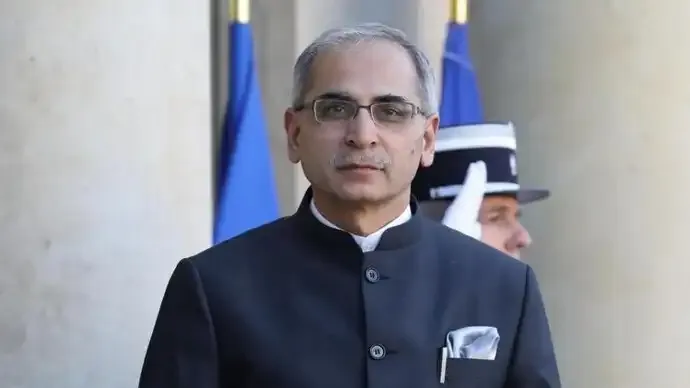

India’s newly announced trade agreement with the United States is the outcome of nearly a year of structured negotiations, strategic alignment and top-level political direction, Indian Ambassador to the US Vinay Mohan Kwatra has said.
Speaking in Washington, Kwatra explained that the process began during Prime Minister Narendra Modi’s visit to the United States in February 2025, when he and US President Donald Trump issued two clear directives. The first was to initiate negotiations for a mutually beneficial, multi-sector bilateral trade agreement. The second was the ambitious “Mission 500” target — increasing India-US bilateral trade to $500 billion in the coming years.
According to Kwatra, what followed was a series of sustained and intense negotiations at multiple levels, including ministerial discussions and regular engagement between trade negotiators on both sides. He emphasised that the agreement was not a sudden breakthrough but a carefully structured outcome shaped by continuous dialogue and political backing from both capitals.

Addressing speculation about delays, Kwatra noted that trade negotiations typically involve complex technical and policy discussions, and agreements are only announced once fully concluded. He described the final announcement — which followed direct conversations between Modi and Trump — as a significant milestone in India-US economic relations.
The agreement, he said, serves as a new economic anchor in the broader strategic partnership between the two countries. It is expected to open greater access to the US market for Indian industrial goods, manufactured products and agricultural exports. The United States, with an economy valued at approximately $30 trillion, represents a major opportunity for Indian exporters seeking scale and diversification.
However, the envoy stressed that the pact is not solely about exports. He highlighted the importance of technology collaboration and capital flows, describing the framework as a gateway for deeper industry-to-industry partnerships. In particular, he pointed to expanding cooperation in emerging sectors such as semiconductors and artificial intelligence.
Kwatra underscored that collaboration in AI would extend beyond product development to include deployment, adoption and infrastructure support. He referred to the full AI ecosystem — from compute capacity and energy requirements to practical application across industries — suggesting that the trade deal would accelerate technological partnerships.
The agreement also aligns with India’s long-term developmental objectives, including employment generation and economic transformation by 2047. By enabling greater export potential and encouraging investment, the framework is expected to contribute to job creation and industrial growth.
Looking ahead, further engagement is expected between Indian officials and the Office of the US Trade Representative to finalise subsequent phases of the broader bilateral trade agreement. Kwatra described the relationship as closely and intensively engaged, with additional cooperation visible in areas such as defence, critical minerals and digital infrastructure.
He also highlighted the upcoming AI Impact Summit in India as a major upcoming milestone in bilateral ties, expected to feature strong participation from American industry and government representatives.
The trade deal, Kwatra indicated, is part of a larger effort to deepen India-US economic and technological integration, reinforcing both strategic alignment and long-term growth ambitions.





Conversation
Be kind and stay on topic. Comments are moderated; abuse, spam and personal attacks are removed. Report a problem