
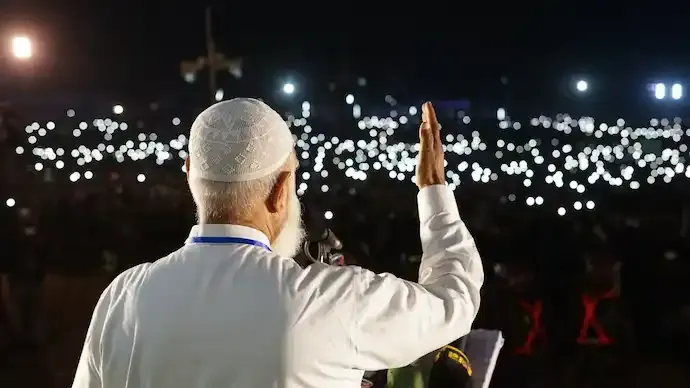
The dramatic resurgence of Bangladesh Jamaat-e-Islami in Bangladesh’s first post-Hasina national election has emerged as one of the most significant political developments in recent years. Once banned and pushed to the margins, the party led by Shafiqur Rahman is now mounting a serious challenge to the Bangladesh Nationalist Party (BNP), reshaping the country’s political calculus.
As Bangladesh votes in its first parliamentary election since the fall of Sheikh Hasina, Jamaat’s rise signals a shift in voter sentiment, particularly among the youth. The party heads an 11-party alliance and is presenting itself as a vehicle for “poriborton” — change — in contrast to what many perceive as entrenched political structures dominated by older power blocs.
Political observers note that Jamaat’s organisational structure has long been strong at the grassroots level, even during years of restrictions. Its student wing and cadre network reportedly played a visible role in the protests that led to political upheaval in 2024. With the ban lifted under the interim administration of Muhammad Yunus, the party has re-entered mainstream politics with renewed energy.
Pre-poll surveys suggest the BNP remains ahead, but Jamaat is performing better than expected. Analysts describe the contest as more competitive than earlier projections indicated. For many younger voters, the appeal lies in promises of a new political culture, distancing themselves from allegations of corruption and patronage politics that have long defined Bangladesh’s electoral battles.
What Could Jamaat’s Rise Mean For Bangladesh’s Hindus?
Jamaat’s past has often drawn criticism, particularly regarding its historical stance during the 1971 Liberation War and allegations of hardline positions. However, party leaders now insist that the organisation has reformed and is committed to protecting minority rights.
In recent months, there have been claims from within Bangladesh that Jamaat workers provided protection to Hindu families during periods of unrest following political transitions. The party has also fielded a Hindu candidate, projecting an inclusive approach.
Shafiqur Rahman has publicly stated that there will be “no second-class citizens” under his leadership, attempting to reassure minority communities amid anxiety over safety. However, some analysts caution that pre-election messaging and post-election governance can differ, urging careful scrutiny of future policy decisions.
What Could It Mean For India-Bangladesh Relations?
For New Delhi, Jamaat’s ascent introduces a new diplomatic equation. India has historically maintained close ties with the Awami League. With the political landscape shifting, engagement strategies are evolving.
Jamaat leaders have rejected allegations of a pro-Pakistan tilt and described the party as focused solely on Bangladesh’s national interests. Rahman has publicly said that India would remain a priority neighbour. Reports also indicate that informal diplomatic channels between Indian officials and Jamaat representatives have opened in recent months.
If Jamaat gains significant parliamentary influence — either as a governing force or a key opposition bloc — India may need to recalibrate its approach, focusing on pragmatic engagement centred on trade, border security and regional stability.
A Defining Political Moment
Regardless of the final seat tally, Jamaat-e-Islami’s emergence as a central political actor marks a structural change in Bangladesh’s post-Hasina political order. Whether this momentum translates into lasting governance influence, and how it shapes minority rights and foreign policy, will become clearer once the election results are declared.

Conversation
Be kind and stay on topic. Comments are moderated; abuse, spam and personal attacks are removed. Report a problem