Bangladesh Probe Claims Sheikh Hasina Ordered 2009 BDR Mutiny, Alleges India’s Role in Destabilisation

Bangladesh Probe Claims Sheikh Hasina Ordered 2009 BDR Mutiny, Alleges India’s Role in Destabilisation

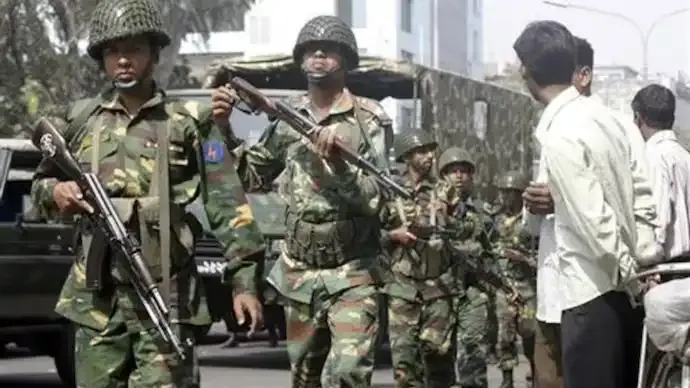
A fresh political storm has erupted in Bangladesh after a newly formed commission alleged that former Prime Minister Sheikh Hasina personally ordered the 2009 Bangladesh Rifles (BDR) mutiny, a revolt that killed 74 people, including several top army officers. The panel also claimed that India played a role in destabilising Bangladesh during the uprising.

The explosive findings, published on Sunday, intensify scrutiny on the 78-year-old leader—already sentenced to death in absentia for “crimes against humanity” linked to her government’s 2024 protest crackdown.

The commission was constituted by the Muhammad Yunus-led interim government, which took over after Hasina’s ouster last year. Its mandate was to reassess the BDR mutiny, which erupted on February 25–26, 2009, only weeks after Hasina returned to power.


Panel Claims Hasina ‘Green-Lighted’ the Mutiny

Commission chief ALM Fazlur Rahman alleged that the then-Awami League government directly orchestrated the revolt. He named former MP Fazle Noor Taposh as the “principal coordinator,” claiming Taposh acted “at the behest” of Hasina.

Rahman claimed Hasina provided the “green signal” for the operation that resulted in the killings of dozens of army officers.

A previous probe under Hasina’s administration had blamed the mutiny on longstanding grievances within the Bangladesh Rifles over pay and working conditions. Her political opponents, however, have long argued that the revolt was used to restructure military leadership and consolidate political control.


India Accused of Attempting to Destabilise Bangladesh

In a dramatic turn, Rahman alleged the involvement of an unnamed foreign force—later identified as India—claiming the 2009 mutiny was part of a broader destabilisation campaign.

“The conspiracy aimed to weaken the Bangladesh Army and destabilise the country,” Rahman said, according to bdnews24. He claimed “921 Indians” were inside Bangladesh during the mutiny period and that the whereabouts of 67 remain unknown.

Rahman alleged that India sought instability while Hasina’s government attempted to extend its control. India has not responded to the claims, but bilateral relations have been tense since Hasina fled to India following mass protests that toppled her government in 2024.


Interim Government Pushes India to Extradite Hasina

The Bangladeshi government has renewed demands for Hasina’s extradition. Foreign Affairs Advisor Mohammad Touhid Hossain said repatriating Hasina—now officially a fugitive—is a priority but should not overshadow overall relations with New Delhi.

Hasina received a death sentence in absentia on November 17 for alleged atrocities during the 2024 student uprising, which forced her government’s collapse on August 5, 2024. She fled to India shortly after her ouster.

Interim leader Muhammad Yunus welcomed the investigation’s findings, saying the “truth has finally been revealed.”

As tensions rise, the allegations risk deepening regional friction just as Bangladesh navigates political upheaval and shifting alliances.

Prev Article
Kazakhstan Slams Ukraine for Drone Strike on CPC Oil Terminal Handling 1% of Global Supply
Next Article
Northeast Braces for Heavy Snow as Midwest Travel Chaos Continues After Record Storm

Related to this topic: