

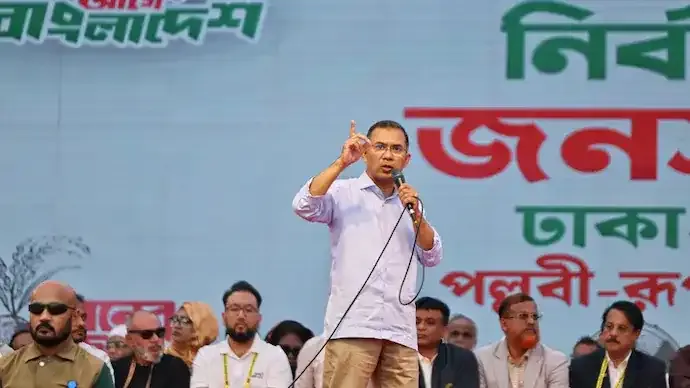

Bangladesh’s political landscape appears set for a major transformation as the Bangladesh Nationalist Party (BNP) moves toward forming the next government following a decisive performance in the 13th general elections. Early counting trends indicate that the party, led by Tarique Rahman, has comfortably crossed the 151-seat threshold required for a simple majority, ending a two-decade wait to return to power.
Preliminary figures reported by local media suggested the BNP-led alliance was ahead in more than 200 constituencies, signalling a landslide mandate from voters. While counting continued in several seats, analysts noted that the overall trend pointed toward a stable majority unlikely to change significantly once final results are declared by the Election Commission.
The election outcome marks a dramatic shift in Bangladesh’s political trajectory following years of upheaval and an interim administration led by Muhammad Yunus. The polls were widely viewed as a critical test for the country’s democratic process, particularly as the Awami League — a dominant political force for decades — was absent from the ballot after earlier political developments.

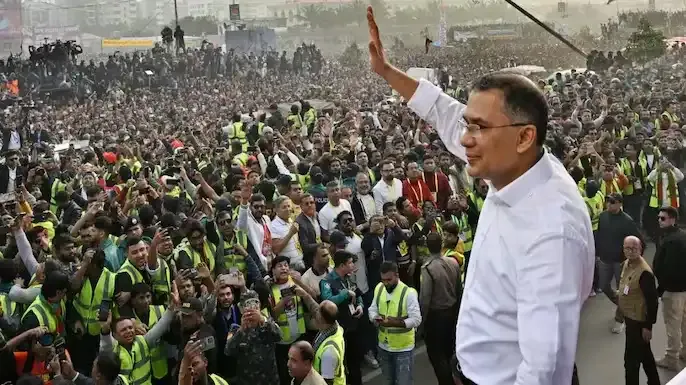
BNP leaders declared victory early as trends emerged, positioning Tarique Rahman as the frontrunner for the prime minister’s post. If confirmed, the transition would mark the party’s first return to power since 2001, reshaping domestic politics and potentially influencing Bangladesh’s regional diplomacy.
Meanwhile, Jamaat-e-Islami faced a significant setback, securing only a fraction of seats compared to the BNP’s commanding lead. Party chief Shafiqur Rahman acknowledged the evolving results and indicated a willingness to adopt a constructive political role moving forward.
The elections were held alongside a nationwide referendum on the proposed July Charter, a reform agenda born out of the political unrest of 2024. Early unofficial results suggested strong public backing for the reforms, with a significant majority reportedly voting in favour. However, election authorities have yet to release official confirmation.
Despite authorities initially describing the voting process as largely peaceful, several incidents of violence were reported in different parts of the country. Local media indicated that more than 70 people were injured in clashes linked to polling activities, though no fatalities were confirmed. Security arrangements were extensive, with nearly one million personnel from the armed forces, police and border guards deployed nationwide to maintain order.
Voters cast ballots across more than 42,000 polling stations, using separate papers for parliamentary and referendum votes. Turnout was reported to be above 60 per cent, reflecting strong public participation in a closely watched election.
As Bangladesh awaits official confirmation of the final tally, the BNP’s expected return to power is being viewed as a defining moment in the country’s modern political history, potentially ushering in a new phase of governance and reform.




Conversation
Be kind and stay on topic. Comments are moderated; abuse, spam and personal attacks are removed. Report a problem