

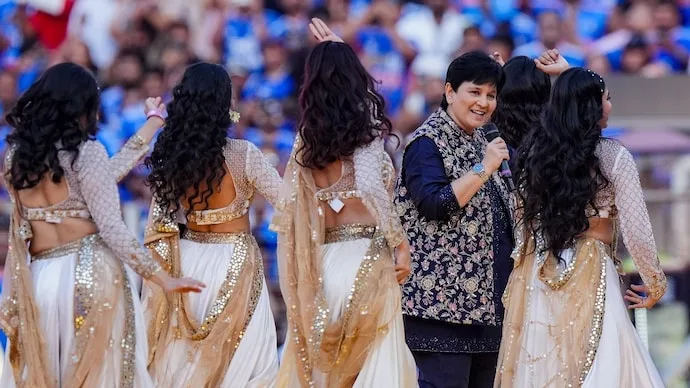

Every Navratri, Falguni Pathak’s songs bring thousands of people to the dance floor. But the journey of the singer widely known as the Garba Queen began long before hits such as Yaad Piya Ki Aane Lagi and Maine Payal Hai Chhankai made her a household name.
Born into a Gujarati family in Mumbai, Falguni began singing at the age of four and started performing professionally at nine. During a conversation with Raj Shamani, she revealed that she earned just ₹25 for some of her early performances at Ganpati celebrations and weddings.
Her parents wanted her to become a doctor or an engineer, but she continued pursuing music alongside her studies. Her mother also introduced her to traditional Gujarati songs, helping shape the musical identity that would later define her career.

Ta Thaiyaa Gave Her Garba Career Direction
A major turning point came in 1994, when Falguni formed her musical group, Ta Thaiyaa. The group became the foundation of her live performances and helped her establish a stronger presence in the Garba and Dandiya circuit.
Her shows combined traditional Gujarati folk music with arrangements that appealed to wider audiences. Her energetic stage presence and connection with the crowd gradually turned her performances into an annual Navratri tradition for many fans.
In a 2024 interview with Eastern Eye, Falguni said her Garba group had completed 29 years and continued working to improve its performances. She credited audience appreciation for motivating the team.
Over time, her popularity extended beyond Gujarat, reaching audiences across India and overseas.
How Yaad Piya Ki Aane Lagi Changed Her Career
While live performances established Falguni in the Garba circuit, her music albums introduced her to an even wider audience.
Her 1998 album Yaad Piya Ki Aane Lagi became a major success and helped establish her as one of the recognisable voices of the Indipop era. She followed it with popular songs such as Maine Payal Hai Chhankai, Meri Chunar Udd Udd Jaye and Chudi Jo Khanke Haathon Mein.
These tracks became fixtures on music channels and at parties, weddings and festive gatherings. Her success demonstrated that she could connect with audiences both as a folk performer and as a pop singer.
Why Falguni Pathak Is Synonymous With Navratri
Falguni’s enduring popularity comes from her ability to bring Gujarati folk traditions to new audiences without abandoning their roots. Her live shows blend Garba favourites, album hits and other popular melodies, encouraging people from different backgrounds to join the celebrations.
Her distinctive short hairstyle and casual stage outfits have also become part of her identity. In an interview with The Nod Mag, she recalled being asked to wear wigs and glamorous outfits for the Yaad Piya Ki Aane Lagi music video. She resisted those suggestions and chose to retain her own style, eventually wearing a blazer made by her local tailor.
Her decision reflected an approach that has remained consistent throughout her career: focusing on her music and individuality rather than simply following changing industry trends.
A Career Built Over Decades
Falguni Pathak’s journey from earning ₹25 per show to becoming a defining name in Navratri celebrations was not built around a single hit. It grew through years of live performances, popular albums and a lasting relationship with her audience.
Her Indipop songs introduced her to millions, while Ta Thaiyaa and her annual Garba performances cemented her place in the festive calendar. For many listeners, discovering her through a romantic pop song eventually became an invitation to dance to her music during Navratri.
That connection explains her enduring appeal. Decades after her early performances, Falguni Pathak continues to bring generations together through music, tradition and the unmistakable energy of Garba.



Conversation
Be kind and stay on topic. Comments are moderated; abuse, spam and personal attacks are removed. Report a problem