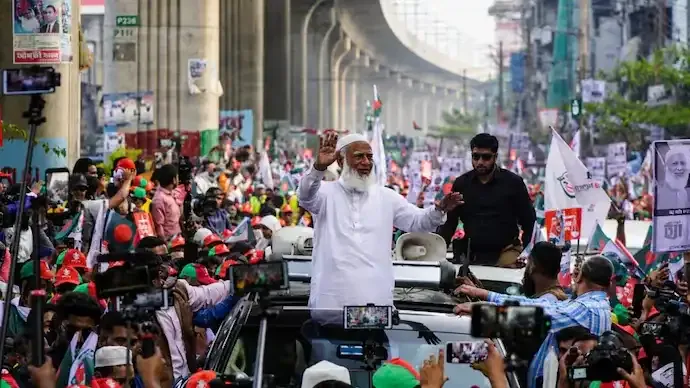
Political tensions are once again rising in Bangladesh as the country's largest Islamist political party, Jamaat-e-Islami, has warned of nationwide street protests if the government fails to implement the July Charter reforms introduced under the interim administration of Muhammad Yunus.
The warning comes amid growing frustration over the slow progress of the reform package, which supporters describe as a roadmap for political and institutional restructuring in Bangladesh.
What Is the July Charter?
The July Charter is a broad reform framework that emerged during the transitional period overseen by Muhammad Yunus.
The charter was designed to address several key issues, including:
-
Electoral reforms
-
Institutional accountability
-
Governance improvements
-
Judicial transparency
-
Political restructuring
Supporters argue that the reforms were intended to strengthen democratic institutions and reduce long-standing political tensions.
However, implementation has reportedly stalled since the Bangladesh Nationalist Party formed the government under Prime Minister Tarique Rahman.
Jamaat Issues Strong Warning
Jamaat chief Shafiqur Rahman has publicly warned that continued delays could trigger a major political agitation.
According to his remarks, if the government does not move forward with the promised reforms, the party may have "no option but to take to the streets."
The statement is being viewed as one of the strongest warnings issued by the opposition since the formation of the current government.
Why the Issue Matters
The July Charter has become a symbolic political issue in Bangladesh.
For Jamaat and several reform advocates, implementing the charter represents:
-
Fulfillment of promises made during the transition period
-
Strengthening democratic institutions
-
Ensuring political accountability
-
Preventing a return to political polarization
For the government, however, implementation involves complex political negotiations and competing priorities.
Diplomatic Outreach Underway
Alongside domestic pressure, Jamaat has reportedly sought international support for the reform agenda.
Party leaders have held discussions with diplomats from several countries, including:
-
United States
-
United Kingdom
-
Denmark
The meetings have focused on the future of democratic reforms and the implementation status of the July Charter.
This diplomatic engagement indicates that the issue is attracting attention beyond Bangladesh's borders.
Could Bangladesh See Major Street Agitations?
Bangladesh has a long history of political mobilization through mass protests.
Large-scale demonstrations have previously played a significant role in shaping political developments across the country.
Political analysts suggest several factors will determine whether the situation escalates:
-
Government response to reform demands
-
Opposition unity
-
Public support for the charter
-
Economic conditions
-
Security measures adopted by authorities
At present, no nationwide protest movement has begun, but the rhetoric from opposition leaders indicates growing impatience.
BNP Government Faces Political Test
The issue presents an early challenge for the Tarique Rahman government.
Balancing governance priorities while managing opposition expectations will be critical in preventing further political confrontation.
Any prolonged deadlock could increase pressure from both domestic political groups and civil society organizations seeking progress on reforms.
What Happens Next?
The coming weeks may prove decisive.
If negotiations move forward and implementation begins, tensions could ease considerably.
However, if opposition groups conclude that the reform agenda has effectively been abandoned, Bangladesh could witness renewed political mobilization and street demonstrations.
For now, the July Charter remains at the center of a growing political battle that may shape the country's political trajectory in the months ahead.
Prev Article
Elderly Sikh Couple Shot Dead Inside Pakistan Gurudwara, Attack Sparks Outrage
Next Article
Raja Krishnamoorthi Raises Concern Over Rising Anti-India Hate in US After Texas Incident