

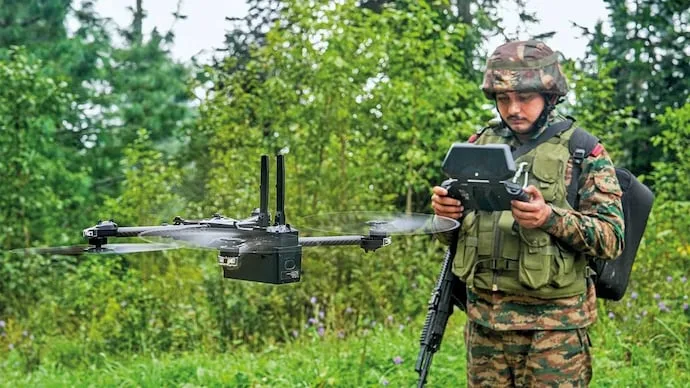

India's drone acquisitions are entering a major expansion phase following Operation Sindoor, with the armed forces preparing purchases worth more than ₹1.5 lakh crore over the next five years. However, despite growing investments in unmanned warfare, the country continues to face significant challenges in domestic manufacturing, component availability, military coordination and operational integration.
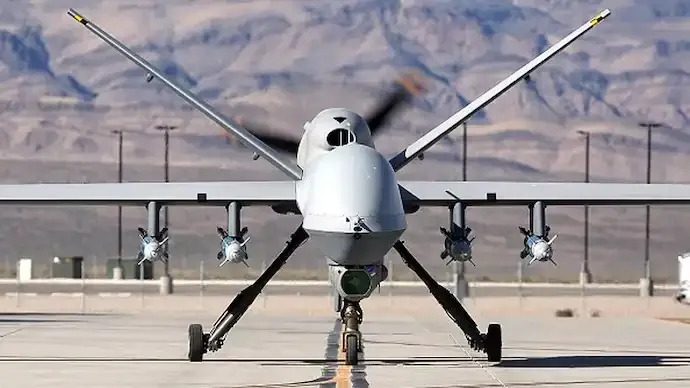
The 88-hour Operation Sindoor conflict highlighted the growing importance of drones in modern warfare. Indian military forces used drones for surveillance and strikes, while the Indian Air Force deployed BrahMos missiles and Harop loitering munitions against military targets.
The experience has accelerated India's efforts to expand its unmanned aerial capabilities.

India Plans Major Expansion of Military Drone Arsenal
The Indian Army is preparing to evaluate jet-powered kamikaze drones developed by around a dozen domestic companies, with plans to acquire approximately 540 units.
The Indian Air Force (IAF) is also pursuing several unmanned systems, including high-altitude pseudo-satellites, long-endurance surveillance platforms and collaborative drone swarms. Its proposed Ghatak stealth bomber programme is expected to receive significant investment.
Meanwhile, the Army plans to train and deploy more than 100,000 drone operators across its infantry formations. The Navy is exploring long-range jet-powered drones and unmanned surface vessels for operations such as mine clearance and potential attacks on enemy warships.
These developments reflect a shift towards using unmanned platforms across land, air and maritime operations.
Manufacturing Capacity Remains a Major Challenge
Despite the growing order pipeline, India lacks the industrial capacity required to manufacture drones at the scale demonstrated by Russia and Ukraine.
Both countries are expected to produce millions of drones annually, supported by large manufacturing ecosystems. India's procurement orders, by comparison, are often placed in smaller quantities, making it difficult for domestic manufacturers to invest in large-scale production facilities.
Experts have also raised concerns about fragmented procurement across the Army, Navy, Air Force and paramilitary organisations. The absence of coordinated, long-term orders limits standardisation and prevents manufacturers from building sustainable production capacity.
Dependence on Imported Components and Chips
India's drone industry also faces significant dependence on imported components, including motors, propellers, carbon fibre, printed circuit boards and flight controllers.
Semiconductors remain another critical weakness. Modern drones rely on specialised chips for navigation, stabilisation, communication and autonomous operations. Most Indian military drones continue to use imported chips, creating potential supply-chain vulnerabilities.
Although domestic initiatives have supported drone development, experts argue that India needs stronger indigenous research, component manufacturing and semiconductor capabilities.
India Needs a Unified Drone Warfare Strategy
Another major challenge is the lack of a comprehensive doctrine for integrating drones across military services. Many systems operate independently, with limited communication between platforms and no fully standardised network for coordinating large-scale drone operations.
Experts have called for a unified command-and-control architecture that connects surveillance systems, drones, sensors and strike platforms. Such integration could create a distributed operational network capable of coordinating multiple systems during combat.
India has made progress in defensive drone detection and air defence through systems such as Akashteer and SAKSHAM. However, building an equivalent offensive network remains an important requirement.
India's expanding drone arsenal demonstrates growing ambition in unmanned warfare. Yet manufacturing independence, indigenous technology, coordinated procurement and a unified operational doctrine will determine whether the country can emerge as a major drone power.
For official defence policy updates, visit the Ministry of Defence.






Conversation
Be kind and stay on topic. Comments are moderated; abuse, spam and personal attacks are removed. Report a problem