

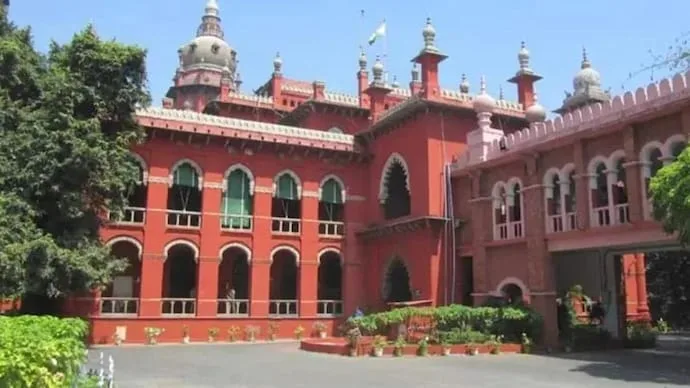

The Madras High Court’s Agamic temple entry ruling has placed conditions on non-Hindus seeking to enter temples governed by traditional Agama shastras, emphasising the importance of religious customs and sanctity. The court said visitors who do not affirm reverence for the presiding deity or comply with established practices cannot be permitted entry.
A division bench of Justices GR Swaminathan and P Murugan at the Madurai Bench issued the order on Tuesday while hearing a public interest litigation filed by K Thangam Venkatesh. The petition sought enforcement of the Tamil Nadu Temple Entry Authorisation Act and accountability for alleged statutory violations.
The judges clarified that the ruling applies specifically to Agamic temples, which are built, consecrated and maintained according to the principles of ancient Agama shastras. They stressed that such temples are places of worship rather than tourist destinations.

Court Emphasises Religious Customs and Entry Rules
The bench said non-Hindus who do not affirm reverence for the presiding deity, including those displaying religious markers associated with other faiths, may be denied entry. Any required affirmation must follow the format prescribed by the temple.
Referring to an earlier ruling in Kalyan Dass, the court observed that the entire temple precinct should be treated as sacred.
The judges also referred to Sections 10 and 24 of the Hindu Religious and Charitable Endowments (HR&CE) Act. Section 10 requires officials appointed under the Act to profess the Hindu religion, while Section 24 concerns officials’ duties to respect temple customs and religious practices.
The bench further noted that Agamic temples maintain specific traditions governing access to the sanctum sanctorum, where the principal deity is housed. Designated priests, including Shivacharyas, Dikshitars and Bhattars, perform rituals in these sanctums.
Court Cites Tamil Nadu Chief Minister’s Temple Visit
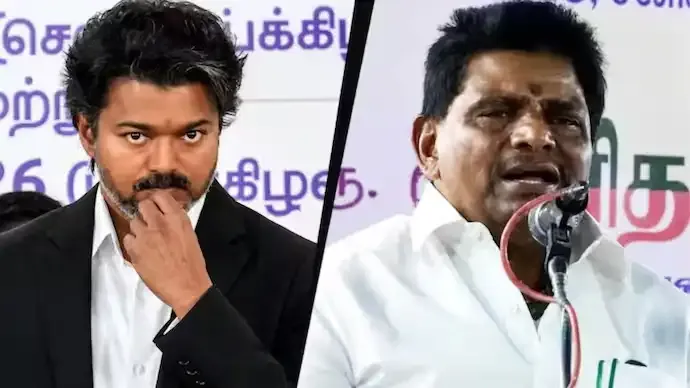
The judges referred to Tamil Nadu Chief Minister C Joseph Vijay’s visit to Madurai’s Meenakshi Amman temple after he reportedly signed the required undertaking.
The bench described the episode as an example of an inclusive approach, observing that Vijay was not asked to convert to Hinduism but was required to affirm reverence for the deity.
The court also referred to an alleged instance involving a minister who entered the Tiruchendur temple without submitting the required undertaking. It criticised the use of temple visits and religious symbols for political purposes, stressing that established customs should apply regardless of a visitor’s public standing.
Court Raises Concerns Over Alleged Temple Entry Violations
The bench took note of a social media video purportedly showing people wearing skull caps entering the Thiruvannamalai Arunachaleswarar temple despite objections from devotees. It questioned the response of the temple’s HR&CE staff during the incident.
The judges also discussed the visit of TVK MLA Badrudeen Mustafa to the Meenakshi Amman temple after his election. According to the court’s observations, Mustafa cited his right to inspect facilities provided to devotees and had climbed the temple towers during a Kumbabishekam ceremony.
The court reiterated that established religious practices and temple-entry rules must be followed irrespective of political affiliation or public position.








Conversation
Be kind and stay on topic. Comments are moderated; abuse, spam and personal attacks are removed. Report a problem