

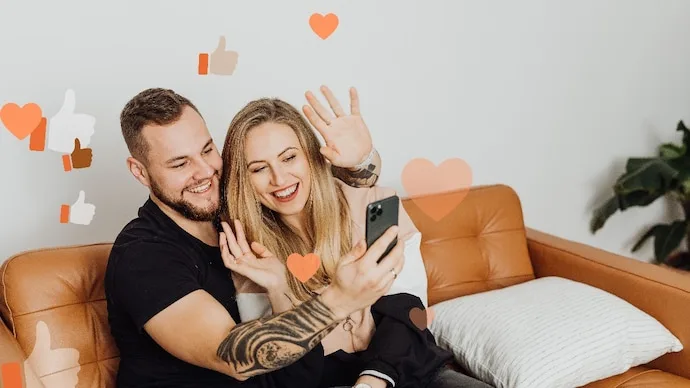

The impact of social media on relationships is becoming increasingly visible as viral Reels and online dating advice influence how people judge their partners. From claims such as “If they wanted to, they would have” to videos showcasing extravagant romantic gestures, social media can make complicated relationships appear deceptively simple.
A recent survey by dating app QuackQuack, involving more than 10,000 Indian daters aged 22 to 38 across metropolitan and smaller cities, examined how relationship content affects expectations in real life. One concern stood out: advice that sounds convincing in a short video may overlook the individual circumstances and communication styles that shape a relationship.
When Viral Relationship Advice Becomes a Relationship Test
Online trends often encourage people to measure their partners against ideas of “high-value” relationships, elaborate dates and what social media labels as the bare minimum.

According to the survey, 4,694 daters aged over 25 believed problems arise when people apply identical relationship rules to every couple.
Six in 10 men surveyed disagreed with the assumption that needing silence or personal space after work automatically indicates emotional unavailability. Meanwhile, 38 per cent of respondents felt that being unable to organise an elaborate date should not necessarily be interpreted as a lack of effort.
QuackQuack founder and CEO Ravi Mittal cautioned against applying every online relationship rule without considering its context. A missed call, for instance, might indicate a communication problem in some situations, but it does not automatically prove emotional neglect.
Can Social Media Also Teach Healthy Boundaries?
Despite the risks, respondents did not dismiss relationship content entirely. Around 48 per cent felt its influence could not simply be ignored, while approximately 27 per cent of women in their 30s said such content could sometimes be eye-opening.
The survey also found that four in 10 participants had learned about boundaries through other people's relationship experiences shared online.
This suggests that social media can offer useful perspectives, provided people distinguish general advice from rules that must apply to every relationship.
The Comparison Trap Behind Perfect Couple Reels
The irony is that many people recognise the curated nature of online relationships but still compare them with their own lives.
According to the survey, 3,347 respondents acknowledged that online couples selectively present their experiences, sometimes using multiple takes to capture seemingly perfect moments, yet continued comparing themselves with those portrayals.
One participant, Akriti from Bengaluru, observed that cinematic proposals, elaborate surprises and dreamy couple photographs can make ordinary expressions of love seem less valuable.
What Matters More Than a Viral Reel?
Before forwarding a relationship Reel as a hint to a partner, it may help to identify the actual concern behind it. Is it a need for attention, reassurance, better communication or a recurring issue that deserves an honest conversation?
Social media can inspire people to recognise unhealthy patterns and establish boundaries. However, meaningful relationships require understanding, mutual effort and conversations that go beyond viral advice.
Ultimately, the question is not whether relationship Reels are good or bad. It is whether people are using them as conversation starters or treating them as universal verdicts on their partners.









Conversation
Be kind and stay on topic. Comments are moderated; abuse, spam and personal attacks are removed. Report a problem