

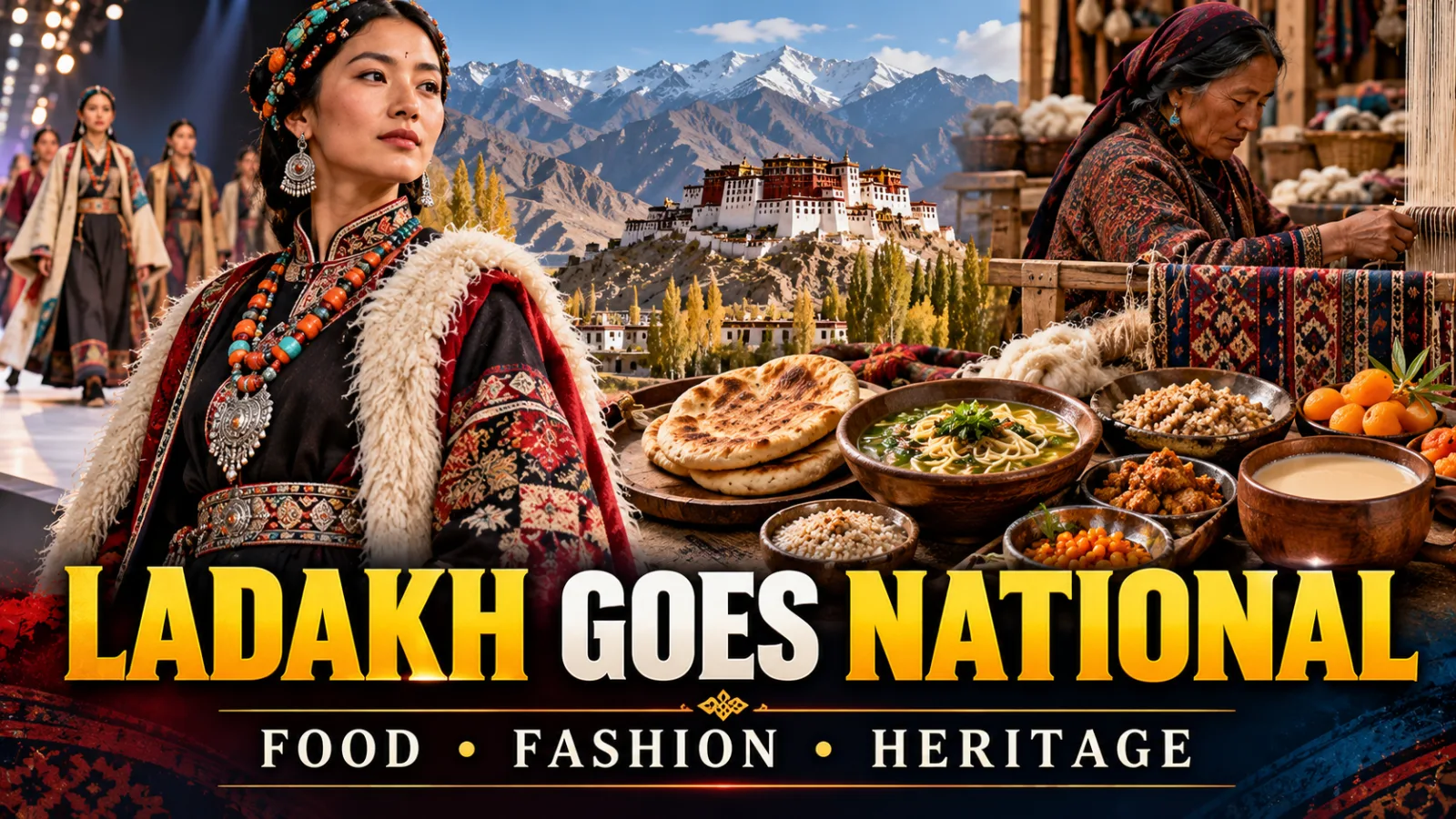

Ladakh is becoming more than a travel destination. Its traditional food, distinctive ingredients and indigenous textiles are increasingly appearing on restaurant menus, cocktail lists and fashion runways across India. The growing interest reflects a wider appreciation for regional Indian cultures and the artisans, chefs and designers working to preserve them.
The region’s visibility has grown through high-profile culinary events, restaurant collaborations and fashion showcases. Ladakhi dishes featured at a state dinner hosted by President Droupadi Murmu for Swiss Confederation President Guy Parmelin on October 5, bringing the region’s culinary traditions to a prominent international gathering.
Ladakhi Food Finds a Place on India’s Fine-Dining Menus
Ladakhi cuisine draws on ingredients such as barley, sea buckthorn, apricots, wild greens, yak cheese and traditional mountain dairy. Its dishes also reflect the region’s short growing season and longstanding techniques for preserving seasonal produce.

At the state dinner, the menu included Za Thuk, a nettle soup served with winter peas and roasted millet pearls, and Phorok Nangka, a charcoal-roasted whole-wheat dumpling filled with turnip greens and caper leaves. Dessert featured Phaymer, made with roasted barley, jaggery and butter, while Gur Gur Chai, the region’s traditional butter tea, completed the menu.
Restaurants are also exploring Ladakhi ingredients through contemporary cooking. At Naar, chef Prateek Sadhu incorporates regional staples such as chutagi, a buckwheat pasta, and khambir, a traditional bread. Ladakhi apricots, known locally as chulli, are used to create liqueurs and oils.
In Delhi-NCR, The Brook and Sidecar have drawn inspiration from Ladakhi flavours and cooking techniques. Their interpretations include variations on thukpa, momo and tingmo, along with experimental cocktails featuring ingredients such as sea buckthorn, wild rhubarb bitters and yak cheese.
Ladakhi chef Jigmet Mingyur is also introducing regional dishes through restaurant and hotel pop-ups in cities including Bengaluru, Kolkata and Delhi, showcasing traditional grains, preserved fruits, mountain dairy and foraged ingredients.
Reviving Recipes and Protecting Culinary Heritage
For Padma Yangchan, founder of Namza Couture and NAMZA Dining, the growing attention creates an opportunity to preserve recipes that risk disappearing from everyday life.
Dishes such as drapu, gyuma and phating-e-baley highlight the variety of Ladakhi cooking. By using seasonal ingredients and traditional preparation methods, regional chefs and restaurateurs are helping introduce these lesser-known foods to new audiences.
The trend also reflects growing interest in regional Indian cuisines beyond the country’s better-known culinary traditions.
Ladakhi Fashion Moves Beyond the Mountains
Ladakh’s growing visibility extends to fashion, where designers are bringing indigenous textiles and traditional silhouettes to wider audiences.
Namza Couture, founded in 2016 by Yangchan, works to revive Ladakhi crafts, textiles and garments while adapting them for contemporary wardrobes. The label has attracted celebrity attention, with Sonam Kapoor, Kareena Kapoor Khan and Kangana Ranaut wearing its creations.
At Lakme Fashion Week 2026, a Ladakh-focused showcase featuring Zilzom, Namza Couture and women-led artisanal enterprises Changra Ladakh and Charkha Ladakh highlighted the region’s textile traditions and craftsmanship.
Ladakhi fashion draws on materials including Changthang pashmina, nambu (local sheep wool) and khullu (yak wool). Traditional garments such as the Mogo and Bok, alongside regional embroidery, floral motifs and headgear, provide a distinctive design vocabulary.
Designers are adapting these traditions into jackets, shawls, separates and occasion wear without abandoning their cultural roots. The aim is to make indigenous craftsmanship relevant to younger generations while creating sustained opportunities for artisans.
A Regional Identity Reaching a National Audience
The growing popularity of Ladakhi food and fashion illustrates how regional heritage can travel beyond its place of origin. Restaurants are introducing mountain ingredients to new diners, while designers are bringing traditional textiles into contemporary wardrobes.
For Ladakh, the opportunity extends beyond visibility. Greater national interest could help preserve culinary knowledge, support local makers and encourage younger generations to value their cultural identity.
From barley-based dishes and sea buckthorn drinks to handcrafted pashmina and traditional silhouettes, Ladakh is increasingly becoming part of India’s evolving food and fashion conversation.








Conversation
Be kind and stay on topic. Comments are moderated; abuse, spam and personal attacks are removed. Report a problem