

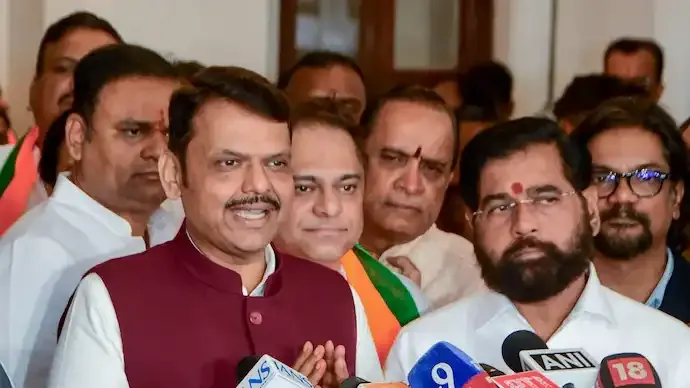

Maharashtra is facing mounting financial pressure as its total debt is projected to reach ₹9.32 lakh crore. The rising debt burden comes at a time when the state government is seeking additional funds to maintain essential services while attempting to control a widening revenue deficit.
Chief Minister Devendra Fadnavis, who currently holds the finance portfolio, presented supplementary budget demands of ₹11,995.33 crore in the state assembly. The new proposal is significantly smaller than earlier demands, reflecting the government’s effort to exercise fiscal restraint. The revenue deficit has already approached ₹2 lakh crore after major spending approvals earlier in the financial year.
Out of the total proposed amount, ₹5,748.10 crore has been earmarked for revenue expenditure to support operational costs such as salaries, subsidies, and ongoing administrative expenses. Another ₹6,003.79 crore has been allocated for capital expenditure, focusing on infrastructure development and long-term asset creation.

The Industries and Energy Department is set to receive the largest share, seeking ₹5,840 crore. Within this allocation, ₹3,262 crore has been designated for the power sector to strengthen electricity supply and infrastructure. Additionally, ₹803 crore has been proposed to support small and village industries, aiming to boost local employment and rural economic growth.
Water supply and sanitation projects will receive ₹1,431 crore, highlighting the government’s focus on improving essential civic infrastructure. Smaller allocations have also been proposed for medical education, rural development, and welfare schemes targeting Other Backward Classes (OBC).
This cautious spending approach follows the Chief Minister’s assumption of the finance portfolio after the passing of former Deputy Chief Minister Ajit Pawar. Unlike previous assembly sessions, where supplementary demands often ran into tens of thousands of crores for new schemes, the current proposal is primarily aimed at meeting existing financial commitments.
With debt levels reaching record highs, the government has shifted its focus toward fiscal discipline and financial sustainability. Officials aim to prevent further widening of the revenue deficit while ensuring that essential development projects and public services continue without disruption.
Economists note that maintaining a balance between development spending and fiscal responsibility will be crucial in the coming years. Strategic investments in infrastructure, energy, and industry are expected to support economic growth, while prudent financial management may help stabilise the state’s long-term fiscal health.
The supplementary demands are expected to be reviewed and approved during the ongoing budget session.







Conversation
Be kind and stay on topic. Comments are moderated; abuse, spam and personal attacks are removed. Report a problem