Shopping cart
Your cart empty!


Your cart empty!
Terms of use dolor sit amet consectetur, adipisicing elit. Recusandae provident ullam aperiam quo ad non corrupti sit vel quam repellat ipsa quod sed, repellendus adipisci, ducimus ea modi odio assumenda.
Lorem ipsum dolor sit amet consectetur adipisicing elit. Sequi, cum esse possimus officiis amet ea voluptatibus libero! Dolorum assumenda esse, deserunt ipsum ad iusto! Praesentium error nobis tenetur at, quis nostrum facere excepturi architecto totam.
Lorem ipsum dolor sit amet consectetur adipisicing elit. Inventore, soluta alias eaque modi ipsum sint iusto fugiat vero velit rerum.
Sequi, cum esse possimus officiis amet ea voluptatibus libero! Dolorum assumenda esse, deserunt ipsum ad iusto! Praesentium error nobis tenetur at, quis nostrum facere excepturi architecto totam.
Lorem ipsum dolor sit amet consectetur adipisicing elit. Inventore, soluta alias eaque modi ipsum sint iusto fugiat vero velit rerum.
Dolor sit amet consectetur adipisicing elit. Sequi, cum esse possimus officiis amet ea voluptatibus libero! Dolorum assumenda esse, deserunt ipsum ad iusto! Praesentium error nobis tenetur at, quis nostrum facere excepturi architecto totam.
Lorem ipsum dolor sit amet consectetur adipisicing elit. Inventore, soluta alias eaque modi ipsum sint iusto fugiat vero velit rerum.
Sit amet consectetur adipisicing elit. Sequi, cum esse possimus officiis amet ea voluptatibus libero! Dolorum assumenda esse, deserunt ipsum ad iusto! Praesentium error nobis tenetur at, quis nostrum facere excepturi architecto totam.
Lorem ipsum dolor sit amet consectetur adipisicing elit. Inventore, soluta alias eaque modi ipsum sint iusto fugiat vero velit rerum.
Do you agree to our terms? Sign up
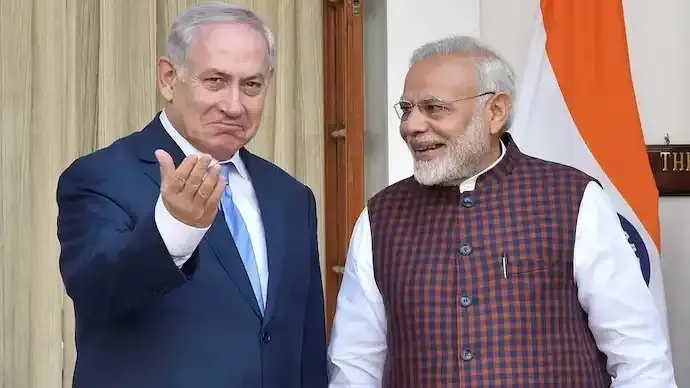
Benjamin Netanyahu has proposed a new geopolitical framework described as a “Hexagon of alliances”, positioning India as a central partner alongside Israel, Greece and Cyprus.
The announcement comes just days before Narendra Modi begins his two-day visit to Israel on February 25–26, where both leaders are expected to discuss regional security and strategic cooperation.
Netanyahu said the proposed grouping would include additional Arab, African and Asian nations and aim to counter extremist threats across the region.
Speaking at a cabinet meeting, Netanyahu described the initiative as a regional security architecture designed to strengthen cooperation among like-minded nations.
The proposed bloc would focus on:
security coordination
intelligence sharing
defence collaboration
counterterrorism efforts
regional stability initiatives
He said the alliance would address threats from both radical Shia and Sunni extremist networks.
The proposal emerges amid growing geopolitical shifts in West Asia and beyond.
Recent developments include:
escalating tensions involving Iran
evolving regional security partnerships
increased cooperation among Mediterranean states
renewed global focus on counterterror alliances
Analysts view the initiative as an attempt to build a structured strategic network rather than isolated bilateral partnerships.
India’s inclusion signals its expanding role in regional and global security frameworks.
New Delhi maintains strong ties with Israel and has steadily deepened cooperation in:
defence technology
cybersecurity and intelligence
maritime security
counterterror operations
innovation and strategic infrastructure
India’s growing influence across West Asia, Africa and the Indo-Pacific adds weight to its potential role within the alliance.
During the visit, Modi and Netanyahu are expected to review bilateral relations and exchange views on regional security challenges.
This would be Modi’s second visit to Israel as prime minister and comes amid deepening defence, technology and economic ties between the two countries.
Unlike earlier regional groupings, the Hexagon proposal signals a move toward a broader multilateral security structure.
Experts say the framework could:
enhance regional deterrence capabilities
strengthen intelligence networks
improve maritime and energy security
counter extremist threats across regions
If implemented, the initiative may reshape strategic alignments across West Asia and the Mediterranean.
78
Published: Feb 25, 2026

All India Story is your trusted source for comprehensive and up-to-the-minute news coverage across India. Bringing you the latest on politics, business, technology, entertainment, sports, and more, we are dedicated to keeping you informed with accurate, engaging, and insightful stories from every corner of the nation.