

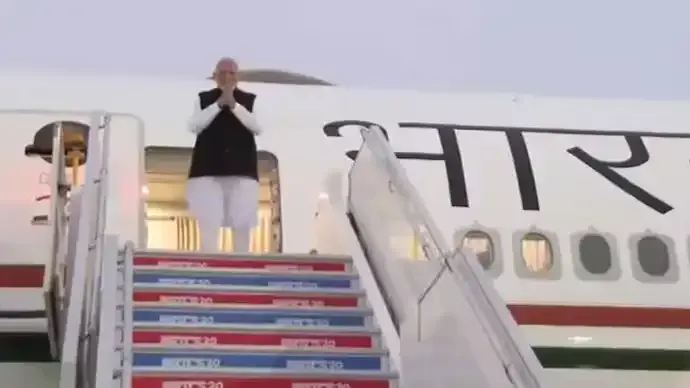

Prime Minister Narendra Modi’s upcoming visit to Jordan on December 15–16 marks a critical moment in India’s evolving West Asia policy. Although the trip is part of a broader multi-nation tour, the Jordan leg stands out for its strategic timing. West Asia is witnessing rapid geopolitical changes after the Gaza conflict, shifting Gulf alliances, and heightened regional security concerns. In this fluid environment, India’s engagement with Jordan—a reliable, moderate Arab partner—highlights New Delhi’s intention to reinforce its diplomatic footprint and act as a responsible regional stakeholder.
This will be Modi’s first stand-alone bilateral visit to Jordan. His previous stop in the country in 2018 was brief and largely ceremonial, whereas the upcoming trip carries substantial political, strategic and economic relevance. Marking 75 years of diplomatic ties, both countries aim to reassess and expand the “entire gamut” of cooperation, as stated by India’s Ministry of External Affairs.
Jordan plays a far more consequential role in regional politics than its size might suggest. As the custodian of Muslim holy sites in Jerusalem and a country hosting a large Palestinian refugee population, Amman remains deeply intertwined with the Israel-Palestine peace process. Jordan’s consistent advocacy for a two-state solution aligns closely with India’s long-standing position. In the aftermath of the Gaza crisis, where regional tensions remain volatile and ceasefire arrangements uncertain, Jordan’s diplomatic influence offers India an important channel for dialogue and humanitarian coordination. Modi’s visit therefore provides an opportunity to reaffirm India’s humanitarian commitments while enhancing strategic consultations with a nation known for its political moderation.

Experts also note that Jordan’s geopolitical significance extends beyond its moral and diplomatic voice. The country has historically played a stabilising role during regional crises and has supported aspects of India’s broader foreign policy, including the Neighbourhood First initiative and New Delhi’s stance on Kashmir. This shared political understanding strengthens the foundation for deeper engagement.
Economically, the visit is expected to expand a partnership that has grown steadily over the years. Bilateral trade reached approximately USD 2.9 billion in 2023–24, with India ranking as Jordan’s fourth-largest trading partner. India relies on Jordan for essential imports such as fertilisers and phosphates, crucial for the agricultural sector. In return, India exports a diverse range of goods including machinery, chemicals, food products, frozen meat and engineering materials.
Jordan’s new wave of economic reforms and emphasis on investment-driven growth present additional opportunities for Indian businesses. Sectors such as renewable energy, automobiles, fintech, pharmaceuticals and advanced manufacturing show strong potential for collaboration. The proposed India-Middle East-Europe Economic Corridor (IMEC), which is expected to pass through Jordan, further boosts the kingdom’s strategic significance. With Jordan seeking improved connectivity and global partnerships, Indian companies are well-positioned to participate in energy, digital infrastructure, logistics and industrial development projects.
Modi’s visit is therefore more than a symbolic diplomatic milestone. It represents a calculated move to strengthen ties with a nation that contributes to regional stability and aligns with India’s long-term strategic and economic objectives. As West Asia undergoes a period of major recalibration, cultivating durable partnerships with countries like Jordan will be essential for protecting India’s geopolitical interests, energy security and the welfare of its large expatriate community.





Conversation
Be kind and stay on topic. Comments are moderated; abuse, spam and personal attacks are removed. Report a problem