

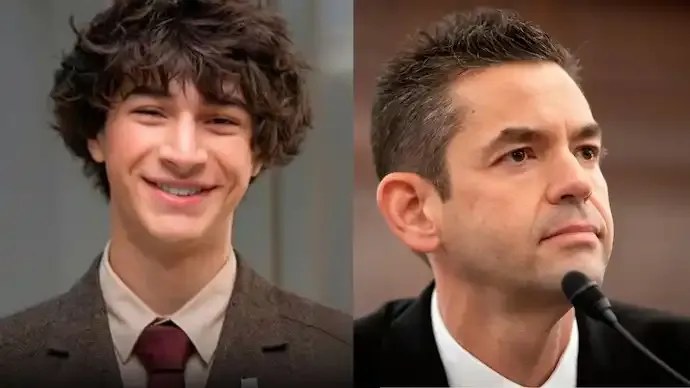

A breakthrough discovery powered by artificial intelligence has earned a US high school student an extraordinary offer from NASA. Matteo Paz, a teenager from California, has been invited to apply for a job at the space agency — along with a fighter jet ride — after identifying nearly 1.5 million previously unseen cosmic objects hidden in archival space data.
The offer came directly from NASA chief Jared Isaacman, who publicly praised the student’s work after it caught the attention of astronomers and space scientists worldwide.
AI Unlocks Forgotten Space Data
Paz made the discovery by applying a custom-built artificial intelligence framework to data from NASA’s now-decommissioned NEOWISE mission. The archive contained more than 200 billion infrared data points, far too vast for traditional analysis methods to fully explore.

Using machine learning, Paz’s model detected subtle variations in infrared signatures that human researchers had previously overlooked. Within weeks, the system flagged a vast range of celestial bodies, including distant quasars, variable stars and supernova candidates.
NASA’s Reaction: Job Offer and Jet Ride
The scale of the discovery quickly reached senior leadership at NASA. Responding publicly, Isaacman wrote that Paz should apply to work at the agency and added a personal incentive — a ride in a fighter jet — as a symbolic signing bonus.
The statement was widely shared across the scientific community, underscoring the growing recognition of AI-driven research and the role of young innovators in modern space science.
Mentorship at Caltech
Paz developed the project while participating in Caltech’s Planet Finder Academy, where he worked alongside astrophysicist Davy Kirkpatrick. The collaboration helped refine the AI model and align its outputs with established astronomical standards.
The findings have since been validated and published in The Astronomical Journal, marking a rare achievement for a researcher still in high school.
Impact on Ongoing Space Missions
The discovery is already influencing active astronomy programmes. Coordinates identified by Paz’s AI system are being used to guide follow-up observations by the James Webb Space Telescope, helping scientists prioritise targets for deeper study.
Researchers say the work demonstrates how legacy mission data, when combined with modern AI tools, can still yield transformative scientific results.
A Sign of Changing Astronomy
The episode highlights a broader shift in space research, where artificial intelligence and young contributors are becoming central to discovery. Experts say Paz’s work shows how unconventional approaches and fresh perspectives can accelerate progress in understanding the universe.
For NASA, the message is equally clear: talent can emerge from anywhere — including a high school classroom — when curiosity meets cutting-edge technology.






Conversation
Be kind and stay on topic. Comments are moderated; abuse, spam and personal attacks are removed. Report a problem