

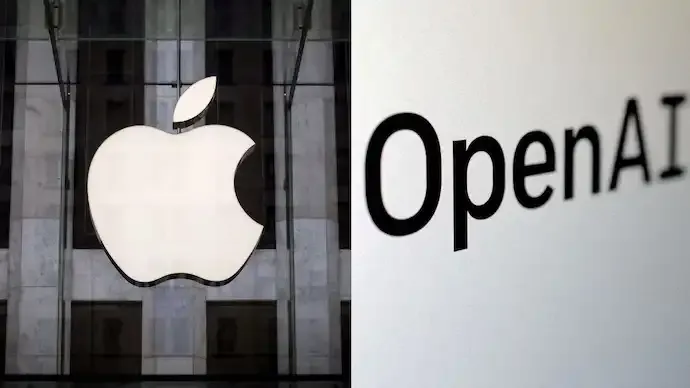

Apple has filed a lawsuit against OpenAI, its commercial entities, hardware startup io Products, and two former Apple executives, accusing them of misappropriating confidential trade secrets to accelerate OpenAI's push into AI-powered consumer hardware.
The lawsuit, filed in the US District Court for the Northern District of California, marks a significant escalation in tensions between two companies that remain commercial partners while increasingly becoming rivals in the artificial intelligence market.
Apple Alleges Systematic Misuse of Confidential Information
According to the complaint, Apple alleges OpenAI orchestrated a coordinated effort to obtain and use proprietary hardware information through former employees, supplier relationships and recruitment practices.

The company claims the confidential information was used to strengthen OpenAI's ambitions in consumer hardware, an area expected to become one of the next major battlegrounds in artificial intelligence.
OpenAI had not publicly responded to the lawsuit at the time of publication.
Former Apple Executives Named in the Lawsuit
Apple has named Chang Liu, a former senior system electrical engineer, and Tang Yew Tan, the company's former Vice President of Product Design for the iPhone and Apple Watch, as defendants.
According to Apple:
- Chang Liu allegedly retained a company-issued laptop after leaving the company.
- Apple claims he later exploited an authentication vulnerability to access Apple's internal systems and downloaded confidential hardware-related documents.
- Tang Yew Tan allegedly emailed confidential supplier information and internal industry summaries to himself before joining OpenAI.
- Apple also alleges Tang encouraged prospective OpenAI recruits to bring Apple hardware components to interviews for "show and tell" sessions.
Neither former employee has publicly responded to the allegations.
Hardware Competition Intensifies
The lawsuit reflects the growing competition between Apple and OpenAI beyond software and generative AI.
Industry analysts believe OpenAI is developing AI-powered consumer hardware that could eventually compete with smartphones, including the iPhone.
Technology analyst Paolo Pescatore described the dispute as evidence of a changing relationship.
Apple increasingly views OpenAI as a future hardware rival, while OpenAI is attempting to build a direct relationship with consumers through AI-first devices.
Even if Apple's allegations are ultimately not proven, analysts say the legal proceedings could slow OpenAI's hardware roadmap.
Apple Questions OpenAI's Hiring Practices
Apple's complaint notes that more than 400 former Apple employees now work at OpenAI.
While acknowledging that employees naturally carry experience gained during previous employment, Apple argues this does not permit the use of confidential trade secrets.
The lawsuit also alleges that OpenAI employees sought proprietary manufacturing knowledge from Apple suppliers.
In one example cited by Apple, a supplier reportedly carried out a specialised metal-finishing process believing OpenAI had Apple's authorisation to use it.
Partnership Continues Despite Legal Battle
The lawsuit comes despite an ongoing business relationship between the companies.
In 2024, Apple integrated ChatGPT into Apple Intelligence, allowing Siri users to access OpenAI's chatbot directly on Apple devices.
Apple also enables iPhone users to purchase ChatGPT subscriptions through iOS settings.
However, the lawsuit highlights the increasingly complex relationship between collaboration and competition as both companies invest heavily in next-generation AI technologies.
OpenAI's Hardware Ambitions
OpenAI significantly expanded its hardware strategy through its $6.5 billion acquisition of io Products, the startup founded by former Apple design chief Jony Ive.
Although io Products is named as a defendant, Jony Ive himself has not been named in Apple's lawsuit.
The acquisition strengthened speculation that OpenAI intends to launch dedicated AI hardware capable of reducing reliance on traditional smartphones and operating systems.
What Happens Next?
The case is expected to examine whether former Apple employees unlawfully transferred confidential information and whether OpenAI knowingly benefited from proprietary technology.
The outcome could have broader implications for employee mobility, intellectual property protection and competition within the rapidly expanding AI hardware industry.
Featured Snippet
Apple has sued OpenAI, io Products and two former employees, alleging they misused confidential trade secrets to accelerate OpenAI's AI hardware development. The lawsuit intensifies competition between the two companies despite their existing partnership on Apple Intelligence.
Key Highlights
- Apple has filed a trade secrets lawsuit against OpenAI, io Products and two former executives.
- The company alleges confidential hardware information was used to accelerate OpenAI's consumer hardware projects.
- Former Apple executives Chang Liu and Tang Yew Tan have been named as defendants.
- Apple claims OpenAI improperly benefited from supplier relationships and confidential manufacturing information.
- The lawsuit comes despite Apple's ongoing partnership with OpenAI through Apple Intelligence.
- OpenAI's acquisition of io Products has increased speculation about its AI hardware ambitions.
Conclusion
Apple's lawsuit signals a major escalation in the battle for leadership in AI-powered consumer devices. While the two companies continue to collaborate through Apple Intelligence, the legal dispute highlights growing competition over the future of hardware, intellectual property and artificial intelligence. The case could become one of the most closely watched technology lawsuits as AI companies race to define the next generation of consumer products.
FAQs
1. Why is Apple suing OpenAI?
Apple alleges OpenAI and former Apple employees misappropriated confidential trade secrets related to consumer hardware development.
2. Who are the former Apple employees named in the lawsuit?
The lawsuit names Chang Liu and Tang Yew Tan, both former Apple executives who later joined OpenAI.
3. What is Apple accusing OpenAI of?
Apple claims OpenAI benefited from confidential information involving hardware design, suppliers and manufacturing processes.
4. Does Apple still work with OpenAI?
Yes. Apple continues to integrate ChatGPT into Apple Intelligence despite the ongoing legal dispute.
5. What is io Products?
io Products is an AI hardware startup founded by former Apple designer Jony Ive that was acquired by OpenAI for approximately $6.5 billion.
6. Why is this lawsuit significant?
The case reflects growing competition between Apple and OpenAI in AI-powered consumer hardware and could influence future intellectual property disputes across the technology industry.





Conversation
Be kind and stay on topic. Comments are moderated; abuse, spam and personal attacks are removed. Report a problem