

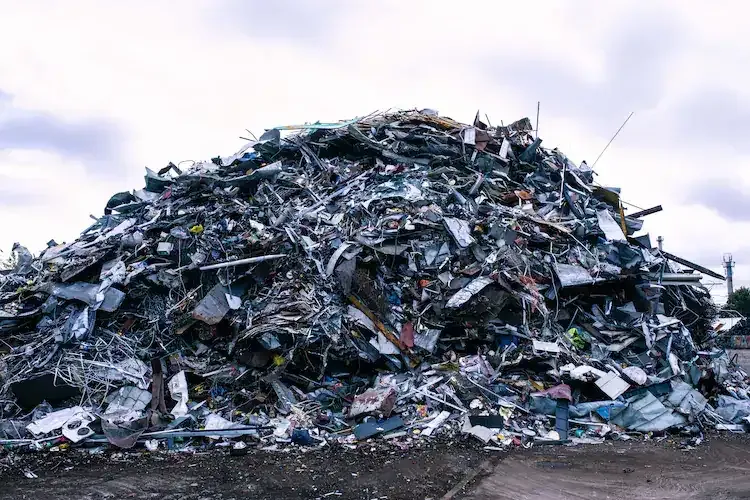

India's rapid digital transformation has powered economic growth, expanded internet access and accelerated electric vehicle (EV) adoption. But alongside this technological progress, another challenge is growing quietly in the background—electronic waste.
Discarded smartphones, laptops, televisions, batteries, chargers and other electronic devices now make up one of the fastest-growing waste streams in the country. While most of these items disappear from daily life after they stop working, their environmental impact continues for years if they are not disposed of responsibly.
Recognising this emerging challenge, the Delhi government has introduced a dedicated battery recycling framework under its EV Policy 2026. Although primarily designed to support electric mobility and reduce pollution, experts believe the policy could become a blueprint for tackling India's broader e-waste crisis.

Delhi's EV Policy Signals a Shift in Waste Management
The newly notified Delhi EV Policy 2026 introduces structured guidelines for handling end-of-life EV batteries.
Under the framework, the Delhi Pollution Control Committee (DPCC) has been designated as the nodal agency responsible for developing standard operating procedures (SOPs) covering:
- Collection of used batteries
- Safe storage
- Transportation
- Recycling and disposal
- Compliance monitoring
The framework also aligns with the Battery Waste Management Rules, 2022, which mandate producers to collect and recycle spent batteries through authorised channels.
While the policy focuses on electric vehicle batteries, environmental experts say it represents a broader shift—from viewing electronic waste as garbage to treating it as a valuable resource that can be recovered and reused.
What Is E-Waste?
Electronic waste, commonly called e-waste, includes discarded electrical and electronic products that have reached the end of their useful life.
These include:
- Mobile phones
- Computers and laptops
- Tablets
- Televisions
- Refrigerators
- Air conditioners
- Batteries
- Chargers
- Household appliances
- Electronic accessories
Unlike ordinary household waste, e-waste contains hazardous materials including:
- Lead
- Cadmium
- Chromium
- Mercury
- Brominated flame retardants
Improper disposal through open burning or landfill dumping can contaminate soil, groundwater and air, creating serious environmental and public health risks.
E-Waste Is Also a Valuable Resource
Despite its environmental risks, e-waste is rich in recoverable materials.
Modern electronic devices contain valuable metals such as:
- Gold
- Silver
- Copper
- Aluminium
- Lithium
- Cobalt
- Nickel
Recovering these materials reduces dependence on mining, conserves natural resources and supports a circular economy.
Environmental experts describe discarded electronics as an "urban mine" because they contain high-value raw materials that can be recycled and returned to manufacturing.
India's E-Waste Challenge Is Growing Rapidly
India's digital economy continues to expand at an unprecedented pace.
With millions of new smartphones, laptops, household appliances and EVs entering the market every year, electronic waste is also increasing rapidly.
According to available data:
- India generated approximately 3.8 million metric tonnes (MMT) of e-waste in FY24.
- The country is now the third-largest e-waste generator in the world.
- Annual e-waste generation increased from 1.01 million metric tonnes in 2019–20 to 1.751 million metric tonnes in 2023–24, according to the Central Pollution Control Board (CPCB).
Although formal recycling capacity has expanded, a significant portion of India's electronic waste continues to be handled by the informal sector.
Why Informal Recycling Is a Concern
Much of India's discarded electronics still pass through informal recycling networks.
These operations often involve:
- Manual dismantling
- Open burning
- Acid extraction
- Unsafe handling of hazardous materials
Such practices expose workers and nearby communities to toxic chemicals while reducing the recovery of valuable metals.
Experts argue that formal recycling infrastructure can recover more materials safely while minimising environmental damage.
Why EV Batteries Need Special Attention
Electric vehicles are expected to play a major role in India's clean energy transition.
However, every EV battery has a finite lifespan.
Without proper recycling systems, used lithium-ion batteries could become one of the country's biggest future waste challenges.
Improper disposal may lead to:
- Soil contamination
- Groundwater pollution
- Fire hazards
- Loss of critical minerals
India currently imports significant quantities of lithium, cobalt, nickel and graphite. Efficient battery recycling can reduce import dependence while strengthening domestic resource security.
Delhi's Policy Could Become a National Model
Experts believe Delhi's battery recycling framework is important because it attempts to address a future waste stream before it becomes unmanageable.
Key priorities include:
Formal Collection Systems
Ensuring batteries reach authorised recycling facilities instead of informal markets.
Producer Responsibility
Manufacturers remain responsible for collecting and recycling batteries after their useful life.
Traceability
Tracking batteries throughout their lifecycle to prevent illegal disposal.
Recycling Infrastructure
Developing modern facilities capable of safely recovering valuable materials.
Consumer Awareness
Encouraging citizens to dispose of batteries and electronics responsibly.
Together, these measures could significantly improve India's recycling ecosystem.
The Economic Opportunity Behind E-Waste
E-waste is not just an environmental challenge—it is also an economic opportunity.
Experts estimate that India's discarded electronics contain billions of dollars worth of recoverable materials, although only a portion can currently be extracted using existing recycling technologies.
Improving recovery rates could:
- Reduce raw material imports
- Create green jobs
- Support domestic manufacturing
- Lower environmental costs
- Strengthen the circular economy
Instead of ending up in landfills, yesterday's electronics could become tomorrow's manufacturing inputs.
Why Public Participation Matters
Government policies alone cannot solve the e-waste problem.
Citizens also play a critical role by:
- Using authorised e-waste collection centres
- Avoiding informal scrap dealers
- Recycling old electronics responsibly
- Returning EV batteries through approved channels
- Extending device lifespan through repairs whenever possible
Public awareness remains one of the biggest gaps in India's recycling ecosystem.
Featured Snippet
India has become the world's third-largest e-waste generator as digital adoption and electric vehicle use continue to rise. Delhi's EV Policy 2026 introduces a dedicated battery recycling framework aimed at improving collection, recycling and resource recovery, offering a potential model for sustainable electronic waste management across the country.
Key Highlights
- India is the world's third-largest e-waste generator.
- Delhi's EV Policy 2026 introduces a battery recycling framework.
- DPCC will coordinate battery collection and recycling guidelines.
- E-waste contains hazardous materials as well as valuable metals.
- Informal recycling continues to dominate large parts of India's e-waste sector.
- Lithium-ion battery recycling is becoming increasingly important with rising EV adoption.
- Experts say e-waste should be viewed as a valuable resource rather than waste.
- Stronger recycling systems can support India's circular economy and reduce import dependence.
Conclusion
India's e-waste challenge is growing alongside its digital economy and electric mobility ambitions. Delhi's battery recycling framework marks an important step toward addressing this issue before it reaches unmanageable levels. While the policy alone cannot solve the country's electronic waste problem, it demonstrates how governments can integrate environmental protection, resource recovery and sustainable development into future planning. If supported by stronger enforcement, modern recycling infrastructure and greater public participation, such initiatives could help transform electronic waste from an environmental burden into a valuable economic resource.
FAQs
1. What is e-waste?
E-waste refers to discarded electrical and electronic devices such as phones, laptops, televisions, batteries and household appliances.
2. Why is e-waste dangerous?
Improper disposal releases hazardous substances like lead, cadmium and chromium into the environment, contaminating soil, water and air.
3. Why is India facing an e-waste challenge?
Rapid digitalisation, increasing electronic consumption and rising EV adoption have significantly increased electronic waste generation.
4. What does Delhi's EV Policy 2026 introduce?
The policy establishes a structured battery recycling framework covering collection, storage, transportation and recycling of used EV batteries.
5. What is the role of the DPCC?
The Delhi Pollution Control Committee will develop and oversee standard operating procedures for battery waste management.
6. Can valuable materials be recovered from e-waste?
Yes. Gold, silver, copper, lithium, cobalt, nickel and several other metals can be recovered through scientific recycling.
7. Why is battery recycling important?
It prevents pollution, recovers critical minerals and reduces dependence on imported raw materials.
8. How can citizens help reduce e-waste?
People should dispose of electronics through authorised collection centres, avoid informal recycling and participate in approved take-back programmes.






Conversation
Be kind and stay on topic. Comments are moderated; abuse, spam and personal attacks are removed. Report a problem