

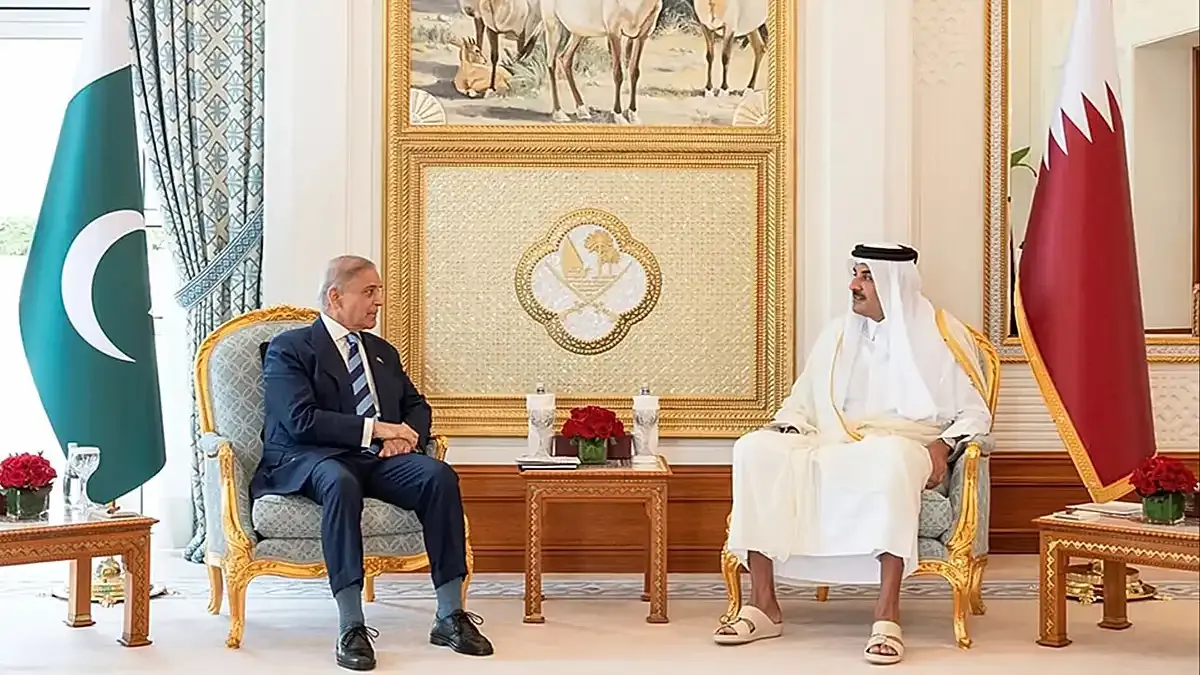

Pakistan Prime Minister Shehbaz Sharif has held separate telephone conversations with the leaders of Iran and Qatar in an effort to revive the stalled US-Iran peace talks and prevent renewed tensions from derailing regional diplomacy.
The discussions focused on preserving the Islamabad Memorandum of Understanding (MoU), which laid the groundwork for renewed dialogue between Washington and Tehran.
Sharif Calls for Restraint
During his conversation with Iranian President Masoud Pezeshkian, Sharif expressed concern over the recent escalation in regional tensions and urged all parties to avoid actions that could undermine ongoing peace efforts.

According to Pakistan's Prime Minister's Office, Sharif stressed the importance of restoring regional peace and stability while safeguarding the progress achieved through diplomatic engagement over recent months.
He described the Islamabad MoU as a lasting framework for promoting mutual understanding, regional cooperation and long-term stability.
Pakistan Reaffirms Mediation Role
Sharif reiterated Pakistan's willingness to continue supporting diplomatic initiatives aimed at reducing tensions across West Asia.
He assured President Pezeshkian that Islamabad remained committed to playing an "honest and sincere" role in facilitating dialogue and encouraging peaceful resolution of disputes.
The Iranian president, in turn, thanked Pakistan's leadership for its support and reaffirmed Tehran's commitment to regional peace.
Both leaders also reviewed decisions taken during Pezeshkian's recent visit to Islamabad and agreed to accelerate bilateral cooperation across multiple sectors.
Separate Talks With Qatar
Sharif also held discussions with Qatar's Emir Sheikh Tamim bin Hamad Al Thani, where both leaders expressed concern over the deteriorating regional security situation.
The Pakistani Prime Minister reaffirmed Islamabad's solidarity with Qatar following recent attacks in the region and stressed the importance of restraint from all parties.
Sharif also thanked Qatar for supporting diplomatic efforts that resulted in the Islamabad MoU and the first round of technical-level negotiations held in Switzerland.
Both leaders agreed that continued dialogue remains the most effective path towards preserving regional stability.
Islamabad MoU at the Centre
The Islamabad Memorandum of Understanding, signed on June 18, seeks to revive diplomatic engagement between the United States and Iran after years of strained relations.
The agreement was followed by technical-level discussions in Burgenstock, Switzerland, on June 21, with Pakistan and Qatar acting as facilitators.
Sharif's latest diplomatic outreach is widely seen as an effort to keep those negotiations alive despite renewed geopolitical tensions.
Focus on Regional Stability
The renewed engagement comes amid continued instability across West Asia, where multiple conflicts have complicated diplomatic efforts.
Pakistan has positioned itself as a supporter of dialogue-based conflict resolution, advocating restraint while encouraging all stakeholders to honour commitments made under the peace framework.
Featured Snippet
Pakistan Prime Minister Shehbaz Sharif held separate talks with the leaders of Iran and Qatar to support the stalled US-Iran peace process. He urged restraint, reaffirmed Pakistan's commitment to diplomacy and called for preserving the Islamabad Memorandum of Understanding aimed at restoring regional stability.
Key Highlights
- Shehbaz Sharif spoke separately with the leaders of Iran and Qatar.
- The discussions focused on reviving stalled US-Iran peace negotiations.
- Pakistan urged all sides to exercise restraint amid regional tensions.
- Sharif reaffirmed support for the Islamabad Memorandum of Understanding.
- Iran and Pakistan agreed to strengthen bilateral cooperation.
- Qatar and Pakistan stressed continued diplomatic engagement.
Conclusion
As regional tensions continue to challenge diplomatic efforts, Pakistan is seeking to reinforce its role as a facilitator of dialogue. Shehbaz Sharif's outreach to Iran and Qatar underscores Islamabad's commitment to keeping the US-Iran peace process alive while encouraging all parties to prioritise diplomacy over confrontation.
FAQs
1. Why did Shehbaz Sharif speak with the leaders of Iran and Qatar?
He sought to support the stalled US-Iran peace talks and reduce regional tensions.
2. What is the Islamabad Memorandum of Understanding?
It is a diplomatic framework signed to facilitate renewed dialogue between the United States and Iran.
3. Who did Shehbaz Sharif speak with?
He held separate discussions with Iranian President Masoud Pezeshkian and Qatar's Emir Sheikh Tamim bin Hamad Al Thani.
4. What role is Pakistan playing?
Pakistan is positioning itself as a diplomatic facilitator supporting dialogue and regional peace.
5. Where were the technical peace talks held?
Technical-level discussions were held in Burgenstock, Switzerland, after the signing of the Islamabad MoU.
6. What was the key message from the talks?
All parties should exercise restraint and continue diplomatic engagement to preserve regional peace.







Conversation
Be kind and stay on topic. Comments are moderated; abuse, spam and personal attacks are removed. Report a problem