

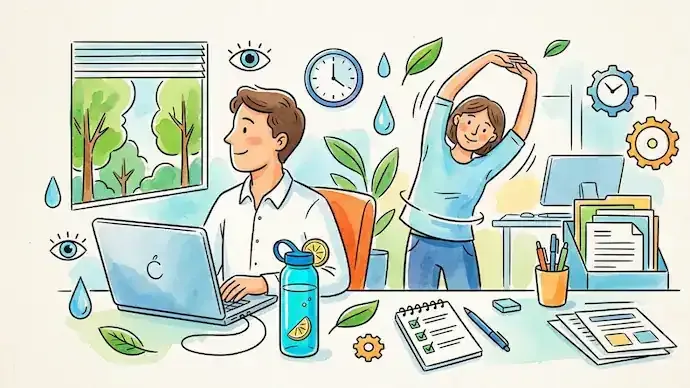

Modern work life often means spending long hours in front of a computer, attending back-to-back meetings, and juggling multiple deadlines. While these routines can help achieve professional goals, they can also lead to eye strain, fatigue, stress, poor posture, and reduced productivity over time.
The good news is that improving your health at work doesn't require major lifestyle changes. Adopting a few simple daily habits can make your workday healthier, more productive, and less stressful.
Here are five workplace habits experts recommend incorporating into your routine.

1. Protect your eyes with the 20-20-20 rule
Staring at digital screens for extended periods can cause digital eye strain, leading to headaches, dry eyes, blurred vision, and difficulty concentrating.
A simple solution is the 20-20-20 rule:
- Every 20 minutes
- Look at something 20 feet away
- For at least 20 seconds
This short break relaxes your eye muscles and encourages you to blink more frequently, reducing dryness and discomfort during long work hours.
2. Stay hydrated throughout the day
Busy schedules often make people forget to drink enough water. However, even mild dehydration can reduce concentration, affect memory, and lower energy levels.
To stay hydrated:
- Keep a reusable water bottle at your desk.
- Sip water regularly instead of waiting until you feel thirsty.
- Add lemon, cucumber, or mint if you find plain water unappealing.
Proper hydration supports brain function, improves alertness, regulates body temperature, and helps maintain productivity throughout the day.
3. Take short movement breaks every hour
Sitting continuously for hours can lead to muscle stiffness, poor posture, reduced blood circulation, and increased fatigue.
Instead of remaining seated all day, take a two- to five-minute movement break every hour. You can:
- Stretch your neck, shoulders, and back.
- Walk around the office.
- Stand while taking phone calls.
- Refill your water bottle.
These brief breaks improve circulation, reduce stiffness, refresh your mind, and help maintain focus.
4. Keep your workspace organised
A cluttered desk can increase distractions and make it harder to stay focused.
Spending just a few minutes organising your workspace each day can help you:
- Find documents quickly.
- Reduce unnecessary stress.
- Improve concentration.
- Create a cleaner and more efficient working environment.
Simple habits like arranging files, organising cables, and wiping your desk at the end of the day can make a noticeable difference.
5. Plan your day before you begin working
Rather than immediately responding to emails or messages, spend the first five to ten minutes planning your day.
Start by:
- Listing your top priorities.
- Identifying urgent deadlines.
- Estimating the time required for important tasks.
- Scheduling breaks between meetings.
Having a clear plan helps reduce stress, improves time management, and allows you to stay focused on high-priority work instead of constantly reacting to interruptions.
Why small habits matter
Healthy workplace habits are built through consistency rather than drastic changes. Small actions performed every day can significantly improve both physical and mental well-being.
Simple practices such as protecting your eyes, drinking enough water, moving regularly, maintaining an organised workspace, and planning your schedule can reduce workplace stress while increasing productivity.
The key is to start with one habit and gradually build a sustainable routine that supports long-term health and better work performance.
Key Highlights
- Follow the 20-20-20 rule to reduce digital eye strain.
- Stay hydrated to improve focus, memory, and energy levels.
- Take short movement breaks every hour to reduce stiffness.
- Maintain a clean and organised workspace for better concentration.
- Plan your workday before starting to improve productivity and reduce stress.
Featured Snippet
Five healthy workplace habits include following the 20-20-20 rule for eye care, staying hydrated, taking hourly movement breaks, keeping your workspace organised, and planning your day before starting work. These simple habits can improve productivity, reduce stress, and support better physical and mental health.
Conclusion
Maintaining good health at work doesn't require dramatic lifestyle changes. Small, consistent habits can have a lasting impact on your productivity, focus, and overall well-being. Whether you work from an office or remotely, incorporating these simple practices into your daily routine can help you stay healthier, happier, and more efficient throughout the workday.
FAQs
1. What are the healthiest workplace habits?
Healthy workplace habits include staying hydrated, taking movement breaks, following the 20-20-20 rule, keeping your desk organised, and planning your day effectively.
2. What is the 20-20-20 rule?
The 20-20-20 rule recommends looking at something 20 feet away for 20 seconds every 20 minutes to reduce digital eye strain.
3. Why is hydration important during work?
Proper hydration improves concentration, memory, energy levels, and overall cognitive performance while reducing fatigue.
4. How often should you take movement breaks at work?
Experts recommend standing up or moving for two to five minutes every hour to improve circulation and reduce muscle stiffness.
5. Does an organised workspace improve productivity?
Yes. A clean and organised workspace reduces distractions, saves time, lowers stress, and helps improve focus.
6. How does planning your day improve work performance?
Planning your day helps prioritise important tasks, manage time effectively, reduce stress, and increase overall productivity.
7. Can small daily habits really improve workplace wellness?
Yes. Consistently practising healthy habits can significantly improve physical health, mental well-being, and work efficiency over time.
8. Who can benefit from these workplace habits?
These habits are useful for office employees, remote workers, students, freelancers, and anyone who spends long hours working on digital devices.









Conversation
Be kind and stay on topic. Comments are moderated; abuse, spam and personal attacks are removed. Report a problem