

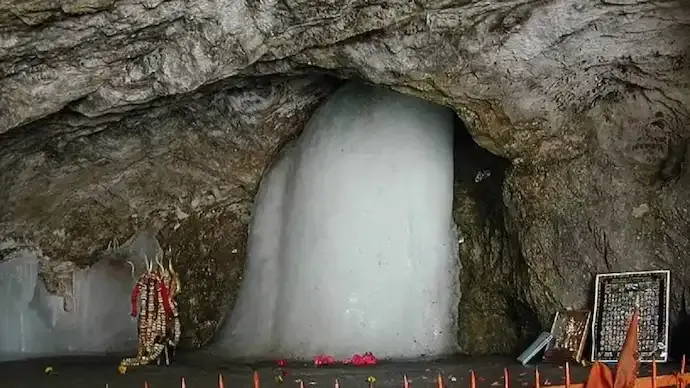

The sacred Amarnath ice lingam, revered by millions of Hindu devotees as Baba Barfani, has shrunk dramatically just days after the beginning of the 57-day Amarnath Yatra 2026, triggering fresh concerns about climate change, environmental degradation and the growing pressure of human activity in one of the Himalayas' most fragile ecosystems.
The naturally formed ice stalagmite inside the Amarnath cave has historically waxed and waned depending on weather conditions. However, its rapid reduction within the first week of this year's pilgrimage has reignited debate over whether rising temperatures alone are responsible or whether increasing pilgrim footfall and infrastructure development are accelerating the process.
The development comes as the annual pilgrimage witnesses one of its strongest turnouts in recent years, reflecting renewed public confidence after last year's terror attack in Pahalgam.

Why Is the Amarnath Ice Lingam Significant?
Situated at an altitude of nearly 3,888 metres in Jammu and Kashmir's Anantnag district, the Amarnath Cave is among Hinduism's holiest pilgrimage sites.
The naturally occurring ice lingam forms every winter when water dripping from the cave roof freezes layer by layer under sub-zero temperatures. Unlike man-made idols, this seasonal ice formation is entirely dependent on natural climatic conditions, making it highly sensitive to changes in temperature and humidity.
For centuries, devotees have regarded the formation as a divine manifestation of Lord Shiva.
Ice Lingam Shrinks Within Days of the Yatra
The Amarnath Yatra commenced on July 3 under extensive security arrangements.
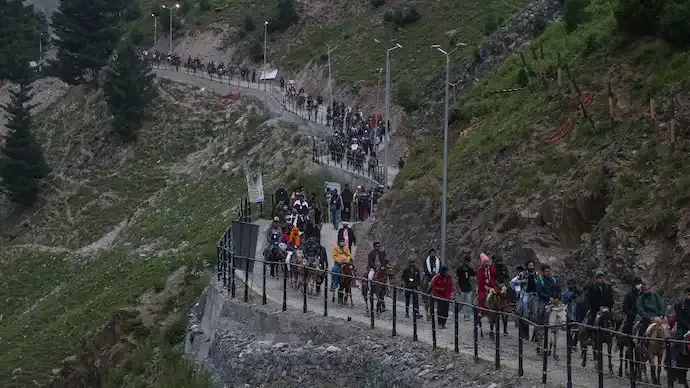
Within the first few days, thousands of pilgrims reached the shrine, but many also noticed that the sacred ice formation had already reduced significantly in size.
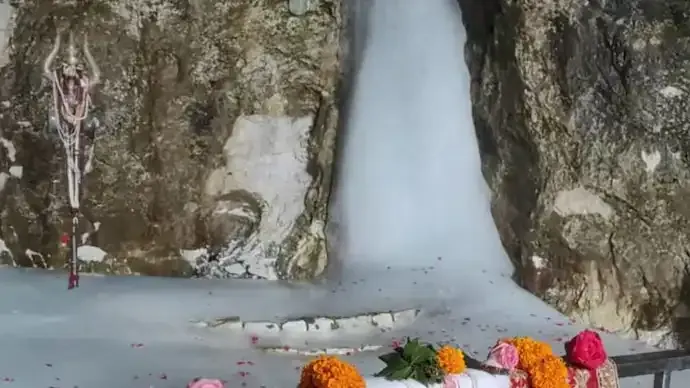
Images and videos circulating online showed a much smaller lingam compared to previous years, prompting widespread discussion on social media and among devotees.
While estimates circulating publicly suggest the formation has melted substantially, authorities have not released any official scientific assessment quantifying the extent of the melting.
Several pilgrims who completed the journey during the opening days also reported that the lingam appeared considerably smaller than expected.
Record Pilgrim Footfall Brings New Challenges
The pilgrimage has witnessed a remarkable rise in participation this year.
More than 93,000 pilgrims visited the shrine during the first four days, making it one of the strongest starts in recent years.
Authorities have also reported a large number of unregistered pilgrims arriving without mandatory medical certification or RFID registration, increasing pressure on security arrangements and logistical infrastructure.
The Shri Amarnath Shrine Board has fixed limits on the number of pilgrims permitted daily through both the Pahalgam and Baltal routes to ensure smoother crowd management.
Despite these measures, officials continue to urge devotees to travel only after completing the prescribed registration process.
Is Climate Change the Biggest Reason?
Scientists have repeatedly warned that the Himalayan region is warming faster than many mountain ranges across the world.
Higher average temperatures, declining snowfall, changing precipitation patterns and shrinking glaciers have already been documented across Jammu and Kashmir.
The Amarnath cave's ice formation depends on a delicate balance of low temperatures and stable humidity. Even small changes in the cave's internal environment can significantly influence the formation and survival of the ice stalagmite.
Experts therefore believe climate change remains one of the strongest explanations for the increasingly early melting observed over recent years.
The Ice Lingam Has Melted Early Before
Although this year's melting has attracted widespread attention, it is not an isolated event.
The sacred ice formation has experienced early melting in several previous years as well.
Available historical observations indicate that the lingam melted significantly earlier than the end of the pilgrimage in multiple years, including 2018, 2020, 2022 and 2024.
The recurring pattern suggests that long-term climatic changes may be influencing the natural cycle of the ice formation rather than a single isolated weather event.
Could Human Activity Also Be Contributing?
Climate change may not be the only factor.
Over the past two decades, the Amarnath pilgrimage has expanded considerably.
Several infrastructure projects have improved accessibility, including:
- Wider approach roads
- Temporary accommodation facilities
- Community kitchens closer to the shrine
- Improved electricity supply
- Solar lighting
- Heavy machinery for route maintenance
- Proposed ropeway project
- Discussions on additional connectivity projects
While these developments have improved safety and accessibility for pilgrims, environmental experts have raised concerns that increased construction and human activity could alter the cave's fragile microclimate.
A greater number of visitors also generates additional body heat, lighting, waste management challenges and logistical pressures that may indirectly influence local environmental conditions.
However, there is currently no scientific evidence proving that infrastructure alone is responsible for the accelerated melting.
Calls for Independent Scientific Study
The rapid shrinking of the ice lingam has renewed demands for a comprehensive scientific investigation.
Environmental observers and political leaders have suggested that an independent assessment should examine whether nearby infrastructure developments have affected airflow, humidity and temperature inside the cave.
Many experts argue that evidence-based research is essential before drawing conclusions, as the issue involves multiple interconnected environmental factors rather than a single cause.
Balancing Faith and Environmental Protection
The Amarnath Yatra remains one of India's largest annual religious pilgrimages and plays a vital role in the economy of Jammu and Kashmir.
At the same time, the shrine lies within an ecologically sensitive Himalayan region that is increasingly vulnerable to climate change.
Experts believe sustainable pilgrimage management will become increasingly important in the coming years.
Possible measures include:
- Strict adherence to daily pilgrim limits
- Better waste management
- Environment-friendly infrastructure
- Scientific monitoring of cave temperatures
- Continuous ecological assessment
- Sustainable tourism practices
Protecting the natural conditions that allow the ice lingam to form may become as important as improving pilgrimage facilities.
Why Does the Ice Lingam Naturally Change Every Year?
Unlike permanent stone shrines, the Amarnath ice lingam is a seasonal natural phenomenon.
Its size varies depending on:
- Snowfall during winter
- Temperature inside the cave
- Humidity levels
- Water seepage from the cave roof
- Weather conditions throughout the pilgrimage season
As a result, no two years produce identical ice formations.
Environmental Impact Beyond the Cave
The discussion surrounding the Amarnath shrine also reflects broader environmental challenges facing the Himalayas.
Scientists have consistently warned that Himalayan glaciers are retreating at an accelerating pace due to rising global temperatures.
These changes threaten:
- Water resources
- Mountain biodiversity
- Local livelihoods
- Pilgrimage routes
- Long-term ecological stability
The early melting of the Amarnath ice lingam has therefore become part of a larger conversation about climate resilience and sustainable development in mountain ecosystems.
Featured Snippet
The Amarnath ice lingam has shrunk dramatically within days of the start of the 2026 Amarnath Yatra. While climate change is considered the primary factor due to rising Himalayan temperatures, experts say growing infrastructure and increased pilgrim activity may also influence the cave's delicate microclimate. No official scientific study has yet identified a single definitive cause.
Key Highlights
- The Amarnath ice lingam has reduced significantly within the first week of the pilgrimage.
- More than 93,000 devotees visited the shrine during the opening days.
- Climate change is considered the leading factor behind early melting.
- Increased pilgrim numbers and infrastructure expansion have renewed environmental concerns.
- No official scientific assessment has confirmed the exact cause of the rapid melting.
- Experts are calling for an independent study of the cave's microclimate.
- Sustainable pilgrimage management is becoming increasingly important for the Himalayan ecosystem.
Conclusion
The early shrinking of the Amarnath ice lingam has once again highlighted the delicate relationship between faith, nature and climate. While rising Himalayan temperatures remain the most widely accepted explanation, the growing scale of the pilgrimage and expanding infrastructure have intensified calls for scientific investigation. As millions continue to visit the sacred cave each year, balancing religious devotion with environmental conservation will be essential to preserving one of India's most revered natural shrines for future generations.
FAQs
1. Why is the Amarnath ice lingam melting early?
Scientists believe rising temperatures linked to climate change are the primary reason, though researchers are also examining whether increased human activity and infrastructure may contribute.
2. What is the Amarnath ice lingam?
It is a naturally formed ice stalagmite created by freezing water droplets inside the Amarnath cave and is worshipped as a sacred symbol of Lord Shiva.
3. Has the ice lingam melted early before?
Yes. Similar early melting has been observed during several previous pilgrimage seasons, indicating a recurring trend.
4. How long does the Amarnath Yatra last?
The 2026 Amarnath Yatra is scheduled to continue for 57 days, beginning on July 3.
5. Is there scientific proof that pilgrims are causing the melting?
No. There is currently no official scientific study directly linking pilgrim numbers to the rapid melting of the ice lingam.
6. Why is the Himalayan climate changing?
The Himalayas are experiencing rising temperatures due to global climate change, resulting in changing snowfall patterns, glacier retreat and warmer mountain environments.
7. What measures are being suggested to protect the shrine?
Experts recommend scientific monitoring, sustainable infrastructure, strict crowd management, better waste disposal and long-term environmental conservation.
8. Where is the Amarnath Cave located?
The Amarnath Cave is located in Jammu and Kashmir's Anantnag district at an altitude of approximately 3,888 metres above sea level.





Conversation
Be kind and stay on topic. Comments are moderated; abuse, spam and personal attacks are removed. Report a problem