

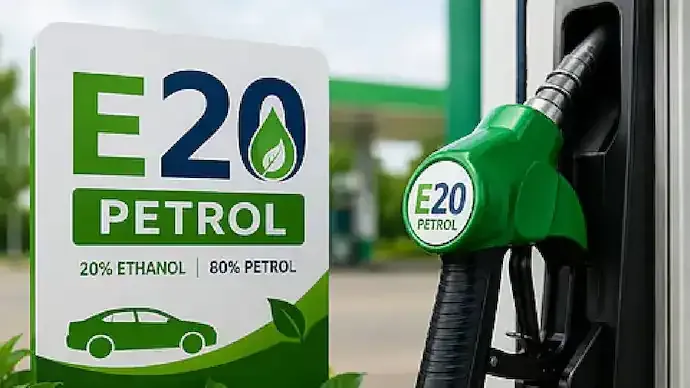

The Centre has clarified that no decision has been taken to increase ethanol blending in petrol beyond the current 20% (E20) level.
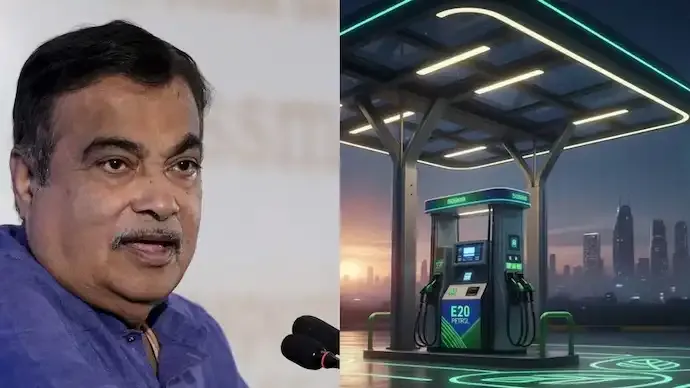
Responding to a question in the Rajya Sabha, Minister of State for Petroleum and Natural Gas Suresh Gopi said any proposal to raise the ethanol blending percentage will only be considered after comprehensive scientific studies and consultations with automobile manufacturers, oil marketing companies, research institutions, and other stakeholders.
The clarification comes amid ongoing discussions over the impact of higher ethanol blends on vehicle performance and fuel infrastructure.

India Achieves E20 Target Ahead of Schedule
The government noted that India has successfully achieved its 20% ethanol blending target five years ahead of its original timeline.
According to the ministry, ethanol blending has steadily increased from approximately 1.53% in 2013-14 to 20% during the 2025-26 supply year, marking one of the country's major energy transition milestones.
The Ethanol Blended Petrol (EBP) Programme has expanded gradually over the past two decades through coordinated efforts between the government, oil companies, and the automobile industry.
Government Lists Economic and Environmental Benefits
The Ministry highlighted several benefits of the ethanol blending programme.
According to official data, the initiative has:
- Reduced dependence on imported crude oil.
- Saved over ₹1.97 lakh crore in foreign exchange.
- Replaced approximately 316 lakh tonnes of crude oil.
- Prevented nearly 952 lakh tonnes of carbon dioxide emissions.
- Generated additional income exceeding ₹1.66 lakh crore for farmers.
Officials said the programme supports both India's energy security and climate goals while creating new income opportunities for the agricultural sector.
No Verified Evidence of Widespread Vehicle Damage
Addressing concerns regarding E20 fuel, the government stated that it has not received any widespread or verified complaints from vehicle manufacturers, automobile associations, or consumer organisations regarding engine failures or fuel system damage.
According to the ministry, scientific assessments and industry service data have not found evidence linking E20 petrol to large-scale problems such as:
- Engine failure
- Fuel pump damage
- Corrosion
- Water contamination
- Major vehicle breakdowns
Officials also cited service records from leading automobile manufacturers covering millions of vehicles that reportedly found no significant issues associated with standard E20 fuel.
Older Vehicles May Experience Slight Mileage Reduction
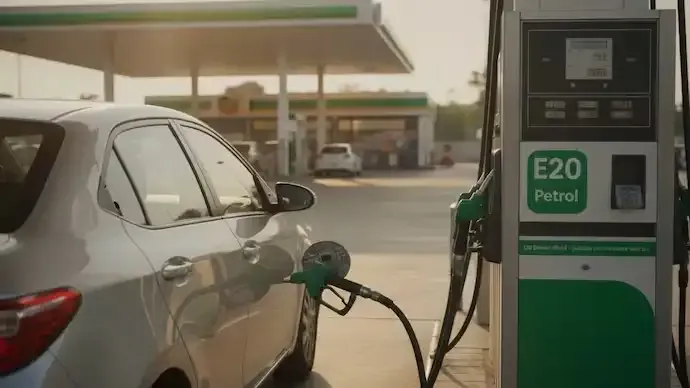
While dismissing concerns over widespread damage, the government acknowledged that older vehicles originally designed for E10 fuel may experience a 3% to 5% reduction in fuel efficiency when using E20 petrol.
However, officials said E20 fuel also offers:
- Higher octane value
- Cleaner combustion
- Lower emissions
The government added that automobile manufacturers continue to honour vehicle warranties for the use of standard E20 fuel wherever applicable.
Food Security and Water Usage Addressed
The ministry also responded to concerns that ethanol production could affect food availability.
According to the government, ethanol is produced using surplus food grains after meeting requirements under:
- The Public Distribution System (PDS)
- National Food Security Act obligations
- Buffer stock norms
Officials further said ethanol production has diversified beyond sugarcane, with maize now contributing around 37% of total ethanol output.
The government also stated that ethanol plants operate under zero-liquid-discharge norms and use treated water efficiently during production.
No Plan for Separate Petrol Grades
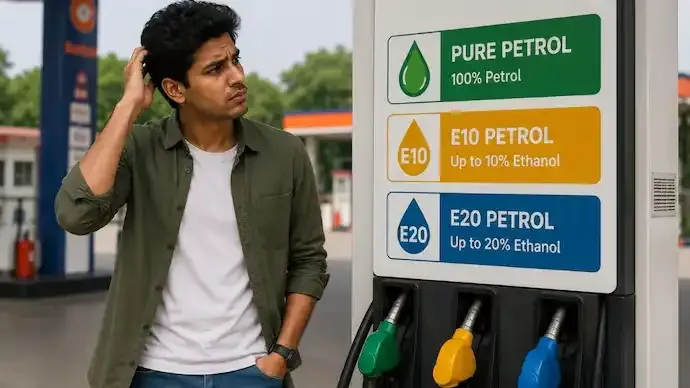
The government ruled out introducing separate fuel stations offering lower ethanol blends or non-blended petrol.
According to the ministry, maintaining multiple fuel supply chains would increase logistics costs while reducing the economic, environmental, and agricultural benefits achieved through the nationwide ethanol blending programme.
For now, the government maintains that E20 remains India's approved standard, and any decision regarding higher ethanol blends will depend on future scientific evidence and stakeholder consultations.
Key Highlights
- The government has not decided to increase ethanol blending beyond E20.
- Any future proposal will follow scientific studies and consultations.
- India achieved its 20% ethanol blending target five years ahead of schedule.
- Officials say there is no verified evidence of widespread vehicle damage caused by E20 fuel.
- Older E10 vehicles may experience a slight reduction in mileage but not significant mechanical issues.
- The government says the programme supports energy security, farmer income, and lower carbon emissions.
Frequently Asked Questions (FAQs)
Has the government decided to increase ethanol blending beyond 20%?
No. The government has stated that no decision has been taken to increase ethanol blending beyond E20.
What is E20 fuel?
E20 petrol contains 20% ethanol and 80% petrol, making it India's current standard blended fuel.
Does E20 damage vehicle engines?
According to the government, there is no verified evidence of widespread engine failure or major vehicle damage caused by standard E20 fuel.
Will older vehicles be affected by E20?
Older vehicles designed for E10 fuel may experience a 3–5% reduction in mileage, but the government says no widespread mechanical issues have been confirmed.
Why is India promoting ethanol blending?
The programme aims to reduce crude oil imports, lower carbon emissions, improve energy security, and increase farmers' income.
Will non-blended petrol be available separately?
No. The government has said there is currently no proposal to introduce separate supply chains for lower-blend or non-blended petrol.





Conversation
Be kind and stay on topic. Comments are moderated; abuse, spam and personal attacks are removed. Report a problem