

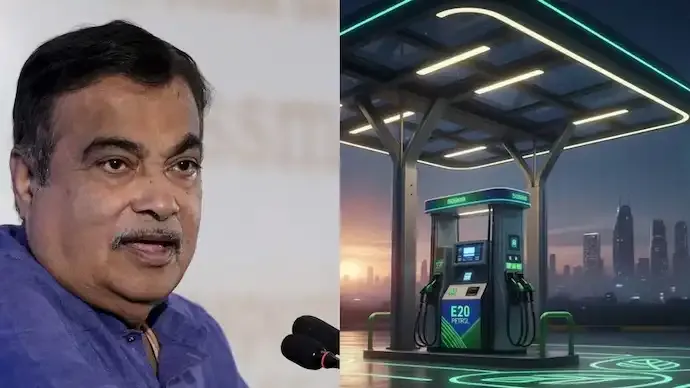

Union Minister Nitin Gadkari has mounted a strong defence of India's E20 ethanol-blended petrol programme, challenging critics to identify even a single vehicle that has suffered damage because of the fuel.
His remarks come amid growing public debate over ethanol-blended petrol, with concerns being raised about fuel efficiency, compatibility with older vehicles and speculation over whether India may eventually transition beyond E20 to higher ethanol blends.
Addressing the Viksit Bharat Conclave, Gadkari rejected allegations that E20 petrol harms vehicles and described criticism of the programme as misinformation aimed at creating unnecessary fear among consumers.

Gadkari throws open challenge to critics
Responding to concerns surrounding ethanol-blended petrol, the Union Minister questioned claims that E20 has caused mechanical damage to vehicles.
"There is no case of any car facing issues due to E20 petrol. Has there been any car in the country that faced issues due to the use of E20 petrol? Just name one," Gadkari said while defending the government's ethanol blending policy.
He further alleged that misleading campaigns were being carried out to discredit India's alternative fuel initiatives.
According to the minister, many of the claims circulating about ethanol-blended petrol are based on misinformation rather than evidence.
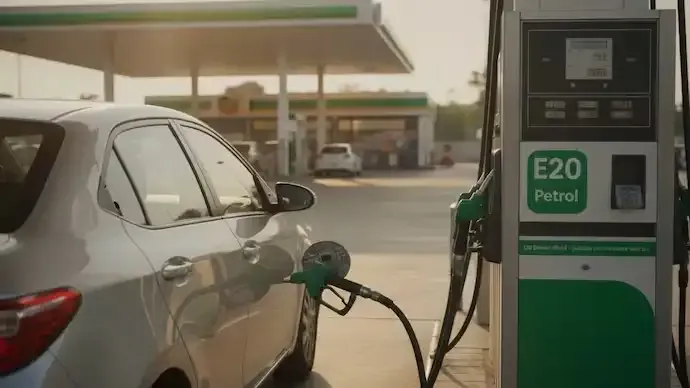
What is E20 fuel?
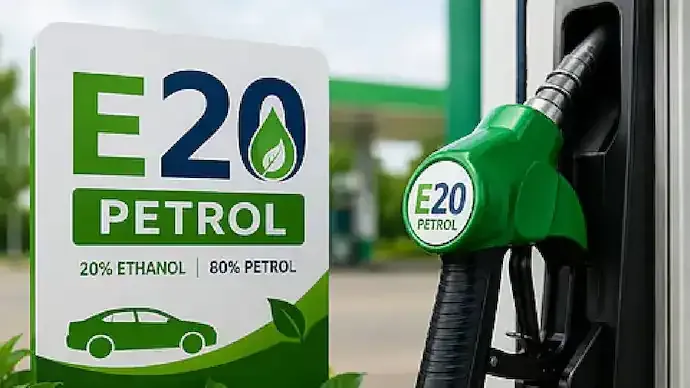
E20 petrol is a blend containing:
- 20% ethanol
- 80% petrol
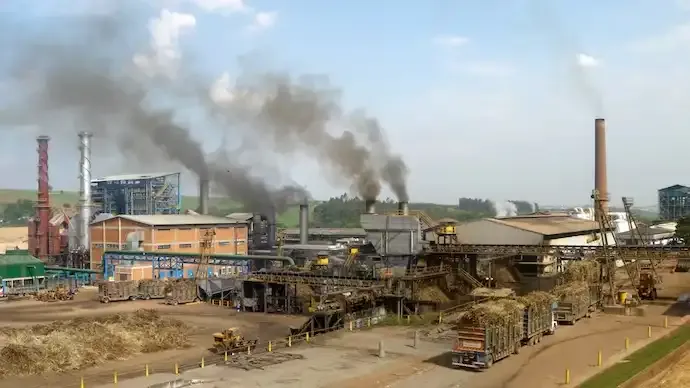
Ethanol is a renewable biofuel produced primarily from crops such as:
- Sugarcane
- Corn (Maize)
- Rice and surplus food grains
The Government of India introduced E20 as part of its broader energy transition strategy aimed at reducing fossil fuel dependence and promoting cleaner transportation.
Why India is promoting ethanol blending
The ethanol blending programme has several long-term objectives.
Reducing crude oil imports
India imports a significant share of its crude oil requirements every year.
According to Gadkari, the country spends nearly ₹22 lakh crore annually on fuel imports, making domestic biofuel production strategically important.
Supporting farmers
The government believes ethanol production creates additional demand for agricultural produce.
Gadkari highlighted that allowing ethanol production from corn significantly increased market demand and improved prices for farmers.
He claimed corn prices increased substantially after ethanol production expanded, generating additional income for farmers in states such as Uttar Pradesh and Bihar.
Lowering emissions
Higher ethanol blending is also intended to reduce greenhouse gas emissions by partially replacing conventional fossil fuels with renewable fuel.
Why some people are concerned about E20
Despite government assurances, some vehicle owners continue to raise questions about the transition.
The main concerns include:
Fuel economy
Since ethanol contains less energy than petrol, several motorists have reported lower mileage after switching to E20 fuel.
Older vehicles
Owners of older petrol vehicles remain concerned about whether engines, rubber components and fuel systems designed before E20 adoption can withstand prolonged use.
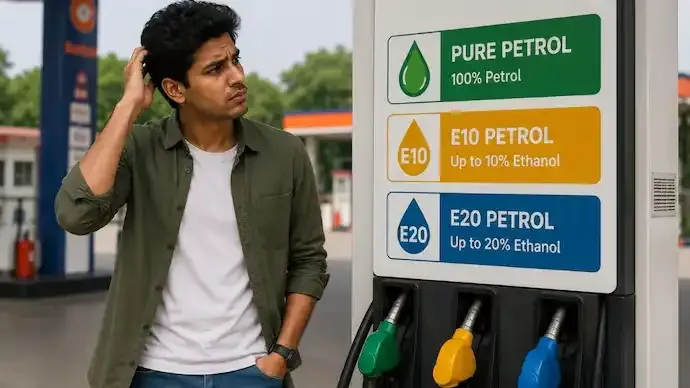
Lack of fuel choice
Unlike countries such as Brazil, where multiple ethanol-petrol blends are available, Indian consumers currently have limited options, with E20 becoming the standard petrol across most fuel stations.
Gadkari rejects conflict of interest allegations
The Union Minister also addressed allegations that his support for ethanol is linked to his family's business interests.
Gadkari acknowledged that his family owns sugar factories but categorically denied that government policy is influenced by private commercial interests.
He maintained that India's ethanol strategy is driven by national priorities, including energy security, environmental sustainability and farmer welfare.
Is India moving to E25 petrol?
Recent reports suggesting that India may soon introduce E25 petrol have sparked fresh debate.
However, government officials have clarified that no decision has been taken regarding any nationwide rollout of E25 fuel.
Authorities have stated that:
- Scientific testing is still underway.
- Vehicle compatibility studies have not been completed.
- Any future decision will be based on technical evaluation and consultations with automobile manufacturers and industry experts.
The clarification is aimed at addressing speculation surrounding higher ethanol blends and reassuring consumers that no immediate policy change is planned.
What the debate means for consumers
The discussion surrounding E20 reflects the broader challenge of balancing environmental goals with consumer confidence.
While the government maintains that E20 has undergone extensive testing and is safe for use, some experts continue to seek greater transparency regarding long-term performance, especially for older vehicles.
The coming months are likely to see further research, technical assessments and discussions between policymakers, automobile manufacturers and consumer groups before any future expansion of ethanol blending is considered.
Featured Snippet
Union Minister Nitin Gadkari defended India's E20 petrol rollout by challenging critics to identify a single vehicle damaged by ethanol-blended fuel. He rejected claims against the programme as misinformation and reiterated that no decision has been taken on introducing E25 petrol.
Key Highlights
- Nitin Gadkari defended India's E20 ethanol-blended petrol programme.
- He challenged critics to name one vehicle damaged by E20 fuel.
- The minister dismissed concerns as misinformation.
- E20 contains 20% ethanol and 80% petrol.
- The policy aims to reduce crude oil imports and boost farmers' income.
- Concerns continue over mileage and older vehicle compatibility.
- Government has clarified that no decision has been taken on E25 petrol.
- Any future move beyond E20 will depend on scientific studies.
Conclusion
As India accelerates its transition towards cleaner and more sustainable transportation fuels, the debate around E20 petrol remains active. While the government insists that the programme has been scientifically validated and offers long-term economic and environmental benefits, questions surrounding mileage, older vehicles and future ethanol blending levels continue to generate discussion. For now, the Centre has made it clear that E20 remains the focus, with any future move to higher ethanol blends dependent on comprehensive testing and technical evidence.
FAQs
1. What is E20 petrol?
E20 petrol is fuel containing 20% ethanol blended with 80% petrol.
2. What did Nitin Gadkari say about E20?
He challenged critics to identify a single vehicle that has been damaged due to the use of E20 petrol.
3. Why is India promoting ethanol blending?
The government aims to reduce crude oil imports, lower emissions and increase farmers' income through biofuel production.
4. Does E20 reduce vehicle mileage?
Because ethanol has lower energy content than petrol, some users have reported a slight reduction in fuel efficiency, though impacts vary by vehicle.
5. Is E20 safe for all vehicles?
Most newer petrol vehicles are designed to support E20 fuel. Owners of older vehicles should consult manufacturer recommendations regarding compatibility.
6. Has India approved E25 petrol?
No. Government officials have clarified that no decision has been taken on introducing E25 petrol.
7. Why are some people opposing E20?
Critics have raised concerns about fuel efficiency, compatibility with older vehicles and limited consumer choice at fuel stations.
8. What are the benefits of ethanol blending?
Benefits include reduced dependence on imported crude oil, lower emissions, support for domestic agriculture and improved energy security.



Conversation
Be kind and stay on topic. Comments are moderated; abuse, spam and personal attacks are removed. Report a problem