

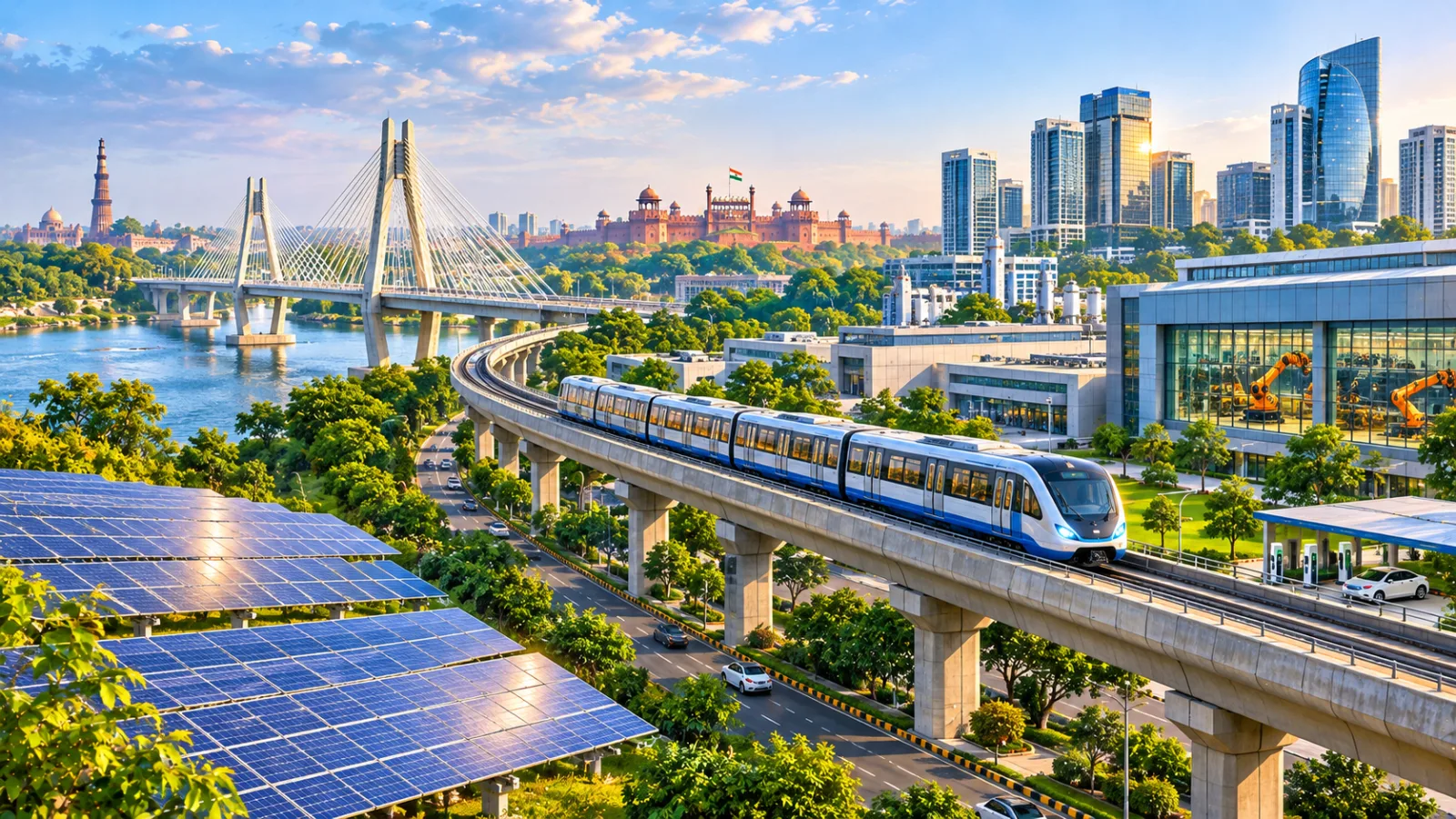

NEW DELHI, November 12, 2026: Prime Minister Narendra Modi on Thursday said India must work with greater urgency to achieve its goal of becoming a developed nation by 2047, describing the target as a deadline that could change how the country plans and delivers progress.
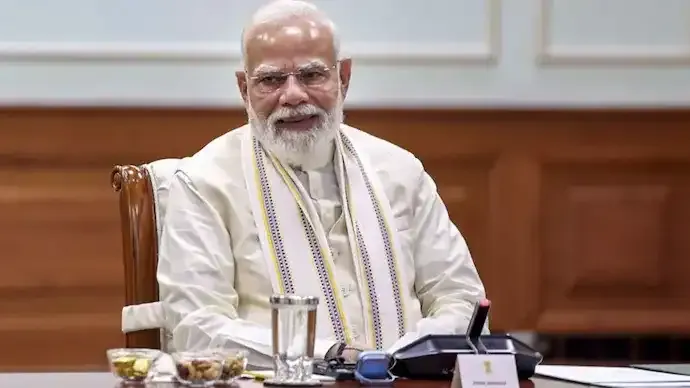
Addressing journalists at the Bharatiya Janata Party (BJP) headquarters in New Delhi during a Deepawali Milan programme, Modi expressed confidence that India could achieve the Viksit Bharat vision before completing 100 years of Independence.
The Prime Minister pointed to developments in space exploration, infrastructure, manufacturing and technology as examples of the country's growing capabilities.

He also urged journalists to give greater attention to India's achievements and help communicate those stories to audiences around the world.
PM Modi Says Viksit Bharat Dream Now Has a Deadline
Speaking about the importance of setting clear goals, Modi said deadlines were necessary not only for individuals and institutions but also for countries.
He explained that India had long aspired to become a developed nation, but the 2047 target had given that ambition a specific timeline.
The Prime Minister said setting a deadline could influence the speed of decision-making and encourage governments and institutions to work with a greater sense of urgency.
India will complete 100 years of Independence on August 15, 2047.
The Viksit Bharat initiative aims to transform the country into a developed economy by that milestone.
Modi's remarks were a reaffirmation of an existing national goal rather than the announcement of a new deadline.
The government has promoted the Viksit Bharat 2047 vision for several years, with development plans spanning infrastructure, education, healthcare, economic growth and public services.
Why Is 2047 Important for India?
The year 2047 marks the centenary of India's Independence from British rule.
The government has chosen this milestone as the target for transforming India into a developed nation.
According to the government's Viksit Bharat vision, development involves more than economic growth alone.
It includes improvements in living standards, public infrastructure, access to opportunities, environmental sustainability and governance.
The broader objectives include:
- Expanding economic opportunities and employment.
- Improving education and skill development.
- Strengthening healthcare and public services.
- Developing modern transport and digital infrastructure.
- Supporting manufacturing, research and technological innovation.
- Encouraging sustainable growth and environmental protection.
- Improving living standards across rural and urban India.
These priorities are reflected in government initiatives and policy documents associated with the 2047 development vision.
However, reaching developed nation status will require sustained progress across multiple economic and social indicators.
The 2047 target is a policy ambition, not a guarantee that every development objective will be achieved by that year.
PM Modi Highlights India's Progress in Space and Infrastructure
During his address, the Prime Minister cited achievements in several sectors to explain why he believes the goal is achievable.
He referred to India's successful Chandrayaan-3 mission, which landed near the Moon's south polar region in August 2023.
The mission demonstrated India's ability to carry out complex space exploration projects and strengthened the country's position in the international space sector.
Modi also highlighted the expansion of transport infrastructure, including the Chenab Rail Bridge in Jammu and Kashmir.
The bridge, which is recognised as the world's highest railway arch bridge, represents a major engineering achievement in difficult mountainous terrain.
The Prime Minister referred to progress in mobile phone manufacturing, semiconductor development and renewable energy capacity.
He argued that these developments showed how India's technological and industrial capabilities had expanded over the past decade.
While the achievements illustrate progress in selected sectors, their contribution to the 2047 goal will also depend on whether they lead to wider economic opportunities, improved productivity and measurable improvements in people's lives.
Manufacturing, Startups and Digital Payments in Focus
Modi also spoke about India's expanding manufacturing capacity and technology ecosystem.
He referred to the country's position in global mobile phone production and its efforts to develop domestic semiconductor manufacturing.
The Prime Minister highlighted the growth of Indian startups, describing entrepreneurship as an important part of the country's development journey.
Digital public infrastructure was another area of emphasis.
India's Unified Payments Interface (UPI) has transformed how individuals and businesses make digital payments.
The platform is widely used for everyday transactions, including purchases at shops, transfers between individuals and payments to service providers.
Modi presented these developments as examples of how technology could support economic activity and improve accessibility.
The government's longer-term Viksit Bharat strategy also places importance on digital infrastructure, innovation and improving productivity.
In April 2026, NITI Aayog launched a roadmap examining how digital public infrastructure could contribute to inclusive economic growth through 2047.
What Does India Need to Achieve Developed Nation Status?
The ambition to become a developed country involves significant economic challenges.
A Reserve Bank of India research article published in July 2023 estimated that India would need sustained real GDP growth of approximately 7.6% annually over 25 years to reach an illustrative developed economy income level by 2047.
The research also emphasised the importance of higher investment, improvements in productivity and reforms across education, healthcare, technology and infrastructure.
That estimate was a research scenario rather than an official forecast.
It demonstrates the scale of sustained growth required to achieve the 2047 ambition.
Growth in national income alone will not necessarily ensure developed country living standards.
Other important measures include the quality of jobs, household incomes, access to healthcare, educational outcomes, infrastructure reliability and the distribution of economic opportunities.
India will also need to manage environmental challenges and ensure that development reaches regions with lower incomes and weaker access to public services.
The success of Viksit Bharat will therefore depend on both the pace of growth and the extent to which its benefits reach the population.
PM Modi Urges Media to Tell India's Success Stories Globally
A major part of the Prime Minister's address focused on communication and the role of journalism.
Modi described communication as one of the most important tools of the 21st century.
He questioned whether India was making sufficient efforts to share its achievements, innovations and individual success stories with international audiences.
The Prime Minister said the country had examples of remarkable work being carried out by scientists, entrepreneurs, young professionals and ordinary citizens.
He referred to his monthly radio programme, Mann Ki Baat, as one of the platforms through which he highlights individual achievements.
Modi encouraged the media to give greater prominence to developments that demonstrate India's capabilities.
He argued that stories of scientific progress, innovation and social change could help strengthen the country's international visibility.
At the same time, the media's responsibility extends beyond highlighting achievements.
Independent reporting, scrutiny of public policy and examination of claims remain essential to ensuring that development programmes are assessed accurately.
Prime Minister Recalls His Long Association With Journalists
The Deepawali Milan programme also gave Modi an opportunity to reflect on his relationship with the media.
He recalled the early years of his political career, when he helped make arrangements for journalists attending BJP events.
The Prime Minister spoke about the transformation of Indian journalism, from traditional press releases and newspapers to digital platforms and social media.
He acknowledged the contribution of reporters who continue working during emergencies, natural disasters and other difficult circumstances.
Modi also praised the diversity of opinions in India's media landscape, describing it as an important feature of the country's democracy.
His comments came during the annual BJP gathering organised for media professionals in the national capital.
Modi Calls for Greater Awareness Against Drug Abuse
Apart from discussing the 2047 development target, the Prime Minister urged the media to help raise awareness about drug abuse.
He said protecting young people from addiction required wider public participation.
Modi called for greater attention to social issues that affect the country's future, including the well-being of its younger population.
The appeal formed part of his broader argument that communication could play an important role in addressing national challenges.
India's development ambitions depend heavily on its young population, making education, health, employment and social welfare important parts of the Viksit Bharat agenda.
Can India Become a Developed Nation by 2047?
The Prime Minister has expressed confidence that India's recent achievements provide a strong foundation for meeting the 2047 target.
However, turning that ambition into measurable progress will require consistent efforts over the coming two decades.
Economic expansion must be accompanied by improvements in employment, skills, healthcare, education and public infrastructure.
The country will also need to strengthen institutions, attract investment, improve productivity and respond to environmental challenges.
For policymakers, the central task is to translate long-term objectives into programmes that produce measurable results.
For citizens, the success of the initiative will ultimately be reflected in better economic opportunities, more reliable public services and improved living standards.
Modi's November 12 remarks underline the government's view that a fixed deadline can help accelerate progress.
The broader test of Viksit Bharat 2047 will be whether India can sustain growth while ensuring that development reaches people across different regions and income groups.
Editorial note: This article is based on Prime Minister Narendra Modi's November 12, 2026 address as reported by PTI and other news organisations, government documents on Viksit Bharat 2047, and a Reserve Bank of India research publication. All India Story has independently reviewed the cited public material but did not attend the event.




Conversation
Be kind and stay on topic. Comments are moderated; abuse, spam and personal attacks are removed. Report a problem