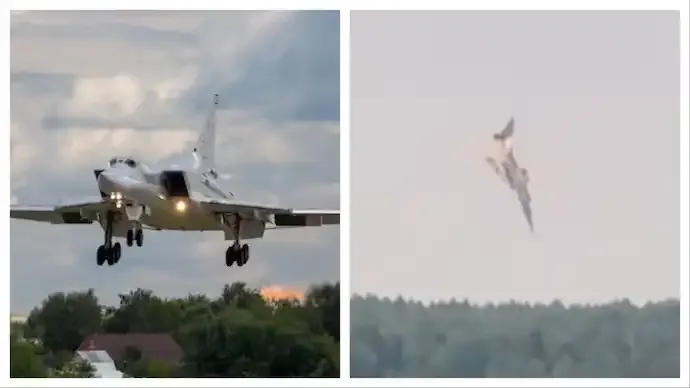
A Russian Tu-22M3 strategic bomber crashed during a training flight in the Irkutsk region of Siberia, prompting fresh attention to the operational safety of one of Russia's most important long-range military aircraft. Russian authorities confirmed that all four crew members successfully ejected before the aircraft went down and survived the incident.
The crash occurred during a routine training mission and, according to preliminary reports, may have been caused by an engine malfunction. Officials stated that no casualties or damage were reported on the ground.
Crew Members Eject Safely Before Impact
Russia's Defence Ministry confirmed that the bomber's four-member crew managed to safely eject after experiencing technical difficulties during the flight.
Emergency services and military personnel were deployed to the crash site to assist the crew and secure the area. Authorities reported that all personnel survived the incident, avoiding what could have been a far more serious tragedy.
The successful ejection highlights the effectiveness of emergency safety systems aboard the aircraft, which are designed to protect crew members during critical situations.
Preliminary Reports Point to Engine Failure
Initial information released by officials suggests that engine failure may have caused the aircraft to crash.
Investigators are expected to conduct a detailed technical examination to determine the exact cause of the accident. Aviation experts will likely inspect maintenance records, flight data and engine performance systems as part of the inquiry.
Russian authorities have not yet announced a final conclusion regarding the cause of the crash.
What Is the Tu-22M3 Bomber?
The Tu-22M3 is one of Russia's most recognizable long-range strategic bombers and remains an important part of the country's military aviation fleet.
Developed during the Soviet era, the aircraft is a supersonic bomber designed for long-range strike missions. NATO assigns the aircraft the reporting name "Backfire."
Over the years, the bomber has undergone several upgrades and continues to play a role in Russia's strategic operations.
The aircraft is capable of carrying a variety of conventional and advanced weapons systems, including long-range missiles and precision-guided munitions.
Aircraft Has Seen Combat Operations
The Tu-22M3 has been used in several military operations over the years.
Russian forces have deployed the bomber during missions in Syria and more recently during military operations related to the conflict in Ukraine. The aircraft's long range and strike capabilities have made it a key component of Russia's strategic aviation assets.
Military analysts consider the bomber an important element of Russia's broader airpower strategy.
Aviation Safety Concerns Remain
Military aircraft accidents continue to attract international attention due to their potential impact on operational readiness and national security.
While military aviation involves complex machinery operating in demanding conditions, investigators carefully review every incident to identify potential technical issues and improve safety standards.
The latest crash is likely to prompt a review of maintenance procedures and operational protocols for the Tu-22M3 fleet.
No Ground Damage Reported
Officials indicated that the aircraft crashed in an area where it did not cause damage to civilian infrastructure or populated locations.
The absence of casualties on the ground has been viewed as a significant relief given the size and capabilities of the aircraft.
Emergency response teams continue to monitor the site while investigators gather evidence related to the incident.
Investigation Underway
Russian authorities are expected to conduct a comprehensive investigation into the crash.
The inquiry will focus on determining whether mechanical failure, maintenance issues or other technical factors contributed to the accident. Findings from the investigation could influence future operational and maintenance procedures.
Further updates are expected once investigators complete their initial assessment.
The crash of a Russian Tu-22M3 strategic bomber in Siberia has raised questions about the aircraft's technical condition, although the safe ejection of all four crew members prevented a greater tragedy. Preliminary reports suggest engine failure may have been responsible, but authorities are continuing their investigation.
As one of Russia's key long-range bombers, the incident is likely to be closely watched by military analysts and aviation experts around the world.
Prev Article
Trump Says Iran Agrees to Never Develop Nuclear Weapons, Dismisses Reports of US Payment as ‘Fake News’
Next Article
Trump Says 'Without Me There'd Be No Israel' as Rift With Netanyahu Deepens at G7 Summit