

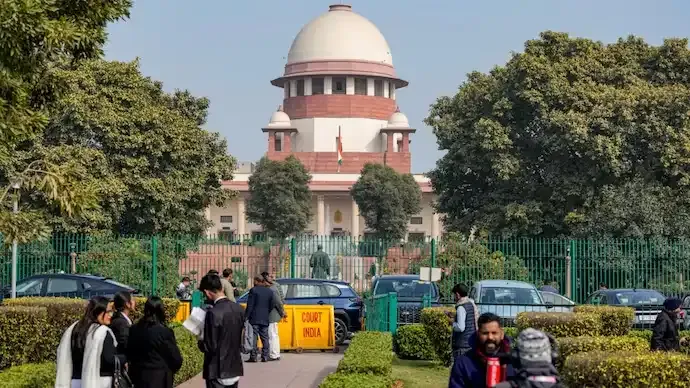

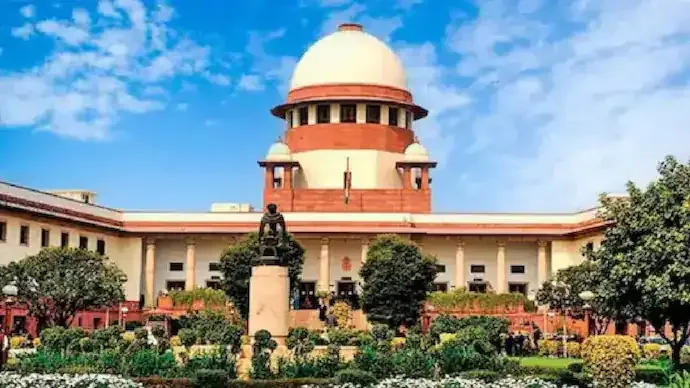
The Supreme Court of India has criticised state governments for announcing what it termed “irresponsible” freebie schemes that place strain on public finances. The court raised concerns about the timing of such announcements, particularly when they are made close to elections, and warned about their long-term economic impact.
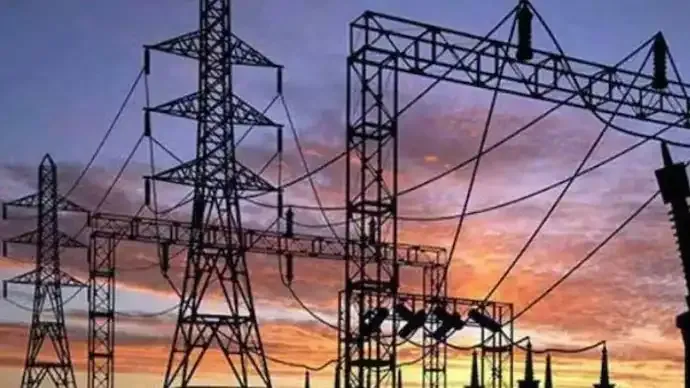
The remarks came during a hearing related to electricity subsidies, where the court sought an explanation from the Government of Tamil Nadu regarding a recently announced free electricity scheme.
Court Questions Last-Minute Electricity Subsidy
The bench specifically asked why the subsidy was introduced at the last moment, leaving power distribution companies (DISCOMs) struggling to adjust tariffs and financial projections.

The court observed that advance planning would have allowed utilities to incorporate subsidies into tariff calculations and budget forecasts. Sudden announcements, it noted, create arbitrariness and disrupt regulatory processes.
It also emphasised that electricity tariff determination involves regulatory bodies and financial planning mechanisms. Unexpected subsidies make it difficult to maintain pricing stability and financial sustainability in the power sector.
Bench Raises Concerns Over Fiscal Discipline
The bench, headed by Chief Justice of India Surya Kant and comprising Justices Joymalya Bagchi and Vipul Pancholi, noted that many states are already facing revenue deficits.
The judges questioned how governments can commit to large subsidy programmes without clear fiscal planning. They warned that unchecked welfare spending could hinder long-term economic development.
During the hearing, the court also remarked that it had observed instances across several states where welfare schemes were announced shortly before elections.
Welfare vs Fiscal Responsibility
The bench highlighted the need to distinguish between targeted welfare support and indiscriminate benefits. While acknowledging the responsibility of a welfare state to assist vulnerable populations, the court cautioned against extending benefits universally without eligibility criteria.
The Chief Justice questioned whether absorbing the full cost of subsidies serves the public interest, particularly when benefits are extended to those who can afford to pay.
The court warned that indiscriminate subsidies may create a policy culture driven by appeasement rather than structured social support.
Impact on Power Sector and Policy Planning
The case involves a challenge by the Tamil Nadu Power Distribution Company to provisions under the Electricity Amendment Rules, 2024. The court noted that sudden subsidy decisions complicate the work of regulatory authorities and tariff-setting bodies responsible for maintaining financial balance in the power sector.
The observations are expected to influence broader debates around subsidy policies, fiscal discipline, and welfare governance across India.
Growing Debate on Freebie Politics
The issue of freebie schemes has become a recurring topic in policy discussions, particularly in the context of elections. The court’s remarks highlight the need for transparent fiscal planning and targeted welfare measures that balance social support with economic sustainability.
As states continue to design welfare policies, the court’s intervention signals increased scrutiny over the timing, intent, and financial viability of subsidy programmes.



Conversation
Be kind and stay on topic. Comments are moderated; abuse, spam and personal attacks are removed. Report a problem